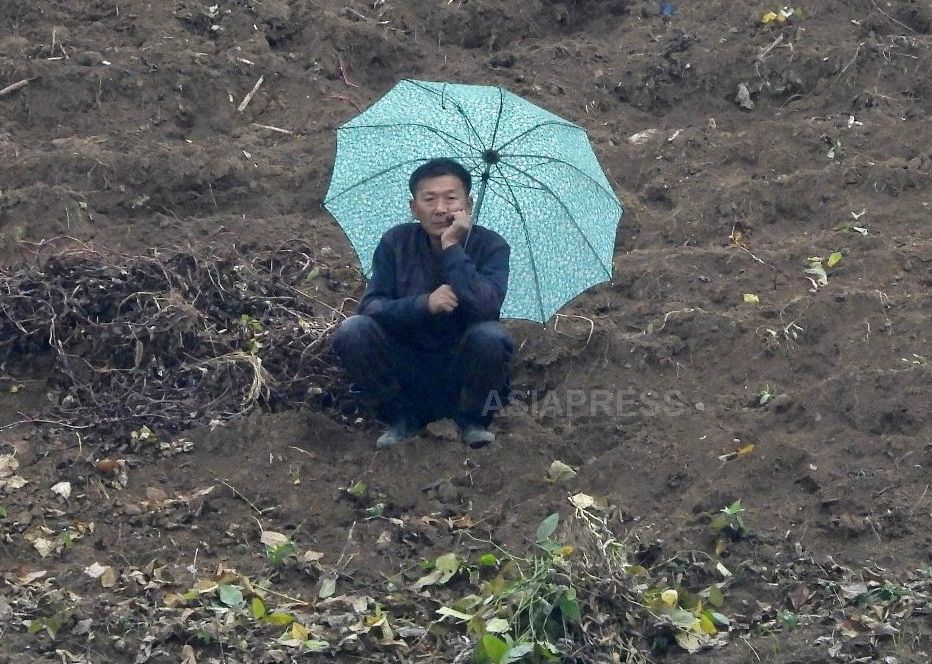
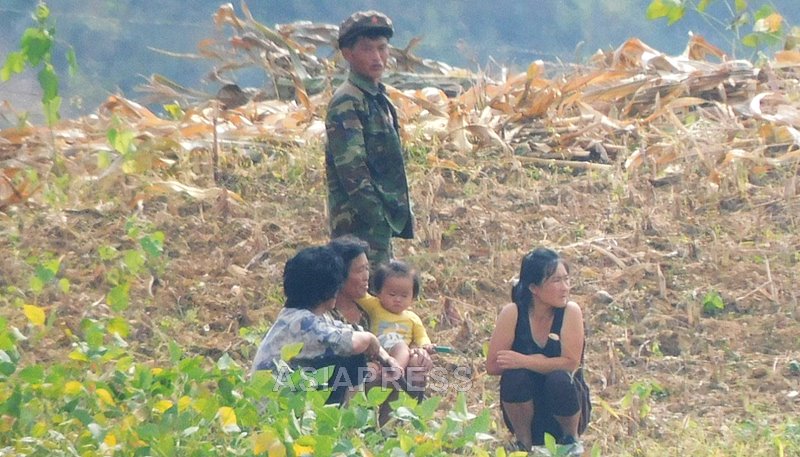
RIMJIN-GANGNEWS FROM INSIDE NORTH KOREA2025-04-09T02:37:59Zhttps://www.asiapress.org/rimjin-gang/feed/atom/WordPresshttps://www.asiapress.org/rimjin-gang/wp-content/uploads/2023/07/asiapress_logo_a-150x150.pngasiapress<![CDATA[<North Korea Special> What is the Reality of Kim Jong-un's Agricultural Policy Reform? (3) Expanding Farm Management Rights: Farmers Say "Farms Now Play the Role of Landlords"]]>https://www.asiapress.org/rimjin-gang/?p=73352025-04-09T02:36:57Z2025-04-09T02:13:44ZA farmer gazing toward China, lost in thought in the middle of a field after sweet potato harvest. Photographed from the Chinese side of Sakju County, North Pyongan Province, October 2024 (ASIAPRESS)
In the 2021 revised North Korean Farm Law, we could confirm that farm management rights have been expanded. ASIAPRESS's on-site farm investigations also show many changes, such as farms directly participating in the process of establishing national production plans and increased autonomous discretion for farms. A local farmer's testimony that "farms now play a role similar to landlords" seems to reveal the essence of agricultural policy reforms in the Kim Jong-un era. (JEON Seong-jun / KANG Ji-won)
◆Expansion of Farm Management Rights
The core of recent changes is that the scope of farm management rights has been expanded and legally codified. The 2021 revised Farm Law includes items on farm management rights that were not found in the 2015 version.
Article 22 of the Farm Law states: "Farms have management rights such as planning rights, production organization rights, management organization and labor adjustment rights, product handling rights, and fund utilization rights in management activities. Farms should proactively and creatively carry out management activities with the practical management rights granted by the state."
On-site investigations of two farms in North Hamgyong Province also revealed that farm management rights are actually expanding.
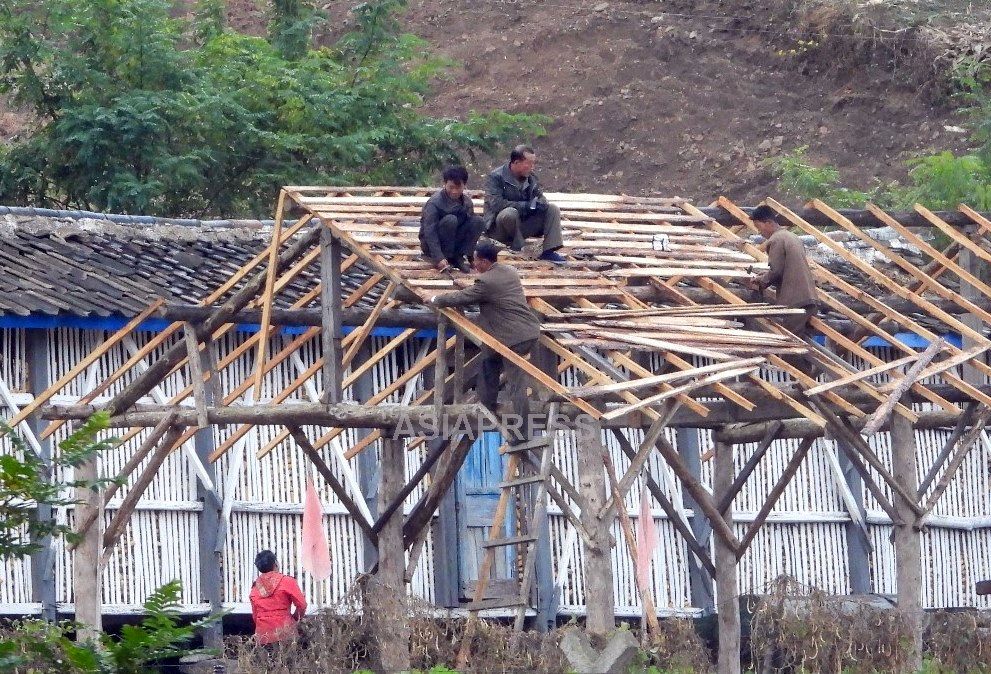
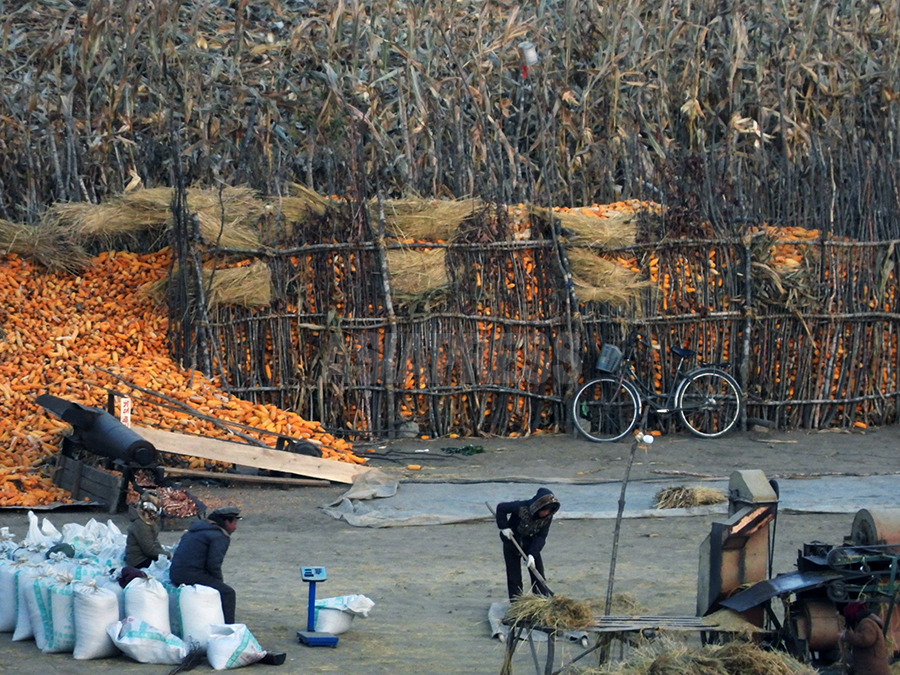
Farm workers constructing a corn storage facility on the farm. Behind them, a storage facility filled with corn is visible. Photographed from the Chinese side of Sakju County, North Pyongan Province, October 2024 (ASIAPRESS)
◆ Farms Directly Involved in Planning
In late March, farm worker and reporting partner A from North Hamgyong Province reported that unlike in the past when national production plans were unilaterally imposed from above, they are now determined through negotiation with authorities based on the specific circumstances of farms.
"The national plan isn't handed down from above. The farm submits production amounts to (government agencies) after considering all operating costs, farming material costs, and distribution, and then it's determined through adjustments there."
This is a notable change.
However, A said that meeting the plan is still not easy, stating, "Last year, the planned amount was about 400 tons of grain, but in reality, it fell short by about 10%."
No agricultural laws supporting the change of plan calculation could be found. It's possible that new content related to plan calculation was introduced in the 2023 revised Farm Law (still undisclosed).
If these changes are certain, it means farms' status has been elevated from passive executors of the national plan to actively participating in and negotiating plan formulation.
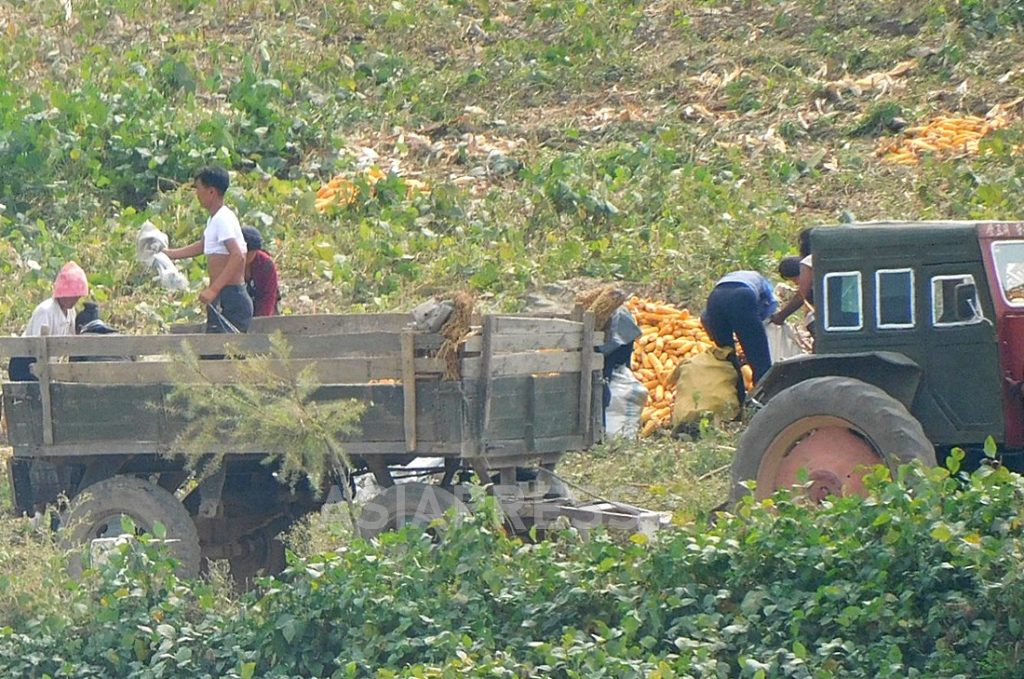
]]>asiapress<![CDATA[<North Korea Special>What is the Reality of Kim Jong-un's Agricultural Policy Reform? (2) Enterprise-Style Farms Codified in Law - Has 'Juche Farming' Been Abandoned?]]>https://www.asiapress.org/rimjin-gang/?p=73322025-04-09T02:26:28Z2025-04-08T07:58:02ZFarm workers harvesting corn. Taken from the Chinese side of Sakju County, North Pyongan Province in late September 2023 (ASIAPRESS)
Agricultural enterprises are being promoted as part of Kim Jong-Un's agricultural policy reforms, according to revised laws and on-site investigations. Farms have gained greater management autonomy, while principles of Kim Il Sung's "Juche farming methods" are being increasingly disregarded. This report examines the current state of farms from a production perspective. (JEON Sung-jun / KANG Ji-won)
◆ Farms Legally Designated as Enterprises
North Korean authorities revised the Farm Law for the fourth time in the 2020s in November 2021.
Article 2 of the law defines farms as follows:
"Farms are socialist agricultural enterprises that conduct agricultural production and management activities using land as the primary means of production."
This phrasing first appeared in 2015 with the term: "socialist agricultural enterprise."
Legally designating farms as enterprises appears intended to fundamentally change their status and nature as agricultural production entities. In other words, the regime aims to increase food production efficiency through the corporatization of farms.
ASIAPRESS has been investigating two farms in North Hamgyong Province to understand what specific changes have occurred in farm operations following these legal revisions.
Of the two investigators, Mr. A is a farm worker, while Mr. B is an urban resident who has been continuously monitoring a nearby farm. Both target farms are typical northern farms with approximately 500 workers each, primarily growing corn rather than rice.
"Now farms are instructed to operate production activities independently and autonomously. Farms must use surplus production beyond state quotas to secure their own farming supplies, seeds, and fuel for agriculture."
This suggests a shift from the past principle of receiving all farming supplies from the state to fulfill plans, toward operating like businesses that must balance income and expenses. The expansion of farm management autonomy is resulting in reduced state involvement in agricultural production while strengthening farms' responsibilities and roles.
◆ Farms Now Choose Their Own Seeds
Regarding seed selection and field implementation—a crucial element of farming—investigator A reported in late February 2025 that farms have been given seed selection rights.
"The difference now is that farms are responsible for seed selection and grain management, handling these tasks independently to fulfill quotas. Previously, seeds were provided by the state, but now farms must purchase their preferred varieties directly from state-run seed farms."
Investigator B confirmed similar information in mid-March:
"This year, farms are directly visiting seed farms to secure seeds, exchanging 1.5kg of food for 1kg of seeds."
In a report sent in July 2024, B had noted:
"Early this year (2024), seed revolution was emphasized through directives from the Ministry of Agriculture, encouraging farms to boldly request seed changes based on local soil conditions."
This represents a clear change from the past when the state directly determined which crops to cultivate and supplied the seeds.
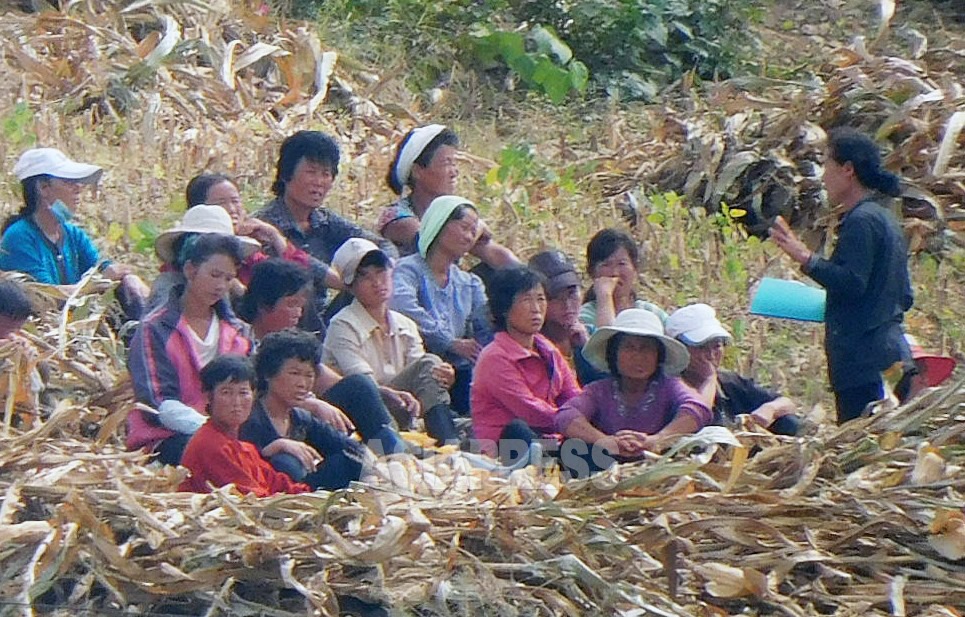
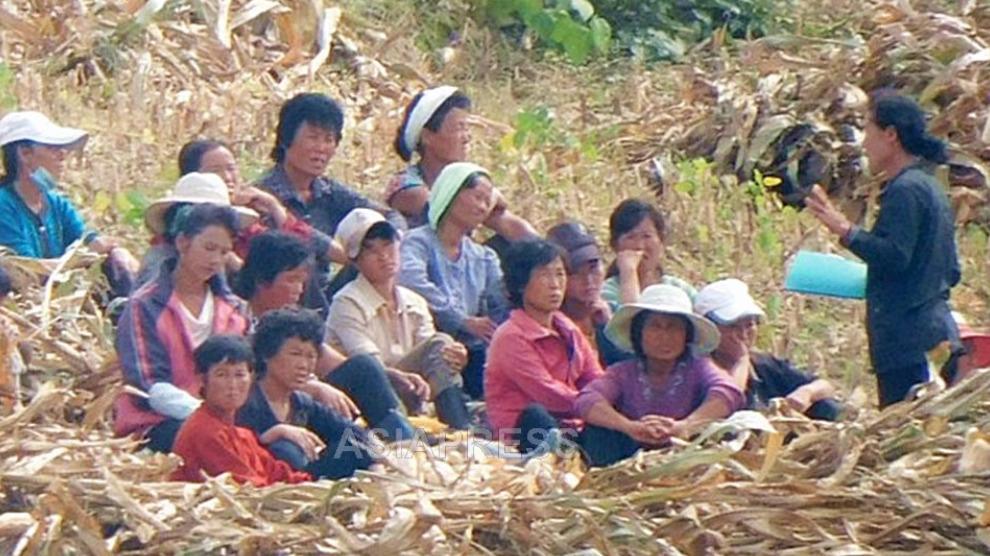
]]>asiapress<![CDATA[<Inside N. Korea>Even Housewives Being Mobilized - New "Women's League Shock Brigades" for Farm Labor as Kim Jong-Un Regime Demands Farms Cover Labor Costs]]>https://www.asiapress.org/rimjin-gang/?p=73272025-04-07T06:05:08Z2025-04-07T06:02:47ZWomen holding a meeting in a corn field. They appear to be "Women's League members" mobilized for harvest work. Taken from the Chinese side in late September 2023, showing a scene from Sakju County, North Pyongan Province. ASIAPRESS
Annual farm mobilization is about to begin in North Korea. Under the slogan "Everyone who can hold a spoon must participate," the entire population from high-ranking officials to elementary school students is mobilized for agricultural work including fertilizer transport, rice planting, and weeding. Starting this year, dedicated "shock troops" are being selected from housewives and intensively dispatched to rural areas. Additionally, farms are now required to cover the food expenses of mobilized workers, causing widespread controversy. Two reporting partners living in the northern region shared this information from late March through April. (HONG Mari / KANG Ji-won)
◆ Women's League Forming "Shock Brigades" for Farm Mobilization
Reporting partner A, who lives in Hyesan in Ryanggang Province, reports that once again, orders to "concentrate all efforts on agriculture" have been issued from the central government. She explains the latest developments in farm mobilization:
"Each neighborhood Women's League has selected 20 people to form 'shock brigades.' Those mobilized to rural areas as part of these 'Women's League Shock Brigades' are exempt from other service labor and political study sessions."
※The Women's League's official name is the "Korean Socialist Women's League," mainly composed of housewives without workplace affiliations.
Shock brigades typically refer to specialized labor units deployed for national construction projects. However, since the COVID-19 pandemic, the Kim Jong-un regime has been directing businesses and factories to create "agricultural shock brigades" to concentrate manpower on farm work. This year, they've expanded the scope to include housewife brigades.
◆ Farms Required to Cover Meals and Wages for Mobilized Workers
Another new system has emerged this year. Reporting partner B explains:
"Until now, people worked for free when mobilized to farms, but this year, farms must provide cash or lunch to those mobilized from the Women's League, institutions, and businesses."
Previously, when factories and businesses organized rural mobilizations, they covered meals and wages, but housewives and students typically had to pay for their own meals and transportation to farms. Starting this year, farms must provide either daily cash payments of 900 won (equivalent to about 20,000 won monthly wages) or meals to those mobilized through organizations.
※As of late March, 1,000 North Korean won was worth approximately 0.04 USD. Current average worker wages are about 35,000-50,000 won. One kilogram of white rice costs about 9,000 won.
]]>asiapress<![CDATA[<North Korea Special>What is the Reality of Kim Jong-un's Agricultural Policy Reform? (1) "Collective" Disappears from Farms Major Revisions to Agricultural Regulations]]>https://www.asiapress.org/rimjin-gang/?p=73202025-04-09T02:37:59Z2025-04-01T08:06:07ZA farm threshing floor photographed with a super-telephoto lens. A large amount of corn is stored, and something is being weighed on a scale. Photographed from the Chinese side in Onsong County, North Hamgyong Province, October 2024 (ASIAPRESS)
North Korea is undergoing significant changes in agricultural policy. The term "collective" has disappeared from "collective farms," and state involvement in agricultural production and product handling has decreased, greatly expanding farm autonomy. Since the early 2020s, agriculture-related laws have been continuously revised, and based on information from reporting partners in North Korea, it's clear that the Kim Jong-un regime has embarked on major agricultural reforms. It has been 70 years since Kim Il-sung set the goal of "feeding the people white rice and meat soup," and in the 13th year of the Kim Jong-un regime, nearly half of the population suffers from malnutrition. The current challenge is how to improve productivity while maintaining collective farming. We report on the reality of agricultural policy reform through a series of on-site farm investigations. (JEON Sung-jun / KANG Ji-won)
◆Secret Investigations Conducted at Two Domestic Farms
Major agricultural policy changes are being observed through revisions to agriculture-related laws and actual changes in farming practices.
Since 2020, the Kim Jong-un regime has been revising numerous agriculture-related laws. According to the "North Korean Code" released by South Korea's National Intelligence Service in August 2024, the "Farm Law" was revised as many as four times between 2020 and 2021. Additionally, the "Agricultural Law" and "Grain Management Law" were revised in 2020 and 2021, respectively. Through retrospective analysis of the revised agriculture-related laws, we could identify the general outline of North Korea's agricultural policy changes.
Another important source of information comes from field investigation reports by ASIAPRESS's reporting partners in North Korea. The two reporting partners who investigated farms both reside in North Hamgyong Province. Reporting Partner A is a farm worker, while Reporting Partner B lives in an urban area and continuously conducts on-site investigations of nearby farms. Both farms are typical northern region farms with about 500 workers each, focusing more on field crops than rice paddies.
The changes at local farms reported by these reporting partners were confirmed to be related to the revised agricultural laws in many aspects. The purpose of this series is to examine the reality of the Kim Jong-un regime's new agricultural policies by comparing legal systems with actual farm operations.
For this purpose, we will publish articles divided into three aspects: 1. Production 2. Distribution 3. Circulation.
ASIAPRESS's investigation is limited to some northern regions. We had almost no access to information about the breadbasket regions in the central and southern parts, including Hwanghae Province, which constitutes an important part of North Korean agriculture. Therefore, we acknowledge limitations in extrapolating our findings to North Korean agriculture as a whole.
◆Farms in Transformation: Has Farmland Been Nationalized?
Since the summer of 2022, North Korean state media has replaced the term "collective farm" with "farm." While researchers and media have speculated about the background of this change, nothing was certain. ASIAPRESS suspects that this name change is related to a policy shift toward the nationalization of farmland. Land ownership is a critical issue that affects overall agricultural policy.
Article 11 of North Korea's Land Law (revised in May 2022) states:
"Land owned by Collective entities is the collective property of workers involved in Collective management."
Also, Article 23 of the North Korean Constitution (revised in September 2023) states:
"The state gradually transforms collective ownership into all-people ownership according to the voluntary will of all members in collective entities by... raising the ideological consciousness and technical and cultural levels of farmers and enhancing the leading role of all-people ownership over collective ownership..."
All-people ownership is a North Korean expression meaning state ownership. The policy of nationalizing collective ownership has been emphasized by North Korea since the Kim Il-sung era. Collective farms are something that must be overcome to achieve complete victory of socialism, that is, to transition to a communist society.
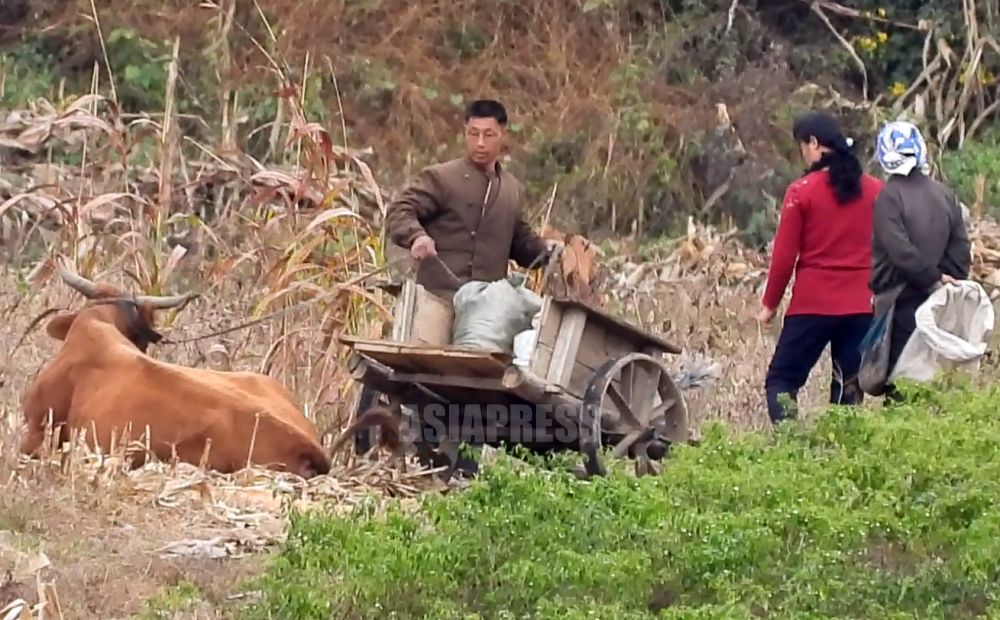
Farm workers loading harvested crops onto an ox cart. Oxen remains an important labor force in farming. Photographed from the Chinese side in Manpo, Jagang Province, October 2024 (ASIAPRESS)
◆Why Has "Collective" Disappeared?
In October 2024, ASIAPRESS confirmed that the name "collective farm" had actually changed on-site. Reporting Partner B conveyed the findings as follows:
"Now they've eliminated the concept of collective farms and call them 'OO Farm,' attaching the regional name to each district."
In a February report, another reporting Reporting Partner, A, reported that the term "collective" had also disappeared from the farm to which they belonged, but there was no separate explanation for such a change at the farm level.
"The change from 'collective farm' to 'farm' last year doesn't seem to have any special meaning. It's just a name change, everything else is the same."
When ASIAPRESS asked if the farms had been nationalized, A replied that they had not been nationalized, saying, "I understand that breadbasket regions (like Hwanghae or Pyongan provinces) have been made state-owned because grain production is the priority, while most rural areas in mountainous regions have been changed to farms."
However, it is unclear whether A's statement refers to state farms that previously existed in some areas of Hwanghae Province or is a direct result of recent policy changes.
The renaming of collective farms could be a transitional measure for the nationalization of farmland, but it is also possible that the authorities carried out the nationalization of farmland but did not actively announce it due to concerns about farmers' agitation and backlash.
The fact that the nationalization of farmland has not occurred despite the long time that has passed since the completion of agricultural cooperativization in 1958 when private land was converted to collective ownership, suggests that land ownership remains a very sensitive issue. (To 2 >>)
※ASIAPRESS communicates with its reporting partners through Chinese cell phones smuggled into North Korea.
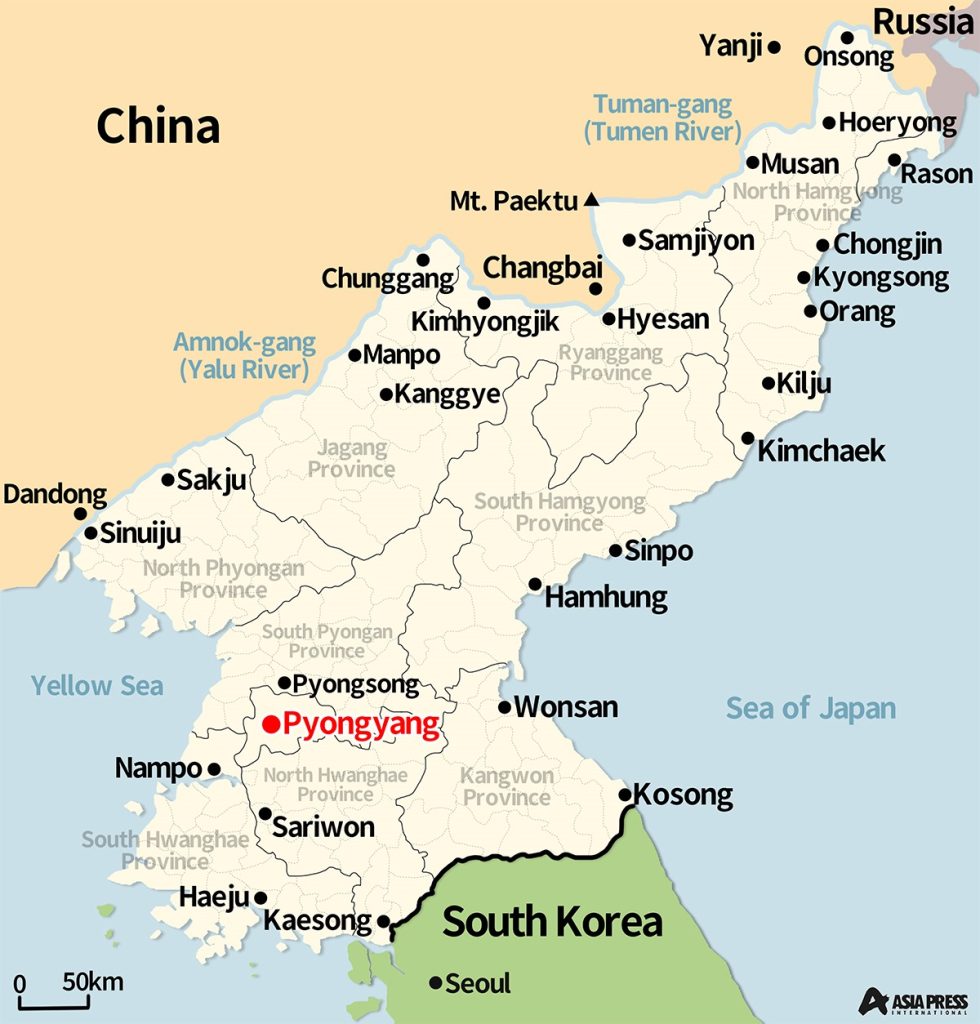
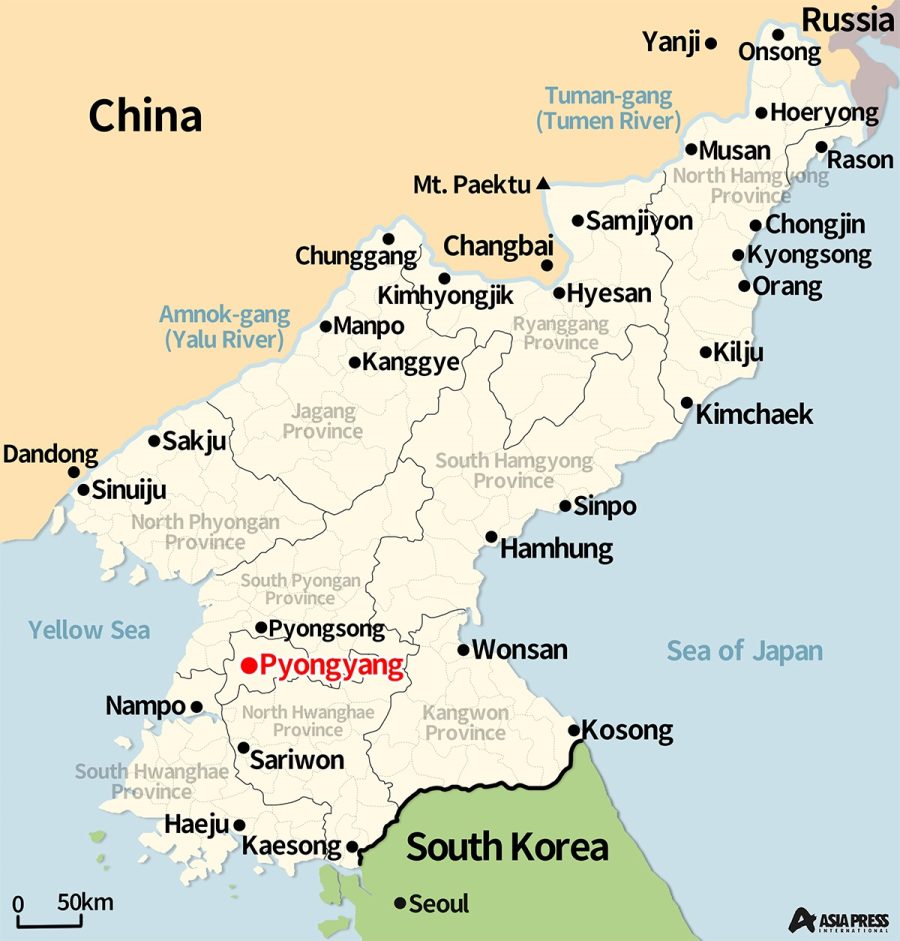
Map of North Korea (ASIAPRESS)
<North Korea Special>What is the Reality of Kim Jong-un's Agricultural Policy Reform? (1) "Collective" Disappears from Farms Major Revisions to Agricultural Regulations
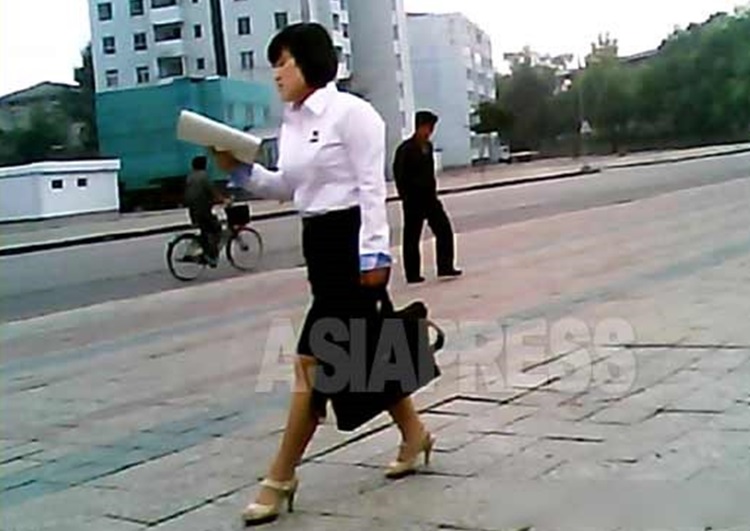
]]>asiapress<![CDATA[<Inside N. Korea>Four Struggling Female Students Expelled and Banished to Rural Areas for Prostitution: Young People's Violation of Order Met with Harsh Punishment]]>https://www.asiapress.org/rimjin-gang/?p=73152025-04-08T08:01:36Z2025-03-26T05:13:21Z(FILE PHOTO) Typical university student attire consists of a white shirt and black skirt with high heels. Photographed in Pyongsung, South Pyongan Province, September 2013. ASIAPRESS
Four impoverished female university students in North Korea were reportedly expelled and banished to rural areas after being caught engaging in prostitution. This information was relayed by a northern region partner who heard directly from university officials. The Kim Jong-un regime has been intensifying its crackdown on "non-socialist behavior," with particularly strict punishment for students and young people. (HONG Mari / KANG Ji-won)
◆Economic Hardship Increases Prostitution After COVID
According to the reporting partner in the northern part of the country: "Four female students at Chongjin University of Mining and Metallurgy were caught engaging in organized prostitution, expelled from school, and forcibly assigned to rural areas. Economic hardship was reportedly the reason."
Since the COVID pandemic, the Kim Jong-un regime's severe restrictions on personal economic activities have dramatically reduced cash income for urban residents. The increase in prostitution among struggling women has become a social problem, with even underage female students routinely selling their bodies or engaging in "compensated dating."
This case likely stems from such economic difficulties. According to reporting collaborators living in North Korea, there are "agents" who connect struggling housewives and students with male clients.
◆Rural Banishment Ruins Lives
Chongjin University of Mining and Metallurgy is a government-operated university in North Hamgyong Province. Its students typically have good academic records and come from relatively financially stable families.
The fact that the four students were not only expelled but also forcibly assigned to rural areas represents an extremely harsh punishment that effectively ruins their future lives. In North Korea, once urban residents are demoted to farmer status, most never return to cities and are forced to work as farm laborers, considered the "bottom" of North Korean society.
]]>asiapress<![CDATA[<Inside N. Korea>Hunger Crisis: As 'Starving Spring' Approaches, Kim Jong-un's Regime Begins Surveying ' Households in Food Crisis'…UN Agency Reports: "45.5% of Population, 11.8 Million People Suffering from Malnutrition"]]>https://www.asiapress.org/rimjin-gang/?p=73102025-04-07T06:03:07Z2025-03-24T06:23:15ZWomen meeting in a cornfield. They appear to be members of the Women's Union mobilized for harvesting in the vicinity. Unpaid labor further strains their livelihoods. Photographed from the Chinese side of Sakju County, North Pyongan Province in late September 2023. ASIAPRESS
North Korean authorities began surveying impoverished households in late February. The process involves neighborhood units listing "households in food crisis" (families with no food or money) and local administrative offices verifying their living conditions. With the seasonal food shortage period approaching, anxiety about hunger is spreading among residents, many of whom are relying on government assistance. (ISHIMARU Jiro / KANG Ji-won)
◆"How are you eating three meals a day?" - A surprising question
"The food situation for urban residents is truly dire right now. Many people are living on two meals or fewer per day, and households eating three meals are viewed with suspicion - people wonder 'how are they managing that?'"
This was the lament of Informant A, who lives in Hyesan, Ryanggang Province. Since early February, sources from North Pyongan and North Hamgyong provinces have also reported growing concerns among residents about securing food.
There are three main reasons for this anxiety: lack of sufficient income to survive, skyrocketing food prices since last autumn (according to ASIAPRESS research, white rice prices have increased 1.65 times and corn prices 1.38 times compared to the beginning of the year), and the imminent start of the "starving spring" - the seasonal food shortage period.
※ Neighborhood units are the smallest administrative organizations, typically consisting of 20-30 households with approximately 60-80 people.
※ The "barley hump" refers to the spring food shortage period. During the lean period until the potato harvest in June and corn harvest in August-September, stored food dwindles in rural areas while food prices rise in cities.
◆2023 Saw Starvation Deaths, Situation Improved Last Year with Government Support
The most significant blow to urban residents has been the sharp decline in cash income. Since around 2022, the Kim Jong-un regime has strictly regulated private economic activities like trading and has forced people to report to state-owned enterprises and other workplaces. While this policy shift revived the food distribution system, it only provided one-third to half of the necessary rations, leading to numerous deaths from hunger and disease among vulnerable populations in provincial cities from March through summer 2023. People simply had no money to buy food.
Perhaps learning from this chaos, last year Kim Jong-un's regime surveyed "households in food crisis" from early spring and implemented relief measures by distributing corn and other foods free of charge. Sources unanimously reported that "deaths from starvation decreased significantly."
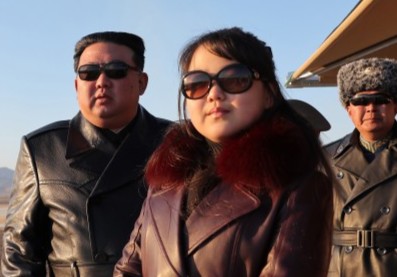
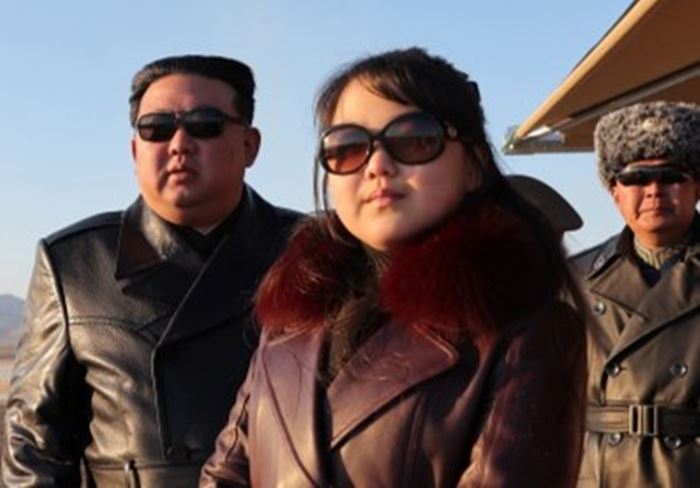
Kim Jong-un and his daughter visiting a military unit, wearing luxurious coats and sunglasses. There are voices of resentment among residents about this stark contrast between heaven and earth. Cited from Korean Central News Agency, December 1, 2023.
◆Survey Begins to Prevent Starvation Deaths
As the seasonal food shortage period approaches this year, surveys of "households in food crisis" have begun again. Informant A explains the current situation:
"In early February, the central government instructed local people's committees to take responsibility for caring for citizens. Consequently, neighborhood unit leaders are visiting homes to investigate living conditions and compile lists of 'non-working households,' elderly households, and honorary soldiers (disabled veterans), which are then submitted to local administrative offices."
This process of creating "aid recipient" lists is having ripple effects even among residents not initially targeted.
"Many people are approaching their neighborhood unit leaders, pleading, 'We're struggling too. Please add us to the list somehow.' In our neighborhood unit alone, seven households have made such requests. It's also common to see poor elderly people gathering in front of administrative offices, loudly demanding help because they have nothing to eat."
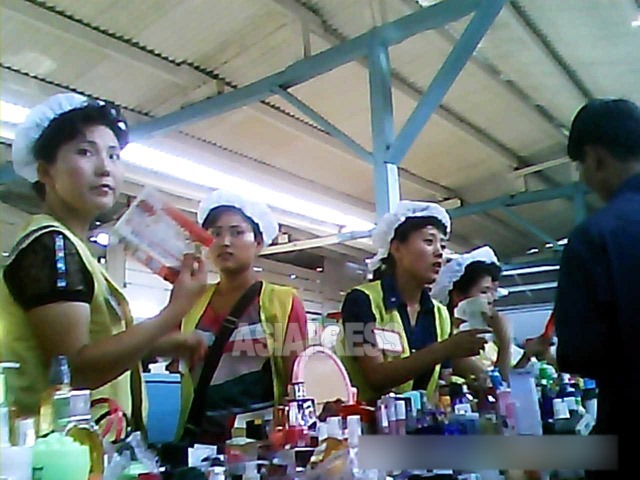
]]>asiapress<![CDATA[<Inside N. Korea>The Rapid Expansion of Online Banking: Tracking Citizens' Money? Kim Regime Accelerates E-Money Adoption]]>https://www.asiapress.org/rimjin-gang/?p=73032025-04-01T08:07:17Z2025-03-19T07:16:38Z(FILE PHOTOS) Card payments became possible at Hyesan Market. The photo shows a female merchant selling Chinese cosmetics, but such scenes are no longer visible as imports of Chinese goods are now severely restricted. (Photo taken in August 2013 by ASIAPRESS)
North Korea is experiencing growing use of online banking. Following the adoption of the "Electronic Payment Law" in October 2021, purchases using electronic currency increased from late 2023, and personal online money transfers have been expanding since last year. A reporting partner living in the northern region has shared details about the situation. (ISHIMARU Jiro / KANG Ji-won)
◆Regime Actively Promotes Electronic Currency
While it's called online banking, internet access in North Korea is completely blocked for everyone except special agencies and the ultra-privileged elite. What's being used is an intranet limited to domestic use. Nevertheless, online currency circulation is expanding rapidly.
Article 1 of the "Electronic Payment Law" states that its mission is to "contribute to reducing cash circulation, increasing non-cash circulation, and facilitating smooth currency flow." The aim appears to be promoting increased use of electronic currency—a global trend—while simultaneously monitoring the flow of funds among individuals, businesses, and organizations.
The Kim Jong-un regime began converting the payment of wages for civil servants and enterprise employees from cash to card deposits in late 2023. These are electronic payment-only cards similar to debit cards, which can be used for payments at state-owned stores, state-run grain stores, and markets. Since last year, online banking that enables transfers between institutions and individuals has been spreading.
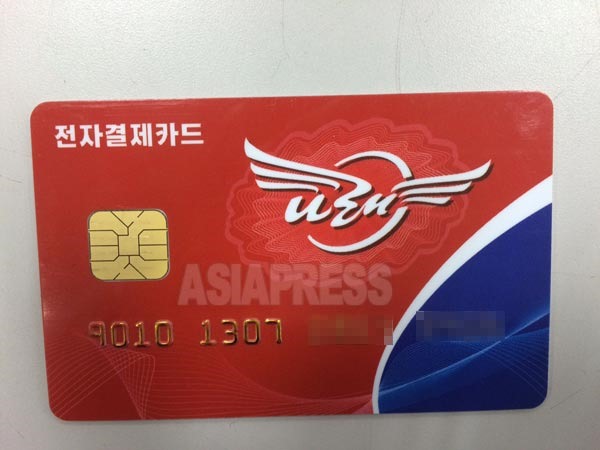
The "Narae" electronic payment card issued by the Korea Trade Bank. It was issued for foreigners in 2010, but is now available for North Korean residents as well. Provided by a Chinese traveler.
◆Transfer Fee: 0.7%
The reporting partner from Ryanggang Province explains the usage method as follows:
"Now most households have bank accounts and payment cards. It's convenient because individuals can transfer money without going to the bank, using 'information service centers' or computers. Many people are using it. However, approval from authorities is required when making transfers. The fee is 0.7% per transaction, and you can transfer up to 30 million won at once."
※ Information service centers are a type of "digital shop" that sells, repairs, and configures devices and software such as mobile phones and computers.
※As of mid-March 2025, 30 million North Korean won is approximately 1.94 million South Korean won.
]]>asiapress<![CDATA[<Inside N. Korea>The 'Last Stronghold' of Defection in Crisis: Security Bureau Receives Commendation for Crackdown Success - Smuggling and Defections Nearly Eradicated]]>https://www.asiapress.org/rimjin-gang/?p=72992025-03-26T05:09:05Z2025-03-11T02:55:48ZNorth Korean Checkpoint No. 10 across the Yalu River: This security post is managed by the Security Bureau (secret police). It blocks major access routes to the border and primarily inspects travelers' identification cards, travel permits, and mobile phones. Photographed from the Chinese side of the border from Sakju County, North Pyongan Province, September 2023 (ASIAPRESS)
The Security Bureau (secret police) in Hyesan, Ryanggang Province in northern North Korea, reportedly received a commendation late last year for its successful crackdown on the border area with China. Located along the upper reaches of the Yalu River, Hyesan City has been the largest and "last stronghold" for smuggling and defections along the 1,400km North Korea-China border. Kim Jong-un's regime continues its "sweeping operations" in the area. (ISHIMARU Jiro / KANG Ji-won)
◆ Hyesan: The Main Hub for Defections and Smuggling
Since its establishment in 2012, the Kim Jong-Un regime has struggled with the illegal movement of people, goods, money, and information. The regime has built wire fences along the entire North Korea-China border and strengthened surveillance and control of residents in border areas in an attempt to eradicate these activities. However, Hyesan had somehow managed to maintain both smuggling and defection operations.
Smuggling and border crossings have thrived in Hyesan for over 40 years. This is due to "favorable" conditions: the width of the Yalu River is only a few dozen meters at this point, and ethnic Koreans make up 16.7% of the 72,000 residents in Changbai County, Jilin Province, across the border. (Population statistics as of late 2023, according to the Changbai County government)
Hyesan City has become the primary target of crackdowns under the border closure policy implemented since the COVID-19 pandemic in 2020. The Security Bureau's commendation suggests these efforts have yielded results.
The width of the Yalu River between Hyesan and Changbai County is merely a few dozen meters wide. Photographed from the Chinese side of the border from Ryanggang Province's Hyesan, October 2024. (ASIAPRESS)
◆ Rigorous Crackdown on Chinese Mobile Phones
A reporting partner, A, who lives in Hyesan, relayed the following information directly from a security officer:
"The Hyesan Security Bureau, which had consistently ranked last each year, received a commendation from the central Security Department late last year. This was due to their successful management of residents through effective crackdowns on Chinese mobile phones, smuggling, and border crossings into China. Some security officers even received cash rewards."
The security authorities are particularly vigilant about smuggled Chinese mobile phones. In border areas within range of Chinese signals, these phones are virtually the only means of communicating with the outside world and are essential for smuggling, defection, and illegal money transfers.
They also serve as crucial channels for leaking internal information to the outside world. ASIAPRESS also maintains regular contact with North Korean reporting partners using Chinese mobile phones.
North Korean authorities constantly emit jamming signals to disrupt communications. Additionally, security officers patrol the streets and villages near the border carrying signal detectors.
"They are re-summoning and interrogating people who previously used Chinese mobile phones. They're also asking neighborhood units to report households spending money inconsistent with their income, offering rewards for information. Those reported are subjected to house searches," (Reporting Partner A)
*Neighborhood units are the lowest administrative organizations, typically consisting of 20-30 households, or about 60-80 people.
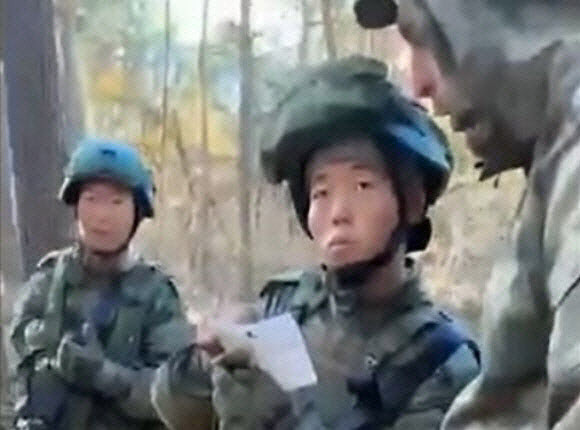
]]>asiapress<![CDATA[<Inside N. Korea>Russian Deployment Exposed, Draft Evasion Surges — Students Fleeing, Faking Medical Certificates]]>https://www.asiapress.org/rimjin-gang/?p=72942025-03-26T05:08:56Z2025-03-06T08:50:39ZCombatants believed to be a deployed North Korean soldier, photographed in Kursk Oblast in November 2024. Cited from Andrei Chaprien's Telegram.
As North Korea prepares for April military registration, a crisis is unfolding. High school senior boys traditionally enlist after graduation (unless continuing education), but news of deployments to Russia has sparked widespread draft evasion. Parents are hiding sons in other regions or bribing officials for fake medical exemptions, causing chaos in schools and military recruitment offices. (By ISHIMARU Jiro / KANG Ji-won)
◆Russian Deployment No Longer Secret
Though North Korean authorities haven't officially acknowledged sending troops to Russia, the information became public after South Korean and Ukrainian officials revealed it last October. Since then, numerous photos, videos, and personal items of North Korean soldiers on the battlefield have been reported. Footage of captured soldiers being interrogated and interviewed has also emerged. Meanwhile, information about the deployment of troops began to spread within North Korea, according to Asia Press's reporting partner.
"Everyone knows our military is being sent to Russia now, even if we don't know how many casualties there are," reported a source from Hyesan in late February. As previously reported by ASIAPRESS, concerned parents of enlisted sons have been key sources of information about these deployments.
"Mother doesn't know I was sent to Russia" - This is what a presumed 19-year-old soldier reportedly told interrogators after being captured by Ukrainian forces in early January.
◆Bribing for Fake Medical Certificates
As April registration approaches, graduating high school students and their parents are increasingly anxious, with blatant draft dodging forcing authorities to scramble. The source explains:
"Schools and Military Mobilization Departments are in emergency mode. Many parents want to delay enlistment by at least 1-2 years. Wealthy families are bribing major hospitals to issue diagnoses for infectious hepatitis or tuberculosis to submit to the Military Mobilization Department. I know a child nearby who was exempted this way. Children from poorer families have no choice but to hide."
◆Parents Severely Punished for Sons' Evasion
Many graduating students are fleeing their residences to avoid military service:
"Students are increasingly failing to appear for physical examinations or interviews. I heard seven students from a nearby school disappeared. Parents are not only dragged to the Military Mobilization Department and ordered to bring their sons back, but also face public criticism at work, expulsion from the Workers' Party, removal from positions, and other severe punishments. Road checkpoints have been strengthened to catch fleeing students, and special 'lodging inspections' are being conducted."
◆Authorities in Crisis Mode, Even Canceling Enlistment Events
On February 27, the Korean Central News Agency reported that 300 graduating high school students in Pyongyang had petitioned to be stationed at the frontline border. This annual event is designed to portray young people volunteering out of patriotism. Similar ceremonies were planned in Hyesan City in late February.
"Wiyeon High School had reported to the Ryanggang Provincial Youth League that they would hold a group petition ceremony with all graduates, but it was quietly canceled after many students fled. The government is struggling with recruitment and I heard they're adding a recruitment period in May to the usual April and July cycles."
The South Korean government estimates about 12,000 North Korean soldiers have been deployed to Russia, with 3,000 casualties including 300 deaths. If news of casualties continues to spread, draft evasion will likely increase further. It's only natural for parents to worry about their sons.
While military service terms in North Korea vary by branch, last year men served 8 years under the mandatory system and women served 5 years voluntarily. Reports suggest service terms may be extended this year due to the Ukraine deployment, but ASIAPRESS could not confirm this information.
※ ASIAPRESS communicates with its reporting partners through Chinese cell phones smuggled into North Korea.
]]>asiapress<![CDATA[<Inside N. Korea>"10x Wage Increase" One Year Later: What Happened? (2) "No One Says Life Has Improved" - "Forced Attendance Makes Us Feel Like Government Slaves"]]>https://www.asiapress.org/rimjin-gang/?p=72912025-03-19T07:23:44Z2025-03-04T06:13:54Z(FILE PHOTO) Video captured in March 2013 when individual economic activities were thriving. Transport workers gather at the train station looking for arriving and departing passengers. A man carrying a customer's luggage runs down the stairs. Filmed by Baek Hyang in Pyongsong, South Pyongan Province.
In late 2023, the North Korean regime dramatically increased wages for state enterprise workers, civil servants, and pensions for retirees by approximately 10 times compared to the beginning of that year. However, there are virtually no voices praising this dramatic wage increase. (By ISHIMARU Jiro / KANG Ji-won)
◆ Complaints About the Massive Wage Increase from the Beginning
The "massive wage increase" of up to 10 times faced complaints from the very start. Why?
According to reporting partners living inside North Korea, there are two common reasons: First, deductions from wages would certainly increase as well. Second, workplace pressure would intensify, making it difficult to engage in economic activities outside official employment. In other words, people anticipated that actual income wouldn't increase much while control would only tighten.
◆ A Wage System That Couldn't Even Buy 1kg of Rice
It's important to understand that pre-increase state wages were already at a level that had almost no practical meaning for daily life.
ASIAPRESS has been conducting weekly price surveys in northern regions for an extended period. In late 2022, one year before the "wage increase," the average monthly wage was 2,000-3,000 won, which could only buy about 1kg of corn noodles or 500g of white rice in the market. Additionally, rations provided to workers covered only their personal portions, typically for just 3-7 days. No rations were provided for family members.
This made survival impossible. People have been earning money outside their official workplaces through private business or individual employment. In urban areas, day laborers could earn around 10,000 won per day.
For 30 years, North Koreans have maintained their livelihoods by combining mandatory workplace labor with side jobs as their main source of income. The Kim Jong-un regime implemented this massive wage increase while strongly controlling and restricting these individual economic activities.
◆ Authorities Halted the Widely Complained-About Deductions
As many people predicted, the increased wages continued to be subject to various deductions: "party dues" for party members and "league fees" for those belonging to social organizations like the Youth League and Workplace League. Mandatory contributions for military and disaster relief also continued.
Perhaps alarmed by residents' disappointment, the authorities began taking action in February this year, according to Reporting Partner “A” in Ryanggang Province. Companies were strongly instructed to eliminate deductions, pay wages in full, and collect various required fees separately from workers.
"Monthly accounting inspections now strictly check whether factories and enterprises make deductions from wages. Wage payment status must also be reported to prosecutors, banks, and administrative agencies."
Even though eliminating deductions and collecting fees individually from workers wouldn't increase the "actual amount received," the authorities appear to be strongly demanding "full payment" as a first step.
◆ Increasingly Strict Workplace Constraints
Since around 2020, when the COVID pandemic began, the Kim Jong-un regime has strictly limited and controlled individual economic activities, partly due to the need for disease prevention.
Operating private restaurants from home was prohibited. Hiring people for small businesses such as food production (bread, rice cakes), clothing manufacturing, or transportation using handcarts became impossible. Markets, which had been spaces for free commerce, saw a dramatic reduction in items permitted for trade.
Adult men must report to their assigned workplaces, making it difficult to engage in business or wage labor outside their workplaces. Those who leave their workplace to pursue other income opportunities are punished as "workplace deserters" or "unemployed."
These strong regulations continued even after the "zero COVID" policy began to ease in 2023. Urban residents saw their cash income decrease, and in provincial cities, vulnerable populations began dying from malnutrition and disease. The Kim Jong-un regime's massive wage increase was implemented amid policies opposing markets and strengthening control over citizens.
◆ Life Has Not Improved Despite the Massive Wage Increase
A little over a year has passed since the massive wage increase. How do North Korean residents actually evaluate it now? Here are comments from two sources living in Ryanggang Province: "40,000-50,000 won is not a small amount and it's nice to receive it, but the problem is that you can't live on that alone. The wage is far from enough to buy necessary food. No one says life has improved (because of the massive wage increase)." (Reporting Partner “A,” mentioned earlier)
"It was much better when we could do business. Now we have to go to work as the government orders, like we've become slaves." (Reporting Partner “B”)
It's necessary to keep a close eye on the "side effects" of this massive wage increase implemented alongside tightened controls.
※ ASIAPRESS communicates with its reporting partners through Chinese cell phones smuggled into North Korea.
]]>asiapress<![CDATA[<Inside N. Korea> Are Cooperative Farms Being Nationalized? Local Confirmation of Name Changes - Potential Major Shift in Agricultural Land Ownership - Why Are "Farmers Unconcerned"?]]>https://www.asiapress.org/rimjin-gang/?p=72842025-03-19T07:23:36Z2025-02-25T03:23:53ZFarm workers resting at the edge of autumn fields. Based on the male worker's reserve forces uniform, they appear to have been mobilized for border security. Photographed from the Chinese side of the border from Sakju County, North Pyongan Province, September 2023 (ASIAPRESS)
Since summer 2022, North Korean state media has replaced the term "cooperative farm" with "farm." While researchers and media have made various speculations about the background, nothing was certain. Our reporting partners living in North Korea have confirmed on-site that the term "cooperative farm" is no longer used and reported the possibility of nationalization. What are the Kim Jong-Un regime's intentions? (By JEON Sung-jun / KANG Ji-won)
◆Have Cooperative Farms Been Nationalized?
In October 2024, ASIAPRESS reporting partner A investigated a farm in North Hamgyong Province and confirmed that "cooperative farm" had been changed to "farm."
"They've eliminated the concept of cooperative farms and now call them 'XX Farm' by attaching local names to each 'ri' (administrative district)."
However, A said that local farm workers, struggling with difficult lives, don't appear to attach much significance to the name change. The farm-level administration also provided no detailed explanation, though the correspondent added that these changes seem related to the nationalization of farm land.
◆Expanded Farm Management Discretion
In February this year, worker B from another farm in North Hamgyong Province also said they now use "farm" instead of the previous "cooperative farm." B explained that each farm has been given management discretion:
"The principle is that farms should conduct production activities independently to fulfill state plans. The policy now is that farms must secure their own farming materials, seeds, and oil." (Structural changes in farm operations will be reported in detail next time.)
What's behind these major changes? A hint can be found in Kim Jong-un's remarks at the 4th Plenary Meeting of the 8th Central Committee of the Workers' Party in December 2021.
In his report titled "Let's Open a Great New Era of Socialist Rural Development in Our Style," Kim emphasized rural issues as a strategic problem that must be solved for socialist and communist construction.
The content of Kim's report, which North Korea considers the agricultural program for a new era, can be interpreted as addressing the ownership rights of cooperative farm land.
]]>asiapress<![CDATA[<Inside N. Korea>This Year's 'Fertilizer Battle' - Fierce Competition for Human Waste Collection, Unusual Rewards like Money and Tourism, "Some Wait with Shovels Under Outhouses"]]>https://www.asiapress.org/rimjin-gang/?p=72802025-03-04T06:16:22Z2025-02-20T01:39:17Z(File photo) Women mobilized for fertilizer collection in freezing conditions. During the 'Fertilizer Battle' period, human waste reportedly disappears from all outhouses. Photo taken in mid-January 2015 in central North Korea by KIM Dong-chul (ASIAPRESS)
In North Korea's annual 'Fertilizer Battle' this new year, things are playing out differently. While collecting human waste has always been a major burden requiring full citizen mobilization, this year there's a new twist: rewards like money and tourist trips are being offered for meeting quotas. This has intensified the competition for human waste collection. (HONG Mari / KANG Ji-won)
◆People Waiting with Shovels Under Outhouses
In North Korea, where fertilizer shortages are chronic, the new year begins with the 'Fertilizer Battle' - collecting human waste for spring farming. Under quotas like 1 ton per worker, everyone from laborers to party officials is mobilized under the supervision of their workplaces, organizations, and institutions.
A reporting partner in Hyesan, Ryanggang Province, reported that the first evaluation of the 'Fertilizer Battle' took place on February 15th: "There was chaos after they announced workers would receive money and 'labor support supplies' for meeting quotas. At public outhouses, it’s even said that someone might literally be waiting underneath with shovels. When someone spots an outhouse, they rush to collect, so neighborhood units are posting lookouts to prevent others from taking waste from their district."
※ 'Labor support supplies' refers to items like cigarettes, alcohol, and cooking oil given to those in physically demanding jobs like mining.
While competition for human waste has always been fierce due to high quotas, the addition of rewards has made it even more intense.
State media simultaneously reported on January 14, 2023, that even staff from central government institutions in Pyongyang were mobilized for the 'Fertilizer Battle'.
◆Resolving Double Assignments
Another change this year is the systematization of quota assignments. Previously, many households faced double burden from both workplace, institute or neighborhood unit quotas - for example, a husband needing to collect 1 ton through his workplace while his wife had to collect 500kg through the neighborhood unit. This year, the system has been streamlined to eliminate such overlapping assignments.
Additional incentives are also being offered. The source reports that "depending on how well organizations meet their quotas - whether workplaces or the Women's Union - they're offering sightseeing trips and rest area visits."
※The Women's Union (officially the Korean Socialist Women's Union) primarily consists of housewives without formal workplace affiliations.
However, ASIAPRESS could not confirm whether these changes are being implemented in other regions.
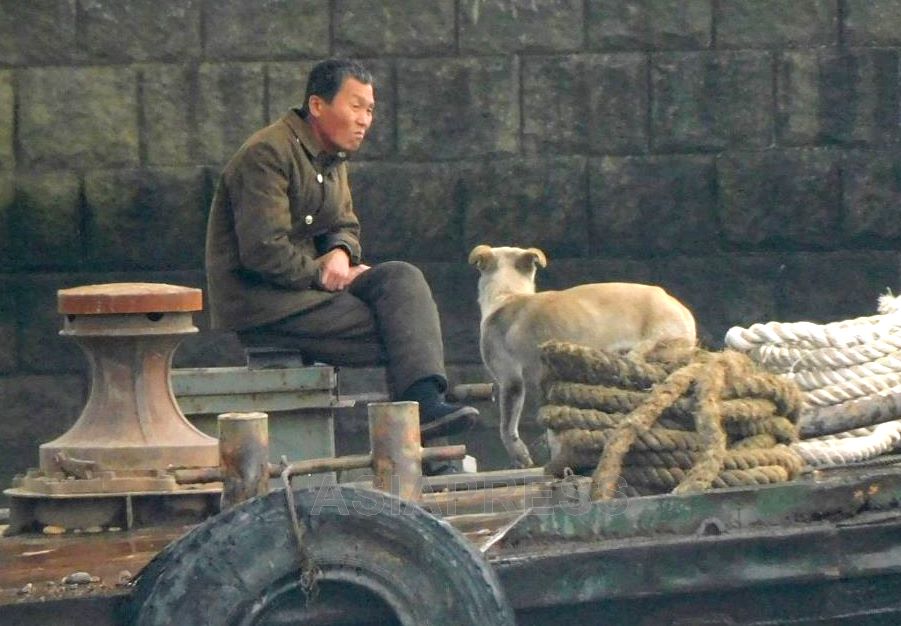
]]>asiapress<![CDATA[<Inside N. Korea>"10x Wage Increase" One Year Later: What Happened? (1) Expanding Card Payments - "Frequent Power Outages are the Problem"]]>https://www.asiapress.org/rimjin-gang/?p=72742025-03-06T08:51:18Z2025-02-18T08:04:24ZNorth Korean workers on a transport vessel on the Yalu River with a dog. Photographed from the Chinese side in October 2023. ASIAPRESS
At the end of 2023, the North Korean regime raised wages for state-owned enterprises and civil servants across the board. Compared to early that year, it was about a 10-fold increase - a dramatic wage hike. Additionally, food rations for 7-10 days were provided, but only for the workers themselves. While there were slight variations between companies and workplaces, this was clearly a "national wage increase policy" rather than decisions made by individual institutions or companies. Has this "wage" been properly paid since then? What was the Kim Jong-un regime's intention? ASIAPRESS report in two parts. (By ISHIMARU Jiro / KANG Ji-won)
◆ Even with 10-fold increase, only about 2 US dollars per month
In December 2023, ASIAPRESS investigated the "significant wage increase" situation at copper mines, iron mines, paper factories, shoe factories, and local government civil servants in North Hamgyong Province and Ryanggang Province. Here's an overview of monthly wages, which vary somewhat by company and position:
Civil servants: 35,000-50,000 won
Teachers: 38,000-50,000 won
General workers at state-owned enterprises: 35,000-50,000 won
"Retirement pensioners": 25,000 won
※ At the time of the survey, 1 US$ was worth about 8,100 Korean won. Currently, it's about 21,000 won.
According to subsequent investigations and reporting partners in various regions, the same "wage increase" was implemented outside North Hamgyong and Ryanggang Provinces, and these levels have been maintained as of February this year.
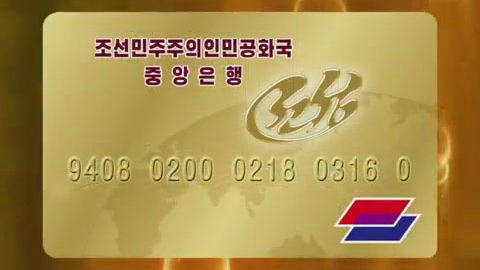
The 'Jeonseong Card' issued by the Central Bank of Korea. Image from North Korea's state-run website 'Korean Today', published in 2016
◆ Basic salary appears to be paid by the state
These wages seem to be basically paid by the state. Moreover, some companies have increased wages based on profits, creating disparities between enterprises. Since last year, some companies have also been paying additional wages of 3,000-5,000 won to workers who work overtime or achieve results - a kind of bonus concept.
"There are big differences in treatment between companies, so many people want to move from places with poor conditions to better ones," says a reporting partner from Ryanggang Province.
◆ Wages paid via payment cards
Most wage payments are made through payment cards, with cash payments gradually disappearing. Money is deposited into personal bank accounts or payment cards (similar to debit cards) issued by companies/institutions, which can be used at state-owned stores, markets, and "grain sales stores".
A reporting partner from Ryanggang Province says:
"Some stores don't accept cash payments, and cards are convenient, so there's less need for cash. You can even pay phone bills with them. The problem is frequent power outages. When stores' payment machines can't be used, you have to pay in cash. The government says they'll eventually make everything card payments and eliminate cash transactions, but we don't know when that will be possible."
In rural areas where the electricity supply is unstable, payment cards have not really spread yet.
◆ Directing people to "grain sales stores"
Around January 2023, the government banned food sales in markets. Rice and corn vendors completely disappeared from markets (sales of miscellaneous grains, powder, and noodles are allowed). Simultaneously, they have been gradually reviving state-owned food monopoly shops called "grain sales stores" since 2019. While the situation in Pyongyang is unclear, these have become the only places to buy food in provincial cities.
"The authorities' notice was to use the increased wages to buy food at state-owned 'grain sales stores' to supplement insufficient rations. They explained that depositing wages to cards was necessary because if paid in cash, people might trade food privately or money would flow to markets and not return to the state," says a reporting partner in Ryanggang Province.
In just one year, the digitalization of North Korean won has progressed rapidly, aiming to completely control money flow by the state and concentrate the distribution of goods, including food, in the state-owned distribution network by separating it from individuals.
The Kim Jong-un regime adopted the "Electronic Payment Law" in October 2021 to establish systems for spreading digital currency. Article 1, "Mission of the Electronic Payment Law," states:
"The Democratic People's Republic of Korea's Electronic Payment Law contributes to reducing cash circulation and increasing non-cash circulation while facilitating currency circulation by strictly establishing systems and order in electronic payment operations." (To be continued)
※ ASIAPRESS communicates with its reporting partners through Chinese cell phones smuggled into North Korea
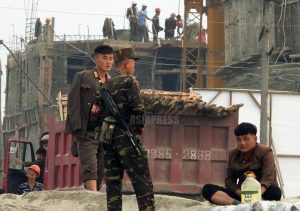
]]>asiapress<![CDATA[<Inside N. Korea> Daytime Masked Robberies on the Rise - Young Organized Crime Groups Emerge in Hoeryong as Authorities Struggle with Deteriorating Security]]>https://www.asiapress.org/rimjin-gang/?p=72692025-03-04T06:16:41Z2025-02-17T08:11:38ZA soldier inspecting travelers and blocking roads near the border. This appears to be 'Checkpoint No. 10' under the jurisdiction of the State Security Department. They primarily check identification cards, travel permits, and mobile phones. Photographed from the Chinese side of Sakju County, North Pyongan Province in September 2023. ASIAPRESS
Since January, the city of Hoeryong in North Hamgyong Province has seen a surge in daytime robberies by young perpetrators, prompting heightened alerts from authorities. Most crimes involve organized groups of 5-7 people with designated roles, making it difficult for the police to effectively control or apprehend suspects. The security deterioration stems from ongoing economic hardship that has persisted even after the pandemic subsided, according to our reporting partner in Hoeryong speaking in late January. (HONG Mari / KANG Ji-won)
♦ Brazen Organized Crime in Broad Daylight
A reporting partner said there were several incidents in Hoeryong during January:
"Around January 12, a private home in Mangyang-dong was robbed in broad daylight. Despite active police patrols, the thieves had lookouts posted and coordinated roles, managing to steal all household items including electronics. Security camera footage revealed a five-person organized group, including one woman. The perpetrators remain at large."
Another robbery occurred at a roadside shop on January 16: "A man and woman entered claiming they wanted to warm up, then threatened the shop owner with a knife and stole money and cigarettes. Despite being on a busy street, three lookouts prevented anyone from entering. The owner was gagged and bound, and the door was locked. The owner's daughter discovered the scene and reported it, but the criminals haven't been caught."
Why are these brazen daytime criminals evading capture? One key factor is the increasing organization of crime: "Young people are committing robberies while masked. Unlike the past when robberies were done by one or two individuals, they now operate in coordinated groups of 4-7 people, making arrests more challenging."
♦ Surveillance of Previous Offenders
"These days, we have at least one robbery, theft, or violent incident daily. We can't live with peace of mind," the reporting partner revealed.
Authorities are concerned about the deteriorating security. On January 18, the police and Youth League received orders to prevent even minor crimes. They are now intensively monitoring and investigating potential offenders based on criminal history and behavior patterns. The reporting partner describes recent enforcement efforts:
"Authorities are focusing investigations on young people with criminal records. They're also watching those who skip work without permission and try to make money with former soldiers through questionable means. Neighborhood unit leaders must report all movement of people in areas where these individuals live.
Going out at night is now itself considered suspicious. Those under intensive investigation get reported immediately. They're trying to prevent crimes through enhanced surveillance."
]]>asiapress<![CDATA[<Inside N. Korea> Kim Jong-un Harshly Condemns Official Entertainment as "Mega Crime" - Private Restaurant Rooms Shut Down in Hyesan, Citizens React with Skepticism]]>https://www.asiapress.org/rimjin-gang/?p=72652025-02-20T01:46:24Z2025-02-14T02:31:31ZKim Jong-un strongly criticized officials who received entertainment at the Party Central Committee Secretariat as " a corrupt group and impudent rabble" - quoted from Korean Central News Agency, January 29, 2025
Kim Jong-un has issued an unusually strong criticism of corruption among Workers' Party officials. At a late January Party Central Committee Secretariat meeting, he severely reprimanded officials for accepting drinking entertainment, calling it a "serious criminal case." In Hyesan, Ryanggang Province, this immediately triggered investigations into restaurants used for entertaining officials, causing local upheaval. While this appears to be part of Kim's ongoing "fight against corruption," citizens' reactions remain cold. (HONG Mari / KANG Ji-won)
◆What's Behind This "Mega Case"?
At the expanded Secretariat meeting on January 27, Kim stated:
"Serious cases that gravely infringing upon the dignity, rights and interests of the people have occurred"
According to the Korean Central News Agency, a "mega case" occurred in Oncheon County, Nampo, where over 40 party officials received drinking entertainment. In Usi County, Jagang Province, there was reportedly a "mega crime" violating local residents' property.
It's nothing extraordinary - simply cases of officials receiving bribes and drinking entertainment from citizens.
In North Korea, taking bribes for favors is commonplace. Whether it's turning a blind eye to violations, allowing people to skip organizational activities to do business, or even facilitating defection - bribes make things happen. Against this backdrop, the strong language seems greatly exaggerated.
◆Private Rooms for Officials Demolished
However, local cities are already in turmoil. Kim's statements have triggered crackdowns on "entertainment incidents." A reporting partner in Hyesan, Ryanggang Province, said:
"Restaurants are in chaos with investigators from the city party organization department looking into official entertainment. Some restaurants had secret private rooms called 'golbang' - they're interrogating staff and shutting these rooms down."
What are these 'golbang'? The reporting partner explained:
"Better restaurants have them tucked away in corners, where people with favors to ask entertain officials. Dinner starts around 100 yuan (approximately $20). There are even back doors to these rooms for discretion. They're so popular you need reservations."
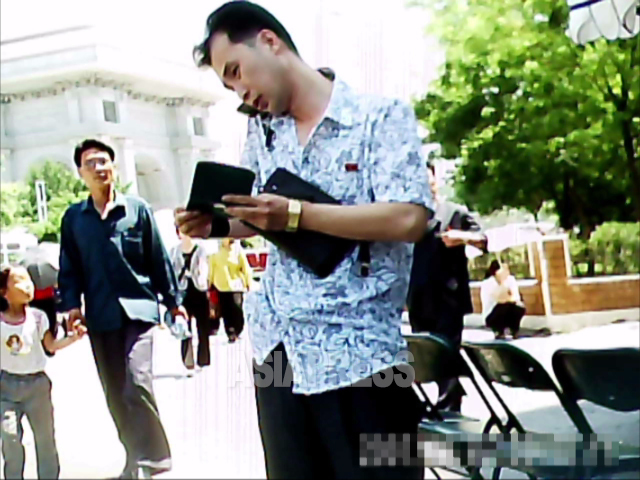
]]>asiapress<![CDATA[<Inside N. Korea> Surveillance and Control of Mobile Phones Intensifies: Information Extracted During Repairs, Daily Photography Monitored]]>https://www.asiapress.org/rimjin-gang/?p=72612025-02-18T08:08:30Z2025-02-12T08:07:19ZA man using a mobile phone while flipping through a notebook. Mobile phone usage has been spreading in North Korea since around 2011. Photo taken by Gu Gwang-ho in Moranbong District, Pyongyang, June 2011
North Korean authorities are intensifying surveillance and control over personal mobile phone usage. People are reportedly being investigated merely for taking photos and videos in public, while others face punishment after authorities extract information from devices left for repair. The goal appears to be monitoring whether residents are using mobile phones for unauthorized information exchange, photography, or storing and watching foreign videos. (By KANG Ji-won / HONG Mari)
◆Information Extracted Leading to Arrests
In North Korea, "Information Technology Exchange Centers" exist not only in Pyongyang but in cities nationwide. These are essentially "mobile-related shops" established under local people's committees, enterprises, and universities. Besides selling and repairing mobile phones, they offer various apps for purchase and installation. They also handle computer sales and repairs, as well as domestically produced video DVDs.
In late January, a reporting partner from Ryanggang Province shared how simply leaving a phone at these "Exchange Centers" can lead to trouble:
"A neighborhood resident was arrested after leaving their phone at the 'Exchange Center'. They had been watching Chinese movies (which are illegal) privately on their phone. Their family is convinced the 'Center' was responsible for their arrest."
This suggests the Exchange Centers are extracting information from devices left for repair and reporting it to authorities. According to our partner, this isn't an isolated incident:
"Residents now prefer paying private repairers instead of using the Exchange Centers. However, authorities seem to be pressuring even these private repairers to report any suspicious information found on phones left for repair."
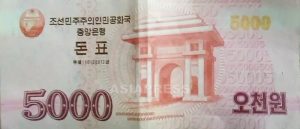
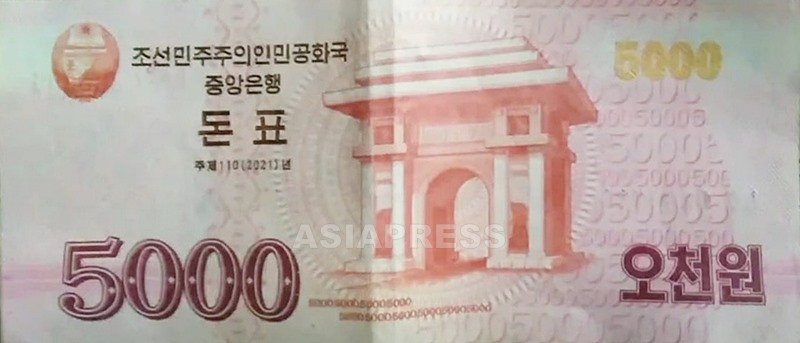
]]>asiapress<![CDATA[<Inside N. Korea>DPRK Issues Mass "Money Vouchers" to Combat Soaring Prices - Value Quickly Plummets as Public Trust Erodes]]>https://www.asiapress.org/rimjin-gang/?p=72582025-02-18T08:08:19Z2025-02-07T06:19:43ZA "don-pyo" temporary money voucher issued in 2021. Photo provided by a North Korean defector. (ASIAPRESS)
The North Korean government issued a new batch of temporary financial vouchers called "donpyo" (money vouchers) around November 2024. However, these vouchers are reportedly trading at about 65% of their face value in markets and private transactions, reflecting deep-rooted public distrust in the authorities' monetary policies. (By KANG Ji-won / ISHIMARU Jiro)
◆ Emergency Measure Born from Financial Crisis 3.5 Years Ago
Donpyo are temporary financial vouchers, essentially coupons, issued by the Central Bank of North Korea. The first 5,000-won vouchers, matching the highest denomination of regular banknotes, were issued in August-September 2021.
These vouchers were introduced as a rescue measure when government institutions and businesses became unable to pay employee wages and settle payments due to severe economic downturn during the COVID-19 pandemic. The Kim Jong-un regime's strict border closure also prevented the import of paper and ink needed for printing regular banknotes from China, likely due to foreign currency shortages.
While the government announced that donpyo could be exchanged for regular currency of the same denomination in the future, public skepticism led to widespread rejection from the start, with shops and markets either refusing to accept them or trading them at a discount. They also gained a poor reputation for their low paper quality and quick deterioration.
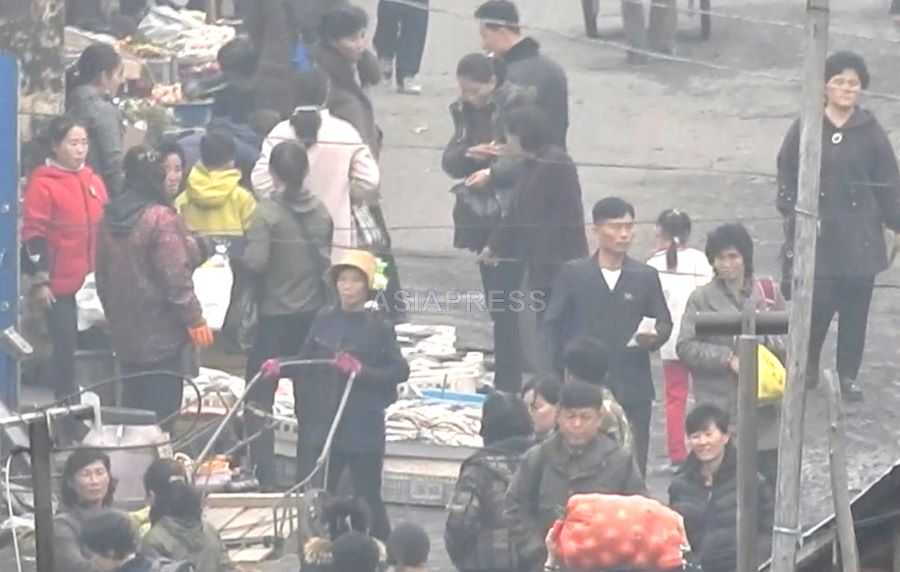
(Recent photo) Street vendors trading behind a public market. Photographed from the Chinese side of Hyesan City, Ryanggang Province, October 2024. (ASIAPRESS)
◆ Hyperinflation: Rice Prices Up 1.65x, Gasoline 2.15x
"New donpyo were issued in November-December (last year), with notice that old vouchers could be exchanged for cash or new vouchers. This was meant to address price increases,” said reporting partner A in Ryanggang Province. Since August last year, prices of food, fuel, Chinese yuan, and US dollars have surged. By December, market prices had risen dramatically compared to the start of the year: rice by 1.65 times, gasoline by 2.15 times, and the US dollar by 3.3 times – indicating hyperinflation.
One trigger was the spread of rumors about an impending "currency excahnge" that would invalidate old banknotes. Many people, anticipating a devaluation of the North Korean won, rushed to acquire Chinese yuan and US dollars while stockpiling goods.
]]>asiapress<![CDATA[<Inside N. Korea> Mockery and Jeers about Kim Jong-un's Daughter 'Ju-ae' Become Trending: "Some People Can Even Inherit a Country..." Seems to Reflect Dissatisfaction with Overwhelming Disparity]]>https://www.asiapress.org/rimjin-gang/?p=72532025-02-14T02:33:49Z2025-01-29T04:37:39Z1. Kim Jong-un and his daughter visit the 1st Air Force Division of the Korean People's Army in a flashy coat and sunglasses. Introduced as "with beloved daughter." Korean Central News Agency, December 1, 2023.
Kim Jong-un's daughter, whom South Korean authorities speculate is named 'Ju-ae', continues to appear in state media wearing luxurious attire. It has been reported that among North Korean middle and high school students, expressions mocking the daughter have become popular as they recognize the extreme disparity between their lives and hers. (By KANG Ji-won / HONG Mari)
◆ Leather Coat and Sheer Fabric... Appears in Luxurious Attire
Kim Jong-un's daughter first appeared in public in November 2022, wearing red shoes while holding her father's hand at a missile launch site. Since then, images of the young girl participating in official events have occasionally been reported in state media. She has been introduced with honorific titles such as "respected beloved child." Recently, on January 1, several photos were released showing her attending a New Year's celebration performance in Pyongyang, holding hands tightly with Kim Jong-un.
The South Korean government estimates that this daughter was born in 2013. She appears with a round face, sophisticated adult-like hairstyle that is always neatly styled, and luxurious clothing including leather coats and sheer fabric materials.
While the regime's method of exposure is clearly meant to put the daughter in the spotlight, it seems to be having unintended consequences in North Korean society. Among ordinary children, expressions of lamentation, mockery, and jeers about the enormous gap between their lives and Kim Jong-un's daughter's life have become popular.
◆ "Some People Can Inherit a Country Just Because They Have Good Parents"
Reporting partner A, who lives in the northern region of North Korea, shares: "The phrase 'Some people can inherit even a country because they have good parents' has spread like a trend among children, referring to the daughter. When schools ask for various monetary contributions, parents can hardly afford it due to difficult living conditions. That's when they say this. As broadcasts frequently show someone eating well, dressing well, and receiving abundant parental love, children disparage their own circumstances and resent their parents, but even getting caught saying these things could cause problems for their parents."
*Note: While education is supposed to be free in North Korea, in reality, parents must bear a significant portion of educational costs and school expenses.
A continues: "Before the daughter appeared, when peers or friends asked for favors, the joke 'Are you the General?' spread like a catchphrase, but now that the daughter appears, jokes mocking her like 'Do you need something? Just say the word' have become common.
Adults limit themselves to saying things like 'She's lucky to be born to good parents,' but since children are immature, these expressions seem to have spread because they envy the daughter who can have everything she wants."
]]>asiapress<![CDATA[<Inside N.Korea> News of North Korean Soldier Deaths in Russia Finally Reaches Home - Parents Scramble While Some Youth Volunteer: What's Behind This?]]>https://www.asiapress.org/rimjin-gang/?p=72482025-02-14T02:33:43Z2025-01-24T02:10:37Z"Mother doesn't know I was sent to Russia" - This is what a presumed 19-year-old soldier reportedly told interrogators after being captured by Ukrainian forces in early January.
Reports indicate that numerous North Korean soldiers deployed to Russia have been killed in action. Ukrainian and South Korean authorities estimate the death toll at 3,000-4,000. Information about these casualties is now spreading within North Korea. While the Kim Jong-un regime has not officially acknowledged the deployment and strictly controls related information, news of the deaths appears to be spreading through informal channels. (By KANG Ji-won / ISHIMARU Jiro)
◆How is information about casualties reaching North Korea?
"Word is spreading that many of our soldiers are dying in Russia. The information came from 'the front' (southern region) - perhaps through South Korean broadcasts," reported a reporting partner in northern North Korea, on January 19.
How exactly is this information entering the country?
On January 16, South Korean military authorities used large loudspeakers near the military boundary to broadcast that two North Korean soldiers had been captured by Ukrainian forces, that there were casualties, and that suicide notes had been found among soldiers' belongings. Additionally, many people in the southern regions close to South Korea secretly watch South Korean TV and radio broadcasts. This suggests the casualty information may have spread northward from the south.
There's also the possibility that North Korean defectors in South Korea and Japan have spread this information to family and acquaintances in the Chinese border region using illegal Chinese mobile phones. The spread of information likely involves a combination of these channels.
◆Parents Try to Avoid Military Service
North Korea's spring military recruitment process is about to begin in earnest. As preliminary physical examinations, background checks, and placement preferences get underway, the reporting partner said that parents of draft-age sons are increasingly anxious:
"Parents are panicking now that they know not only about deployments to Russia but also about the casualties. One acquaintance sold their house to raise money (bribes) for a university recommendation to keep their son out of the military. Many families have only one son, so they're worried about losing them. Many parents are trying to get their sons into the navy, air force, or security bureau (police) where they're less likely to be sent to Russia."
※ In North Korea, men typically enter military service at age 17 after high school graduation. University or technical school enrollment delays conscription.
"A friend who has a son in the 'Storm Corps' inquired about him and confirmed he's still stationed domestically, not in Russia. According to what they heard, soldiers from Hoeryong, Musan, and Hyesan near the Chinese border aren't being sent to Russia. They're not trusted because they might desert (since these areas have many defectors, and soldiers might have family or acquaintances who have defected)."
※The 'Storm Corps' is considered an elite North Korean military unit, and South Korean authorities believe it forms the core of forces deployed to Russia.
Surprisingly, some young people who've learned about the Russian deployments are actually volunteering to go.
"Some reckless young people are volunteering for service, saying they want to experience a foreign country or participate in actual combat. Applications are usually processed through schools, but what will happen? Students from border regions probably won't be allowed to go," the reporting partner said.