The primary reason for this move is the regime’s desperate need for foreign currency. North Korea is suffering from a severe shortage of hard currency. Trade deficits with China are widening, and exchange rates are volatile. Wealthy individuals, fearing uncertainty, have been hoarding dollars and yuan, keeping their money out of circulation.
The regime has dangled the carrot of car ownership. By stimulating the desires of the wealthy and moneyed class, it aims to draw out their hidden foreign currency into state coffers.
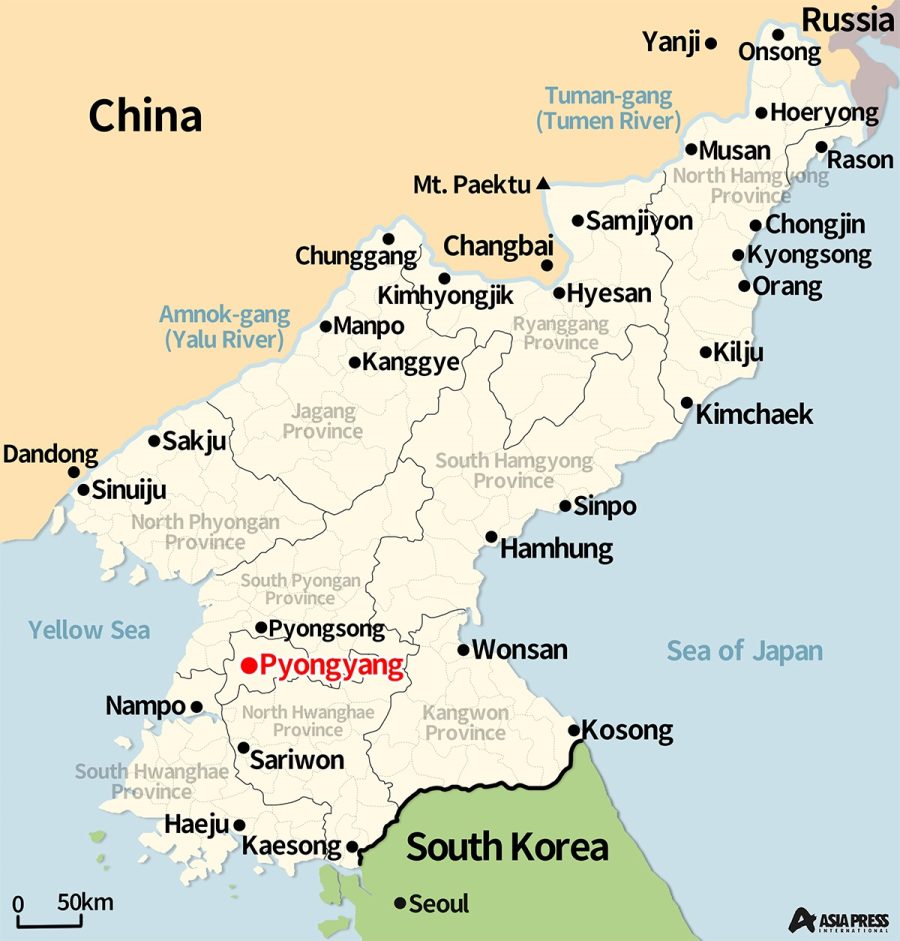
What is the local reaction to this policy? A reporting partner in Hyesan, Ryanggang Province, said:
“Driving and riding in cars has become popular among the rich. I considered buying one with others, but it’s too expensive, and registration and storage costs are high. I heard that in Pyongyang, Hamhung, and Chongjin, there’s a trend of people pooling money to buy cars.”
As private car purchases increase, the state can secure a steady revenue stream not only from sales margins but also from registration fees, license plate issuance, and operating permits. Essentially, this policy is a revenue model designed to absorb private foreign currency holdings.
■ Placating the “Moneyed Class” and Strengthening Regime Loyalty
This move also serves as a political olive branch. In recent years, the Kim regime has cracked down on the “moneyed class,” labeling their wealth as “non-socialist” and confiscating assets. This has bred deep resentment among the wealthy.
However, those who survived the crackdowns have learned to align their wealth with state power, creating a symbiotic relationship. In this context, allowing private car ownership is both a “carrot” to appease the wealthy and a strategy to integrate them into the system.
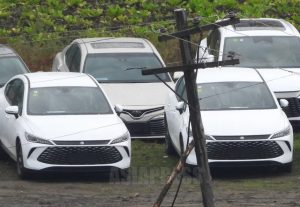
In summary, the current wave of large-scale vehicle smuggling along the North Korea-China border is the result of China’s tacit approval, North Korea’s acute vehicle shortage, and the regime’s policy shift to allow private car ownership in order to shore up state finances.
The state needs money, and the wealthy want their own cars. This alignment of interests has led to an increase in Chinese-made vehicles with yellow license plates—symbolizing private ownership—on North Korean roads.
(to be continued in next installment)
![[Video Report] No merchandise for sale at North Korea's flagship department store](https://www.asiapress.org/rimjin-gang/wp-content/uploads/2019/02/1515-150x150.jpg)