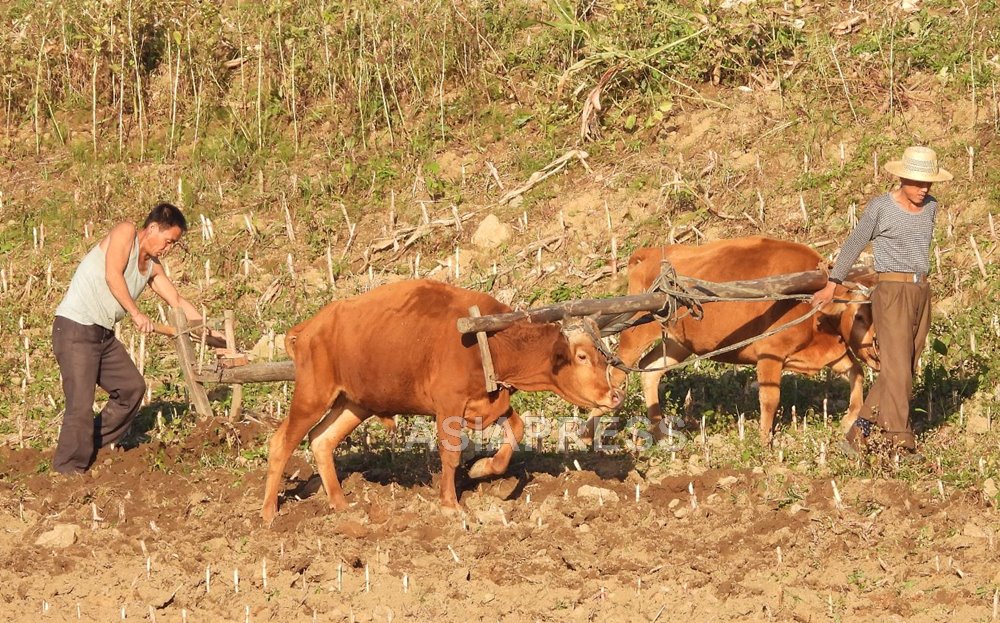
The endpoint of the Kim Jong-un regime's agricultural reforms aims beyond mere "increased production." The regime's determination to completely cut off the flow of food that once made its way to the jangmadang (markets) and to control every stage from production to sales became abundantly clear during last fall's distribution process. This investigation reveals the reality of the 'state food monopoly system' taking shape through the permanent stationing of legal inspection teams in rural areas and strict controls on the movement of food. (JEON Sung-jun / KANG Ji-Won)
◆Breaking free from 'jangmadang dependence': Diversification of planning and the new grain management system
In the 1990s, as North Korea's distribution system collapsed, the jangmadang became people’s main source of food. The supply came from surplus grain produced by farms beyond their quota requirements and imported grain from overseas. Food supplied to the military or public sector also illegally found its way to the jangmadang.
However, starting about three years ago, a state-led grain management system was rebuilt, prohibiting food distribution in the jangmadang. Now food can only be traded through state-run 'grain sales offices'.
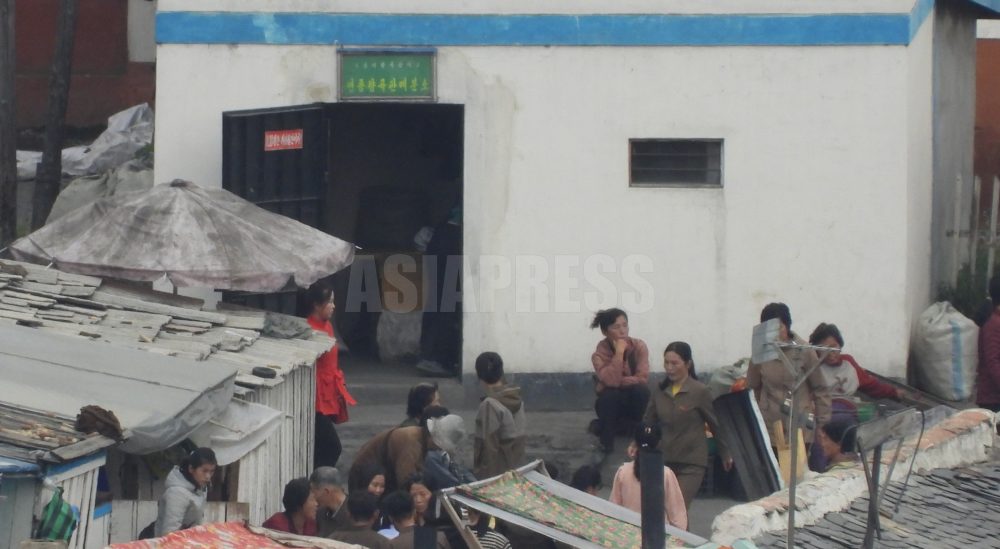
The new agricultural reform policy serves as a crucial link completing the state monopoly grain management system, bringing changes to how grain is secured and supplied.
North Korea's past grain management policy involved the state collecting grain produced in rural areas under the pretext of planning and distributing it to all of the country’s citizens. This approach, with the state overseeing and controlling both procurement and supply, generated significant costs in terms of operation and management and became a source of inefficiency.
The new agricultural reform policy has improved efficiency by dividing the former state plan into a 'state mandatory procurement plan' to secure food for essential public personnel such as the military and police, and a 'contract procurement plan' where farms directly contract with nearby factories and enterprises to supply food under state mediation.
Reporting Partner B explained the current distribution structure as follows:
"In short, if 10 tons of food are produced, 3 tons go to the state (state mandatory procurement), 4 tons go to surrounding factories and enterprises (contract procurement), and 3 tons are used for farm operations."
※ Contract procurement is determined at the farm's discretion, taking into account distribution amounts for farm workers, provided that the state mandatory procurement plan has been fulfilled. The state mediates procurement contracts between farms and nearby factories and enterprises based on the procurement amounts farms submit. While North Korean laws such as the Farm Law stipulate that farms set grain prices for these contracts, reports from rural areas last fall (2025) suggested that in practice, contract prices are actually set by the state (the Grain Bureau).
◆Criticism that 'the state is making money'
What do farmers think of the new system?
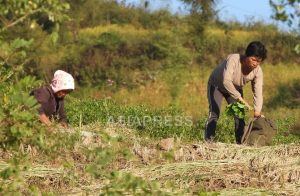
Local farm workers generally agree it's more efficient than before.
"Enterprises take only the amount designated by the Grain Bureau, which is good because it can go directly to enterprise workers without any losses along the way."
Reporting Partner B continued, noting that while efficiency is good, there are negative aspects such as enterprises bearing transportation costs, resulting in about 10% losses in quantity. This points out that transportation costs, once borne by the state, have effectively been transferred to enterprises.
Reporting Partner B particularly criticized the structure where the state monopolizes food sales through grain sales offices, calling it "a structure where the state makes money."
In other words, under the past distribution system, the state supplied grain produced in rural areas to urban workers at nearly free prices, but the current system raises concerns that the state exploits farmers by selling grain at prices higher than procurement prices, pocketing the margin.
◆'Legal Department' inspection teams stationed in rural areas for thorough grain management
North Korean authorities appear to be strengthening controls to ensure the new grain management system takes root after establishing it.
As mentioned in the previous installment, authorities established a policy to pay farmers' incentives for additional production in cash rather than in kind.
Reporting Partner B explained the reasoning:
"The reason for paying additional production in cash is to prevent it from being distributed through individuals again if given in kind. It's about the state completely controlling food."
Controls on food distribution between individual farmers are also being strengthened. Reporting Partner A reported the farm's strict atmosphere:
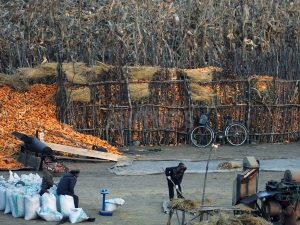
"Starting in October, an inspection team was dispatched to oversee harvest assessments and overall grain production and conducted intensive management of production volumes together with the Grain Bureau. The movement of 15kg or more of food in rural areas is confiscated regardless of reason, with confiscated food entered into Grain Bureau warehouses. I heard that the farm worker I met knew of people who had their food confiscated."
Reporting Partner B also mentioned the food crackdown situation in rural areas:
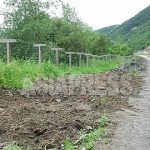
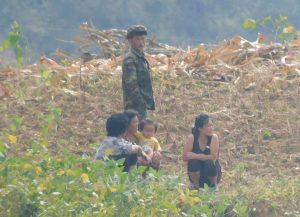
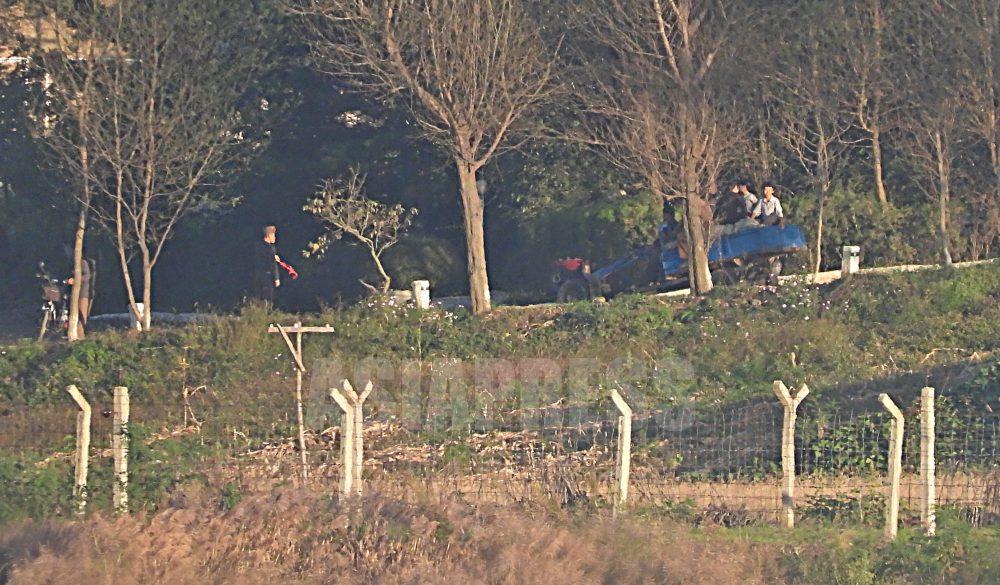
"Even now (late December), guard posts set up at every rural entrance in the fall are still there, conducting food inspections of people coming and going. While some farmers want to sell rice to make money, they can't because of strict controls on transactions between individuals."
Based on reports from ASIAPRESS’s reporting partners, the state's grip on food appears to be at its highest level since the great famine of the 1990s. While ASIAPRESS is limited to information from northern regions of North Korea, that area’s grain management system structure likely reflects the situation nationwide.
◆Urbanites flocking to 'grain sales offices'
As the state food monopoly system takes root, North Koreans appear to be increasingly placing their trust in the state food monopoly system.
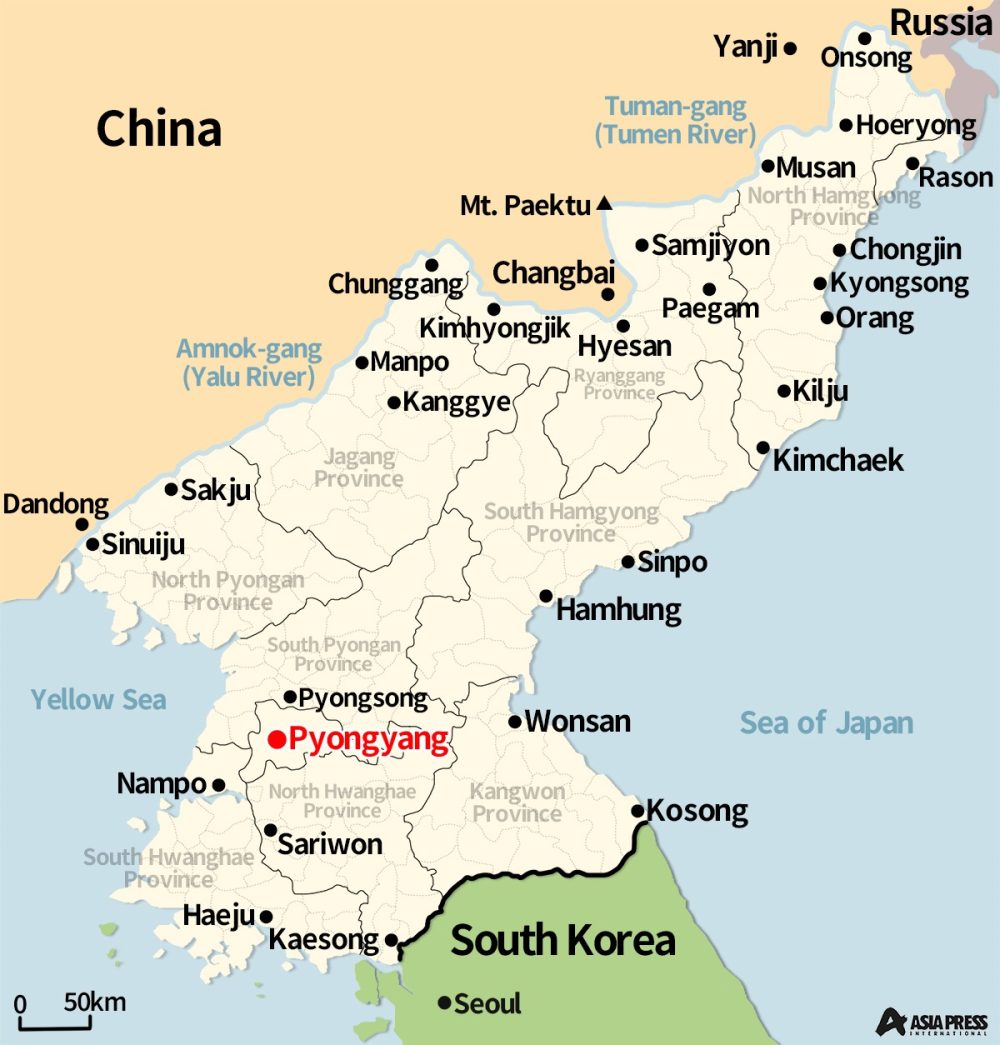
An ASIAPRESS reporting partner in Ryanggang Province reported the following in November:
"As supply has stabilized, the tendency to stockpile food like before is decreasing. With regular food supplies through grain sales offices, rather than worrying about food, there's a growing awareness that they need to use enterprise wages to buy state food. It's hard to find unemployed people now."
Meanwhile, with the knowledge that a stable food supply is important, the government is taking farms' 'reserve grain' in advance to supply urban grain sales offices, tying people to the state supply network.
Farmers in North Korean rural areas suffer from chronic food shortages. According to the reporting partner, 'households without food' emerge every spring farming season when food runs out, leading to decreased labor and productivity. To prevent this, farms have set aside 2-3 months' worth of food as 'reserve grain' during fall distribution to distribute in the spring.
Here's what Reporting Partner A reported:
"I heard the procurement grain collected from farms went to city grain sales offices through commercial management offices. Moreover, reserve grain held by farms is taken to first supply urban grain sales offices, with the state providing food to farmers when they really need it. Farm workers don't seem to have major objections to this."
◆Kim Jong-un's real goal: 'rule through calories'
What the Kim Jong-un regime seeks through agricultural policy reform is not simply increased food production. Its ultimate purpose is to tightly control the population by monopolizing the production, distribution and sale of food.
The Kim Jong-un regime's ambitions in this regard appear to be having an effect. However, how well the grain sales offices operate will be the yardstick for future analysis and judgment on the system. (End of series)
※ ASIAPRESS communicates with its reporting partners through Chinese cell phones smuggled into North Korea.
How Was North Korea's New 2025 Agricultural Policy? (1) Good Harvests at North Hamgyong Province Farms, Increased Distribution Brings Relief to Farmers (4 photos) - <Interview with a North Korean Woman>"It's Annoying and Unbearable" Surveillance and Control Intensified Through Inminban... Registration Required Even for Going Out and Returning Home
- <Super-telephoto Report>Border Guards Look Healthier with Improved Uniforms "Since the Chinese are watching us, selecting robust soldiers, issuing special uniforms" Residents also ordered not to appear shabby Hyesan (6 photos)
- N. K Expands Chinese-Made Surveillance Cameras with Facial Recognition System: Workers' Face Photos Continuously Taken- "Now They Track Everywhere We Go" (5 photos)
- <Super-telephoto Lens Report>One Year After Floods, What Does the Site Look Like Now? (3)Massive Embankment Like a Castle Wall; Mobilized Soldiers' Lunch is Enormous Amounts of Corn Rice (10 Photos)