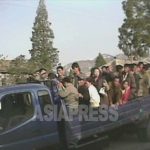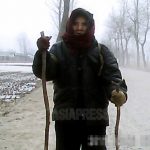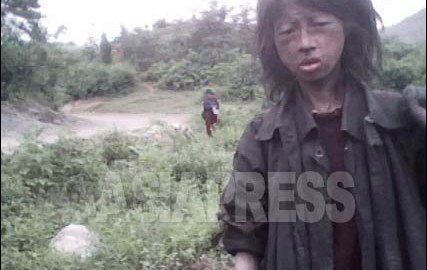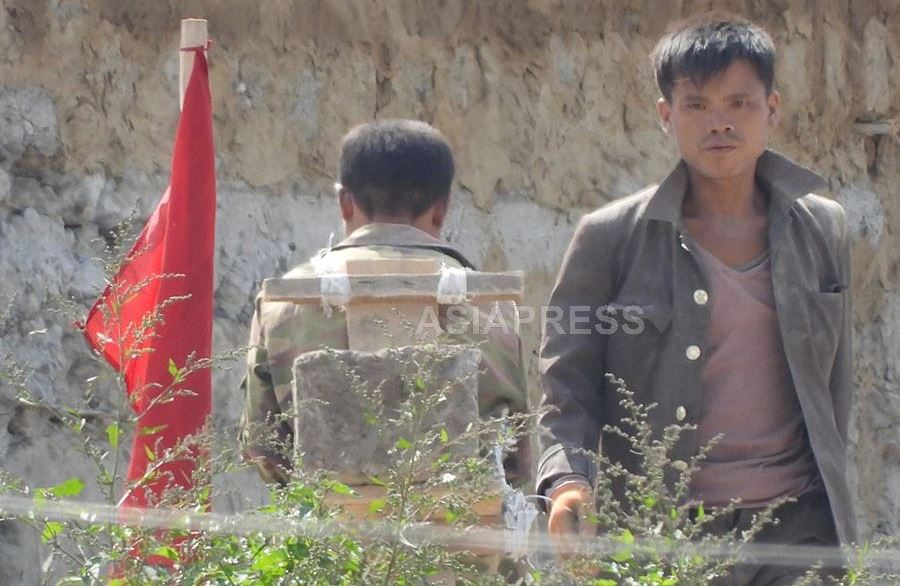
In North Korea, all adults — with the exception of housewives, the elderly, and those with illness — are in principle required to report to whichever workplace the authorities have assigned them. Anyone absent without a legitimate reason such as illness is classified as "unemployed" or a "workplace deserter" and becomes subject to punishment. Enforcement has until now been handled by the Bowiwon (secret police) — but according to recent reports, jurisdiction has shifted to the People's Committee (local government). What is behind this change? A reporting partner living in North Hamgyong Province shared details in early March on the new system for managing workplace attendance. (HONG Mari / KANG Ji-won)
◆ Strong Backlash Against Armed Police Rounding Up Absentees
The reporting partner explained the circumstances behind the transfer of attendance enforcement from the police to the Labor Bureau:
—— How were absentees handled up until now?
If someone was absent without a legitimate reason — illness or a family situation, for instance — for three consecutive days, the workplace would report them to the Anjeongbu (police) as a work refuser. An Anjeongbu mobile unit carrying rifles would track them down at their home or elsewhere and haul them away — no arrest warrant needed. Young officers dragging people off as if they were livestock drew a lot of complaints and criticism. Anyone who wasn't even registered at a workplace was sent directly to a coal mine, construction site, or farm and put to work.
—— How has that changed?
Now it's the People's Committee's Labor Bureau that manages attendance by computer. If someone racks up three consecutive unexcused absences, the system automatically assigns them to wherever the authorities need to fill a labor shortage.
There's talk that one purpose of the new arrangement is to reduce the resentment generated by the old heavy-handed police methods. At the same time, now that the authorities are managing attendance systematically, everyone is being careful not to get caught up in it.
![[Video Report] Fleeing back alley vendors by cracking down](https://www.asiapress.org/rimjin-gang/wp-content/uploads/2018/07/201106-07NK_pyeongyang_gu_0-150x150.jpg)