◆ Tighter Chinese checkpoints
The day we visited, the Yonghu Pavilion (Longhuge) observatory in Fangchuan was fairly quiet. Foreigners came and went on tour buses, and there were no limits on photographing the North Korea–Russia border. On the road to Fangchuan, however, Chinese authorities kept tight control.
On the road from our starting point in Yanji, drivers’ ID cards were checked again and again. At the checkpoint just before Fangchuan, authorities photographed every passenger’s face and searched foreigners’ passports, bags, and even the photos stored on their cameras. Rising tensions appear to be one reason Chinese authorities have recently stepped up control of the border region. These include Kim Jong-un’s sudden visit to China on October 24 and the self-propelled guns North Korean troops were seen deploying across from Aegibong in Gimpo.
◆ Changes on the North Korean side
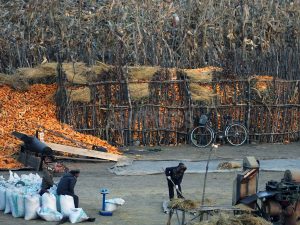
Over about an hour of watching North Korea across the river from the observatory, we could see scenes of daily life and changes both large and small.
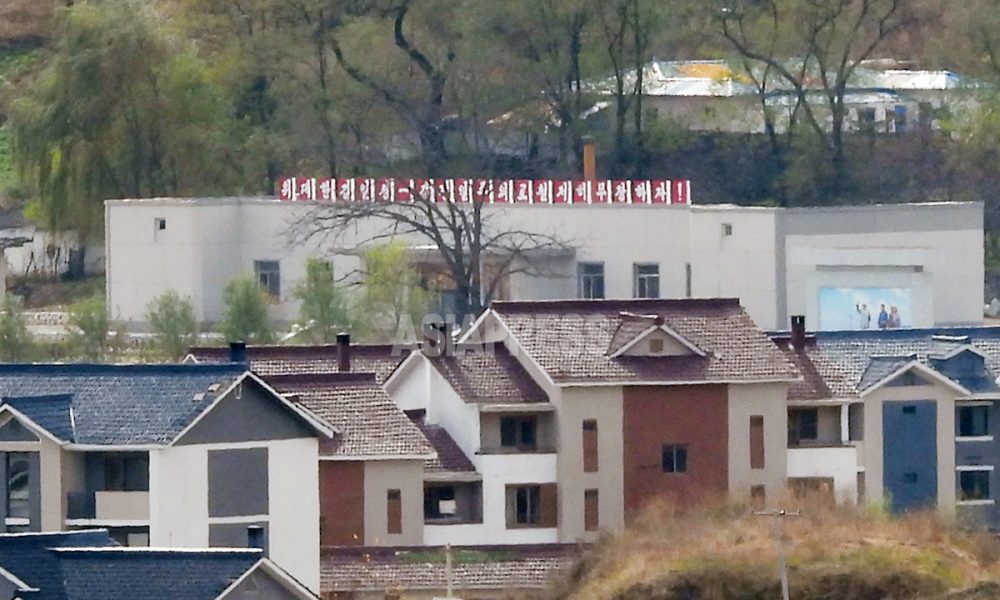
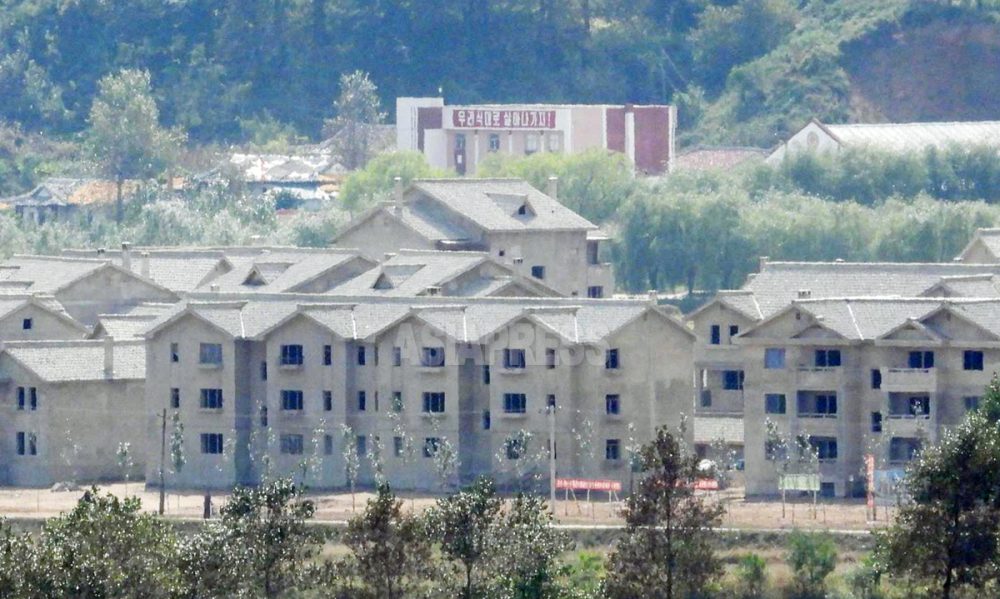
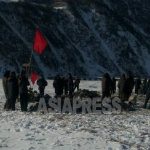
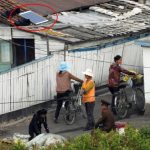
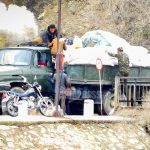
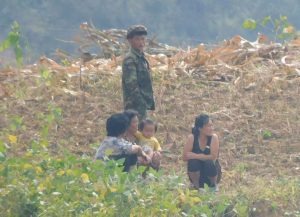
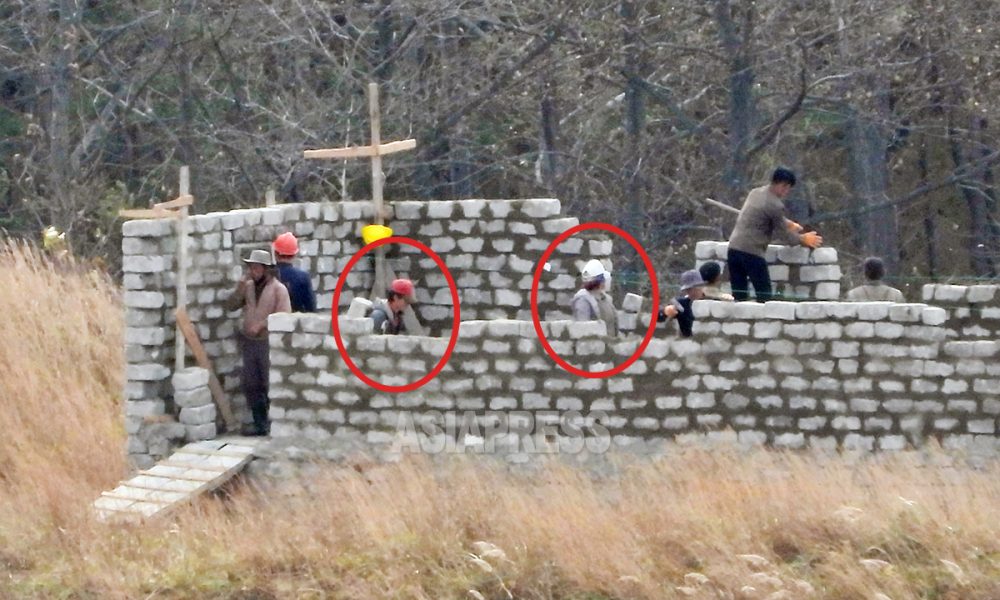
At a site along the Tumen River where workers were building a brick structure that appears to be a military guard post, we saw that women in helmets had been mobilized for the work along with men. In the fields of a nearby village, residents were also busy working around a white truck.
North Korea is also upgrading facilities and equipment in anticipation of more trade with Russia once the new road bridge is in use. Compared with our visit a year ago, though, construction has moved forward only “little by little.”
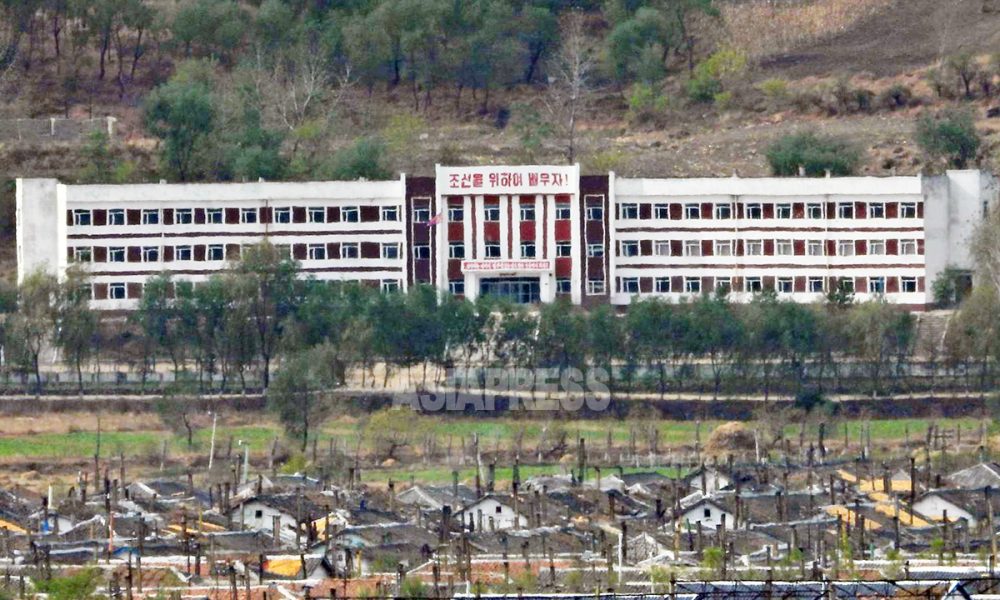
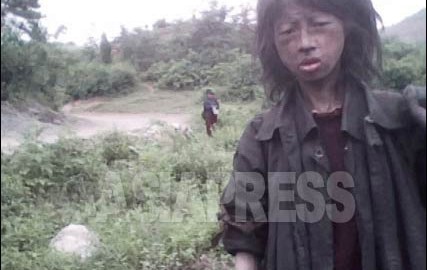
※ All photos were taken in late October 2026, except those marked as taken in September 2025. (ASIAPRESS)