It has come to light that vehicles are being exported from China to North Korea through customs. Under the UN Security Council economic sanctions on North Korea strengthened in 2017, vehicles and vehicle parts are banned from export to the country, making this a clear sanctions violation. Since around August last year, North Korea has been carrying out large-scale, state-level vehicle smuggling on the upper reaches of the Amnok (Yalu) River. Chinese authorities, however, have shifted course to crack down on the smuggling they had long tolerated, and began officially exporting vehicles this summer. We asked several reporting partners living in Ryanggang Province about the situation on the ground. And what is China’s aim in going so far as to violate sanctions? (HONG Mari / KANG Ji-won)
◆ New vehicles arriving one after another via the “official” route
Reporting Partner A in Ryanggang Province, who looked into how vehicles are now entering from China through formal trade via customs, described the situation as follows:
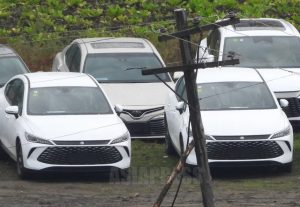
“Only new vehicles are being imported through customs. Used vehicles and (vehicle) parts aren’t coming in. Recently, BYD electric vehicles have been coming in. They’re not for use here (in Hyesan). Orders come from the ‘front’ [the central and southern regions], and the vehicles are brought in to fill them. About once or twice a week, 10 to 17 electric and gasoline vehicles come in at a time. They’re mostly passenger cars. Heavy machinery goes in through Dandong.”
Reporting Partner B, also in Ryanggang Province, said, “Vehicles started coming in through official trade around August.”
New developments can also be seen in Dandong, China, which Reporting Partner A mentioned.
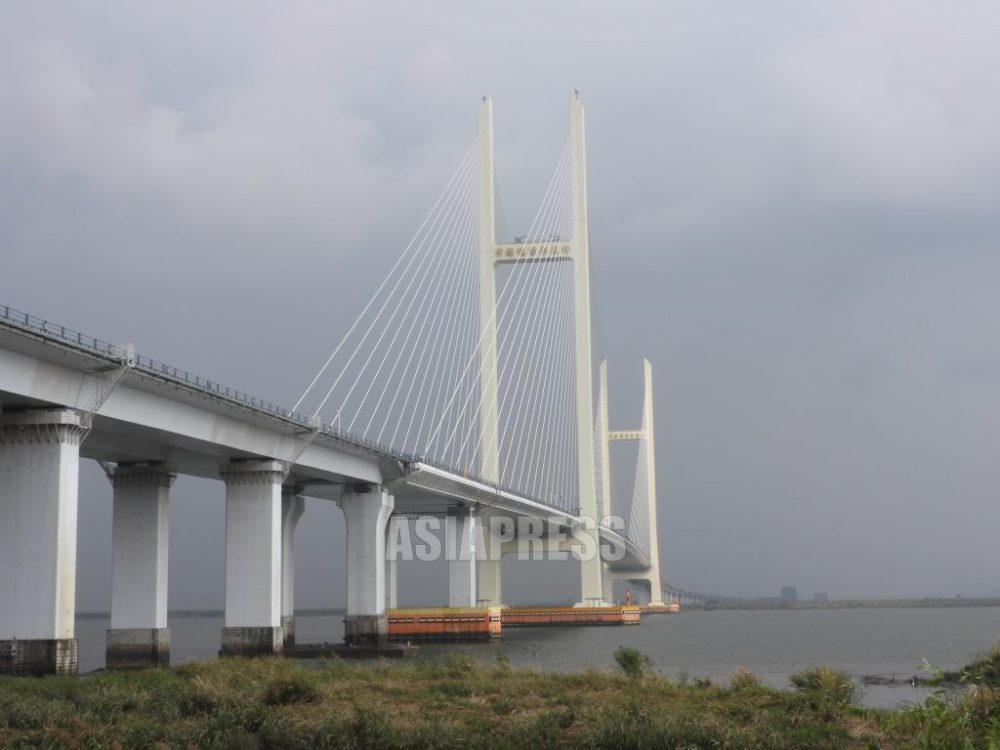
Sinuiju in North Pyongan Province and Dandong, which face each other on the lower reaches of the Amnok River, handle the largest volume of trade between North Korea and China. People and cargo have long crossed via the Amnok River Railway Bridge, completed during the Japanese colonial period. As that bridge aged, construction began downstream on the New Amnok River Bridge, which was completed in 2014. However, the North Korean side delayed its opening, and the bridge sat unused for years. China’s Xinhua News Agency reported that the New Amnok River Bridge is opened on 15th.
In early October, activity apparently related to vehicle exports has also been spotted around the bridge as it awaits its opening. On the 6th, Japan’s Asahi Shimbun published a photo showing rows of red cargo trucks, believed to be new, lined up beside the New Amnok River Bridge. None of them reportedly had license plates. On the 8th, U.S.-based Radio Free Asia (RFA) also reported that it had confirmed, through satellite imagery, cargo trucks parked there, numbering more than 100. They are expected to be transported to the North Korean side in stages.
◆ “State smuggling” had been carried out openly, but...
As noted above, vehicle exports to North Korea are completely banned under UN Security Council economic sanctions. For North Korea, however, which cannot produce its own vehicles, replacing aging vehicles and procuring parts is vital to the economy and the military, and to maintaining the regime itself.
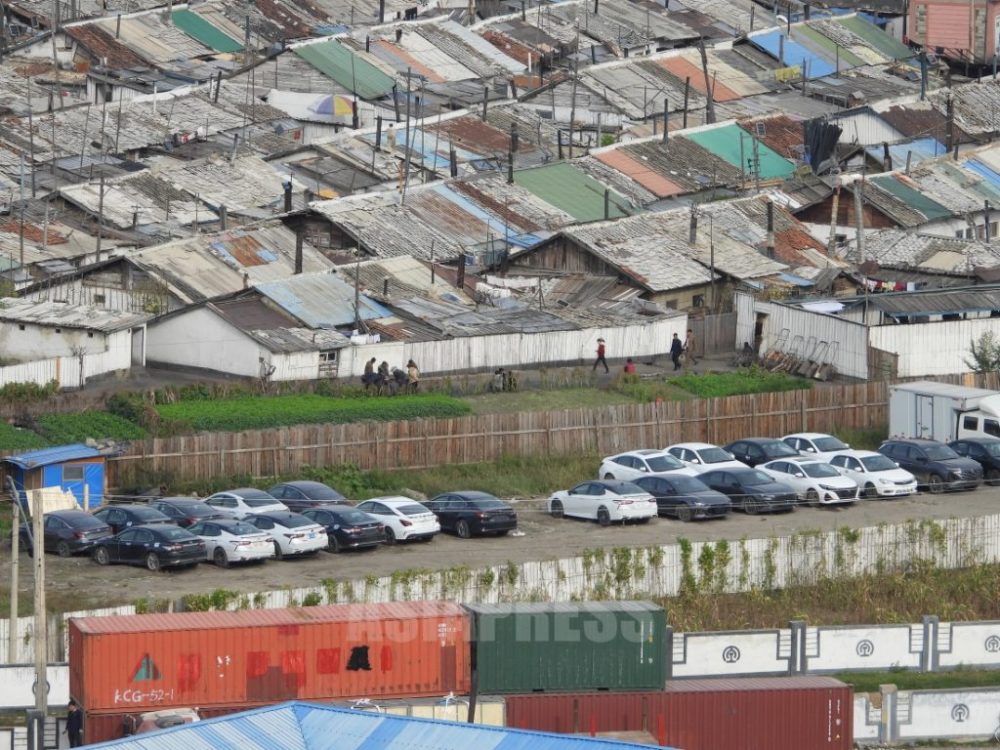
For that reason, the Kim Jong-un regime has been smuggling large numbers of vehicles — from passenger cars to buses, trucks and heavy machinery — across the North Korea-China border. Because state agencies take the lead on the North Korean side, this has been called “state smuggling.” On the Chinese side, private smugglers handled the operations, and border security authorities turned a blind eye.
Hyesan in Ryanggang Province and Changbai in China’s Jilin Province, which face each other across the Amnok River, were ideal locations for smuggling. Because they sit on the upper reaches, the river is narrow there, and by choosing shallow points, vehicles can be moved across to the other bank.
In September last year, ASIAPRESS confirmed that large numbers of Chinese vehicles, apparently smuggled, were parked throughout Hyesan. Then, through investigations with reporting partners inside North Korea and analysis of satellite imagery, ASIAPRESS published a series in November 2025 revealing how the vehicle smuggling operation worked.
This appears to have had an effect. A reporting partner in Hyesan said, “Vehicle smuggling dropped sharply from late November. Because it was reported (on the smuggling) in Japan and South Korea, the Jilin Province public security authorities launched a crackdown.”