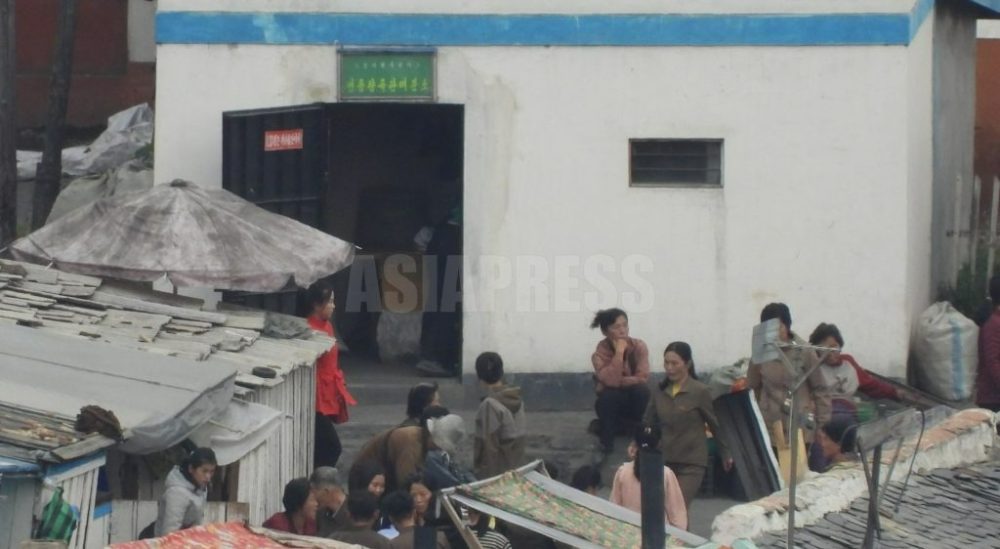
Around January 2023 the North Korean government banned the sale of rice, corn, and other food items in markets and unified food sales under the state-run food monopoly stores known as "grain sales stations." It also strictly restricted individuals, businesses, and institutions from trading food without authorization from the authorities. Let's take a look at the current state of the Kim Jong-un regime's forcibly implemented food distribution monopoly policy. (ISHIMARU Jiro)
◆ The Forcibly Implemented State Food Monopoly System
Beginning around 2019, the Kim Jong-un regime began trial operations of grain sales stations in some regions. This marked the start of a policy shift away from market-centered food distribution toward a state monopoly system. The prices of white rice and corn, the staple foods, were set slightly lower than market prices. However, deliveries were irregular, and sales would end once the stock sold out. Quality was also lower than in the markets — in some cases stones were even mixed in with the grain.
From 2021, the system shifted to fixed-quantity sales once a month. According to a survey conducted in North Pyongan, Ryanggang, and North Hamgyong provinces in December of that year, prices at grain sales stations were nearly identical across all regions under a "unified pricing system," set at about two-thirds of market prices, with each household able to purchase about a 10-day supply. Separately, workers who reported regularly for duty at factories or enterprises were provided a 3-to-5-day supply of corn for their own portion.
Around January 2023, the sale of food in markets was banned. People’s food purchases were restricted to grain sales stations, but sales volumes remained unstable and failed to meet the amount needed. This was because the state had not yet secured enough food to achieve a full monopoly on distribution. It was unable to completely stop the covert circulation of food held by farms, farm workers, and enterprises.
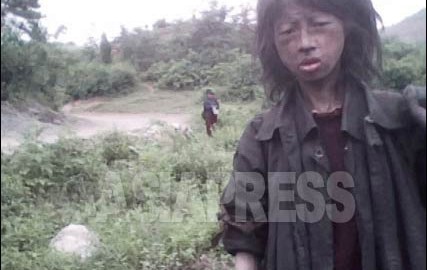
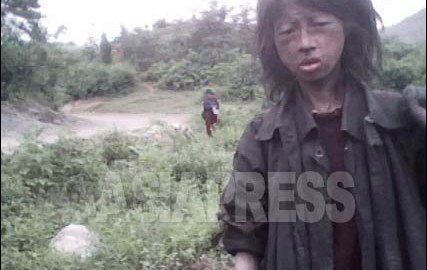
Entering 2025, sales volumes at grain sales stations gradually stabilized. As long as one had money, it generally became possible to purchase the amount needed for daily life. However, in the northern provinces of Ryanggang and North Hamgyong, deliveries of white rice remained extremely scarce, and sales continued to center on corn. This is reportedly due to strengthened restrictions on transporting white rice out of Hwanghae Province, the country's rice-growing region. The problem is the marked rise in prices. "Food is being sold, but we don't have the money to buy it" is the most pressing issue for the majority of ordinary citizens.
※ Food prices will be reported on in detail in the next installment.
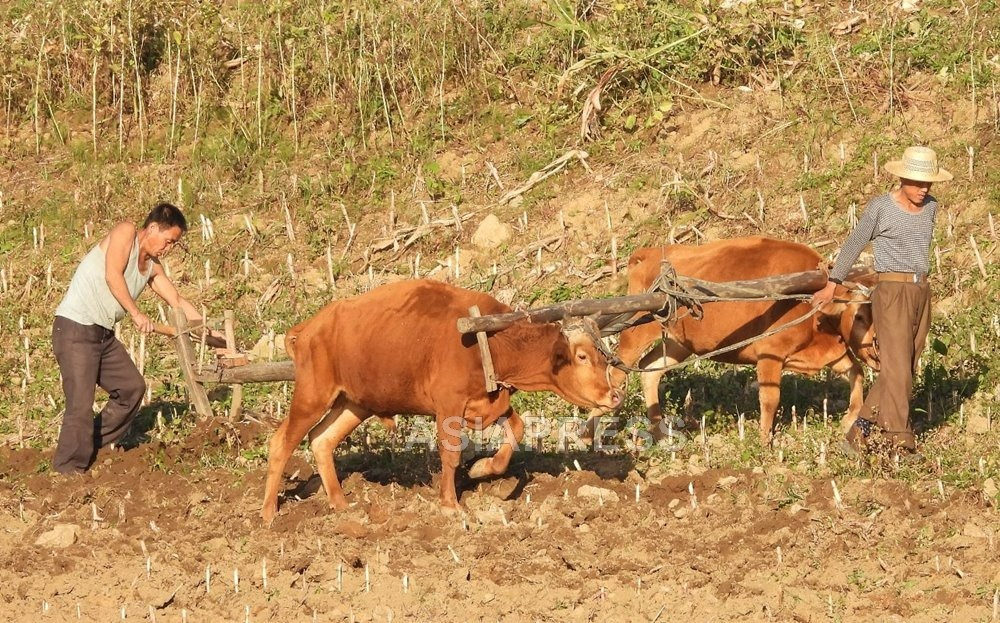
◆ Where Does the Food Come From?
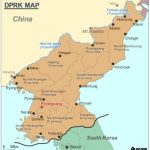
Below is a summary of reports made in May and June by six reporting partners living in four cities in Ryanggang and North Hamgyong provinces.
Grain sales stations sell twice a month, divided into early- and late-month periods, by neighborhood unit (inminban). Overseeing this is the Food Administration Bureau under the People's Committee (local government). Where does this food come from? It can be broadly divided into three categories.
1. Food the state acquires through "mandatory purchase" of farms' planned production quotas.
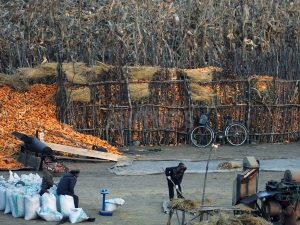
2. Surplus food held by individuals and farms, purchased by the state.
3. Surplus food held by enterprises (production from subsidiary plots, food imported by trading companies), purchased by the state.
※ Subsidiary plot: farmland used by institutions or enterprises such as military units to produce food supplied to their members.
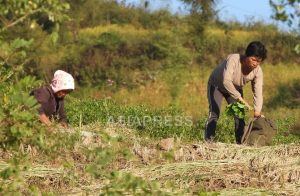
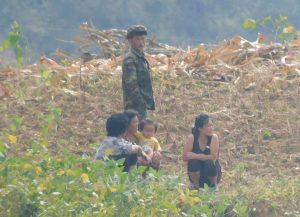
Private transactions of 15 kilograms or more of food held by farmers are also strictly cracked down on, and in principle, when farmers sell food, it is purchased by the grain sales stations.
※ South Korea's Daily NK published an article on August 7 titled "Some Grain Sales Stations Effectively Run on Bribes… 'No Different from Individual Rice Trading.'" Grain sales stations and food distribution are managed extremely strictly by the Food Administration Bureau, leaving no room for donju (the newly wealthy class) to get involved. As will be discussed later, prices too are set by the People's Committee. I would like to point out that this is likely a factual misunderstanding. If there is any room for donju involvement, it would be limited to profiting during the process of transporting food from farms to the grain sales stations.