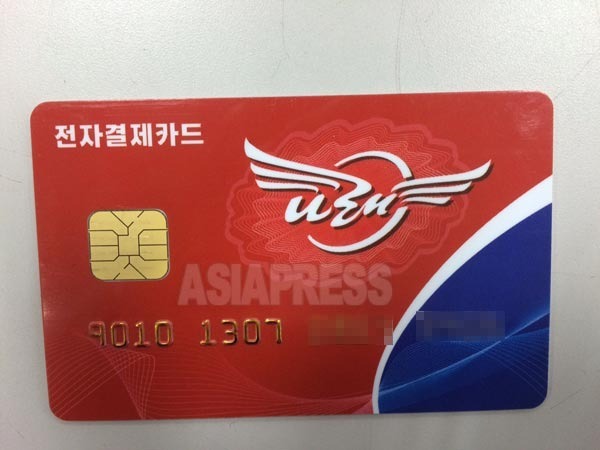
The Kim Jong-un regime has been strongly pushing a "cashless" policy since the start of this year. As part of this drive, electronic payment equipment has been introduced at state-run stores and elsewhere, but in provincial cities, frequent power outages mean payment cards often cannot be used properly, according to a reporting partner in Hoeryong, North Hamgyong Province, in late July. (HONG Mari / KANG Jiwon)
◆ Heat and Humidity Short-Circuit Payment Terminals
In an article this past March, ASIAPRESS reported that North Korean authorities had, starting in March, banned the use of cash in principle for state-run commercial facilities and transactions between enterprises, forcibly pushing a shift to electronic payment. The policy called for nationwide adoption "all the way down to the military and rural areas," but five months later, what does reality look like?
The reporting partner recently reported on the state of electronic payments in Hoeryong as follows:
"On July 23, the electronic payment terminal in Osandeok-dong broke down after short-circuiting, and it seems payment by Narae Card won't be possible there for the time being. At first, the authorities suspected arson, and the National Intelligence Agency (the secret police, formerly the Ministry of State Security) and the Ministry of Social Security investigated, but it seems the cause was the heat and high humidity.
They ran an electric fan to cool the machine down, but in a small city like this, there aren't many card users, and since the equipment isn't properly maintained, problems like this happen often, I think."
※ Narae Card: A card first issued by the Foreign Trade Bank of Korea in 2010
◆ "In the Cities, Code-Based Payments Are Advancing, But..."
Behind all this lies the power shortage. Multiple ASIAPRESS reporting partners reported in a June survey that in the northern region, electricity still comes on for only about two to three hours a day.
As for the electricity needed to run electronic payment systems, the Kim Jong-un regime has demanded that "commercial facilities solve the problem themselves." But the only measures available have been things like diverting power that was previously supplied first to state-run factories over to state-run stores during peak usage hours, or having facilities install solar panels.
Meanwhile, regarding the situation in major cities, the reporting partner said, "In Chongjin, Kimchaek, Kilju, and Hamhung, hardly anyone carries cash anymore — if you don't use a card, people treat you like you're behind the times. Code-based payment is developing there too, and the gap with provincial areas seems to keep growing."
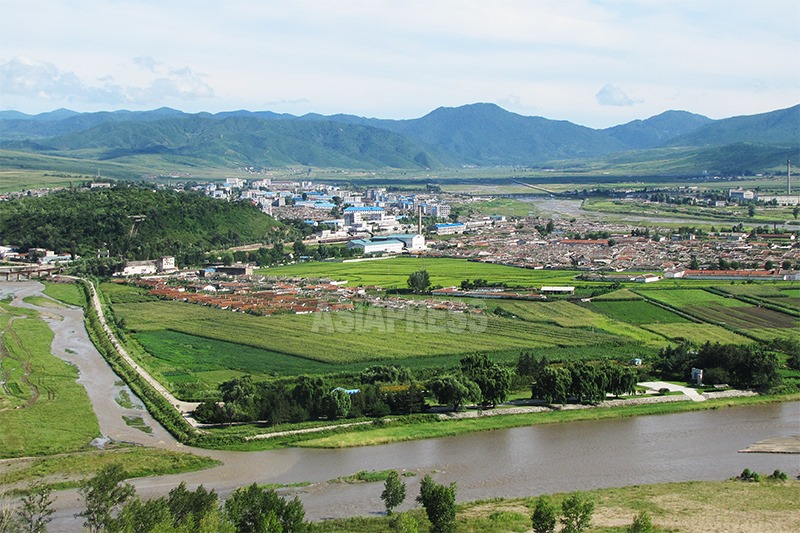
Hoeryong is one of the more populous cities along the Tumen River, which forms the border between North Korea and China. The fact that even Hoeryong is in this state — despite the authorities' policy of eliminating cash use and shifting to electronic payment — is itself evidence that the Kim Jong-un regime has continued to put off investment in local power infrastructure. Other mid-sized cities are presumed to be in a similar situation.
※ASIAPRESS communicates with its reporting partners through Chinese cell phones smuggled into North Korea.
![[Video Report] People under pressure for requisition of military provision](https://www.asiapress.org/rimjin-gang/wp-content/uploads/2018/07/20140129_R_asiapress1X450-150x150.jpg)