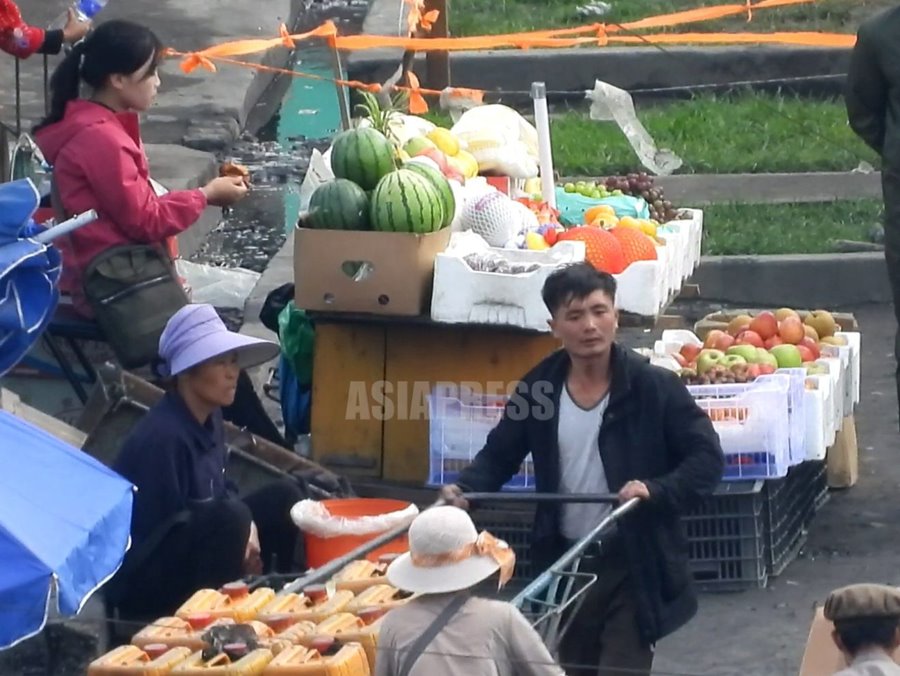
It has come to light that North Korean authorities have recently been requiring factories to halt operations during certain hours and redirect electricity to state-run commercial facilities, in order to ensure smooth electronic payments at those outlets. Authorities have also approved the construction of small power generators at individual state-run commercial facilities, leading to a growing number of solar, micro-hydro, and wind power installations. The Kim Jong-un regime is aggressively pushing to make society cashless, and this appears to be a desperate workaround to prevent power outages from disabling electronic payment systems. Since late February, ASIAPRESS spoke in detail with reporting partners living in the northern regions of the country about conditions on the ground. (JEON Song-jun / KANG Ji-won)
◆ Priority Power Supply to the Commercial Network
— We've heard that electricity supply to state-run commercial facilities has recently been made mandatory.
"Electricity that used to be supplied preferentially to state-run factories has recently been redirected to the commercial network. In particular, the provincial people's committee [local government] has issued instructions requiring that electricity be supplied without fail during the after-work hours, when residents are most likely to visit state-run shops — so shops and service outlets are now getting fairly reliable power."
— Why is the state going to such lengths to supply electricity to commercial facilities?
"Because card payments only work when there's electricity. The state has been telling people not to use cash, and instructions came down through the people's committee telling the commercial network itself to take the lead in solving payment system problems caused by power shortages."
— Has the electricity supply actually improved?
"It amounts to a 'cross-supply' arrangement. They cut power to a state factory and redirect it to the commercial network, then after a while shift it to a different enterprise — rotating the limited supply on a timetable. That's about as far as it goes for now."
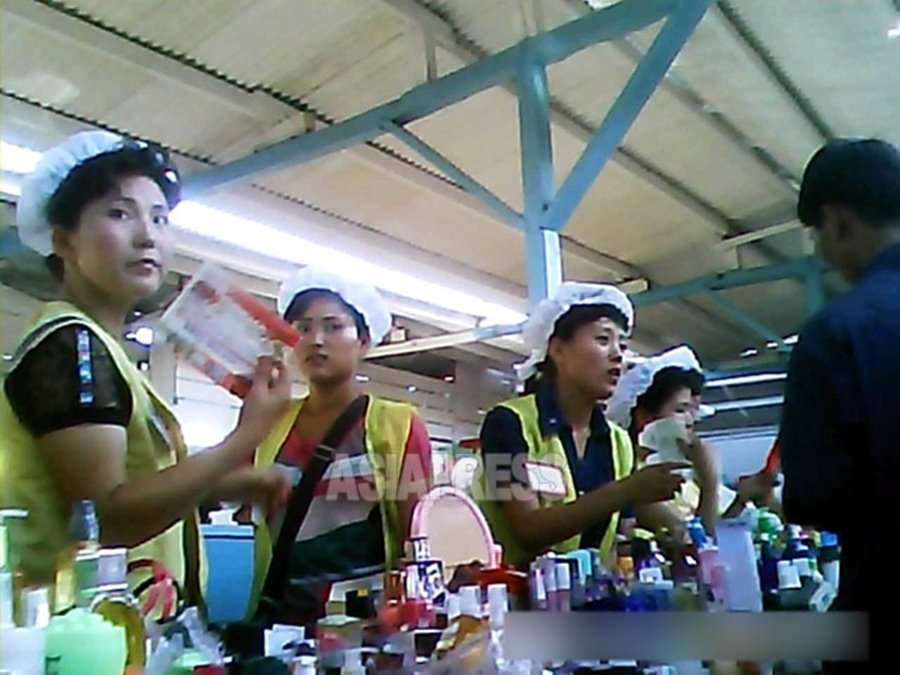
◆ Commercial Facilities Also Told to Generate Power Through Self-Reliance
— How are commercial facilities supposed to secure electricity on their own?
"The authorities have approved the construction of solar, small-scale hydro, and wind power generators to address the commercial network's power problems. Trading companies are apparently partnering with donju [newly wealthy entrepreneurs] who have capital to import equipment and bringing in solar generators and the like."
— What has the local reaction been?
"Lately, enterprises have been pushed to fend for themselves, and they're com peting with each other to run their commercial outlets and direct-sales shops as well as possible. The state is treating commercial facilities as a priority for installation approvals, on the grounds that they're places where large numbers of people gather and that they serve the public."