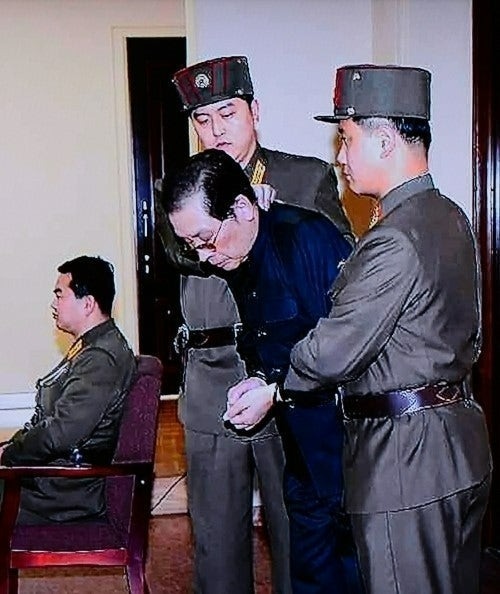
North Korea's secret police agency, the Ministry of State Security, has reportedly been renamed the State Information Bureau. Name changes for security agencies are not uncommon in North Korea, but is this one purely cosmetic? Have its powers and functions changed as well? A reporting partner in Musan County, North Hamgyong Province, shared details of three changes observed in mid-April. (HONG Mari / KANG Jiwon)
◆ Kim Jong-un: "Establish a subdivided, specialized police system"
According to the Korean Central News Agency, on March 23 of this year Kim Jong-un addressed the Supreme People's Assembly (the country's parliament) and stated that "with a view to maintaining public order on a higher level, it is natural and beneficial to establish the (police) system subdividing the field of legal struggle and making it professional," adding that "its establishment will be favourable for fully ensuring mutual ties and collaboration by clearly defining the work demarcation among the law-enforcement organs at home and realizing cooperation with foreign police organizations."
South Korea's National Intelligence Service (NIS), in a closed-door briefing for lawmakers at the National Assembly Intelligence Committee on April 6, reportedly explained that "the Ministry of State Security has been reorganized into the State Information Bureau, the Ministry of Social Security has been incorporated into the Cabinet, and the introduction of a police system has also been announced," according to South Korean media reports.
While Kim Jong-un's remarks cited above contain no direct reference to the "National Information Bureau," the reorganization of the Ministry of State Security may well be part of the broader initiative to "establish a police system." South Korean media also conveyed the NIS's analysis suggesting this may reflect an intent to move toward becoming a more normalized state.
So have there actually been changes on the ground within the secret police apparatus? A reporting partner in Musan County relayed recently observed developments, including information received from a personal acquaintance who is an information guidance officer.
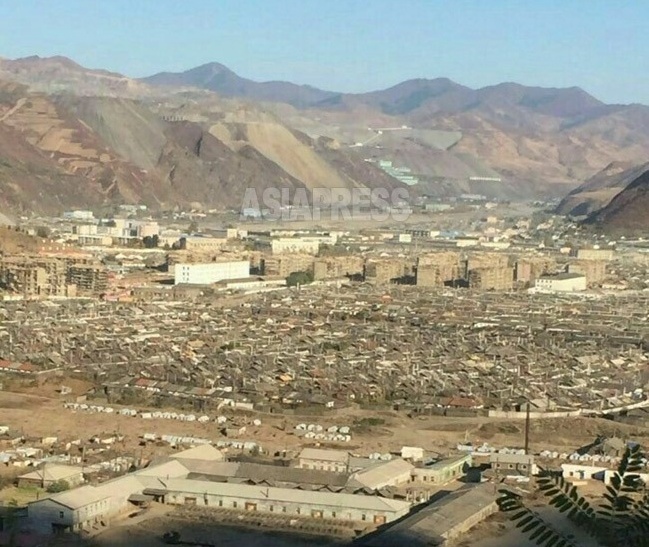
◆ Staff increases, new independent detention facility established
— What changes have been observed in Musan County since the reorganization into an inf ormation bureau?
"The title 'security guidance officer' [bowi jidowon] has been changed to 'information guidance officer' [jeongbo jidowon]. Also, while each enterprise previously had one assigned security officer, there are now three enterprises that have had two information guidance officers assigned to them."
— What other developments have there been?
"A new detention facility for the information bureau is being built. Until now, the Musan County security department had no detention facility of its own and shared the one belonging to the Safety Agency [Ministry of Social Security / police]. After April 15 [Kim Il-sung's birthday], construction is to begin on a new facility to house all detainees currently held in the Safety Agency's detention center and bring them under the information bureau's management. An escort section [responsible for transferring suspects and detainees] has also reportedly been newly established, to ensure completely separate management from the Safety Agency."
In North Korea, security guidance officers have long been assigned to enterprises, schools, and residential areas to monitor and control residents. The reporting partner noted that information guidance officers now have narrower jurisdictions than before — meaning, in effect, that more officers are being deployed to each location.
The establishment of a separate detention facility — previously shared with the Ministry of Social Security police — along with a new escort section, suggests a clear intent to separate the bureau's mandate and authority from those of ordinary police organs.