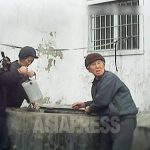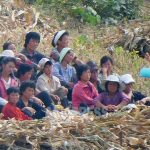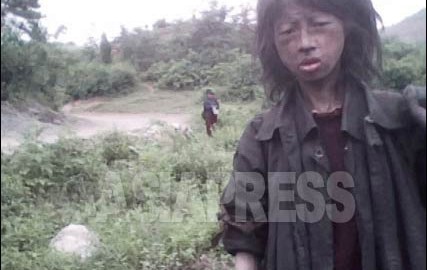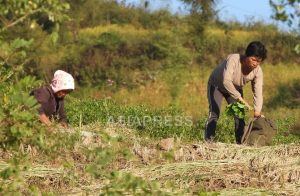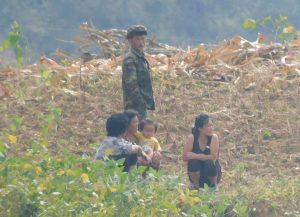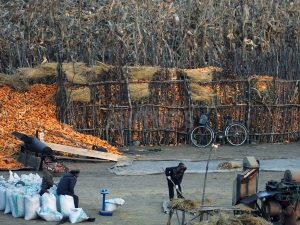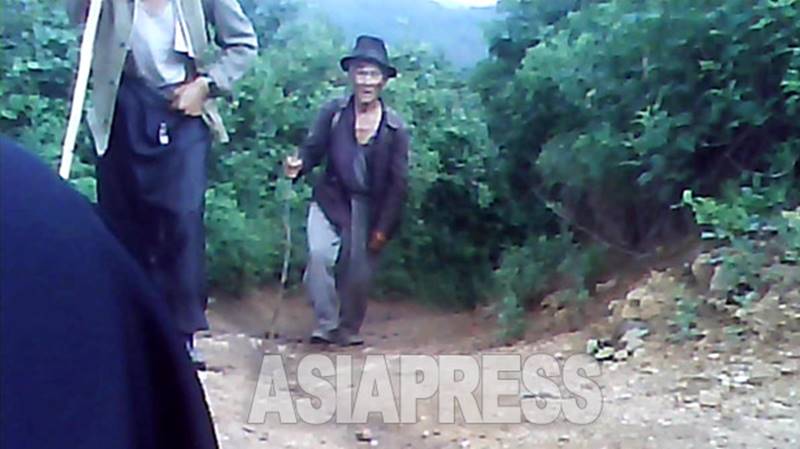
A growing number of residents are heading into the mountains to survive through slash-and-burn subsistence farming as a "last resort." Among those making this choice are men in their forties who should be in their prime working years, as well as divorced women and even Korean Workers' Party members. What is driving people into the mountains? The answer lies in sharply reduced cash incomes and runaway inflation. A reporting partner in Hyesan, Ryanggang Province, filed this report in mid-May. (HONG Mari / KANG Jiwon)
◆ White Rice Up 233%, Corn Up 163% in One Year
"Slash-and-burn farmers" (hwajeonmin) are people who leave their homes and go deep into the mountains, clearing land by burning vegetation to grow crops and sustain themselves. This practice has existed on the Korean Peninsula for centuries. In North Korea, it appeared on a large scale during the catastrophic famine of the mid-1990s known as the "Arduous March."
Carrying whatever food they have on hand, these people retreat into the mountains and hole up in makeshift plastic sheeting shelters or temporary dugouts that barely keep out the wind and rain, living entirely off what they can grow or forage. There is no electricity, no running water — a primitive existence cut off from the city. The reporting partner reports that the number of people making this choice has been rising steadily.
"Because it's hard to make ends meet and there's no trade to be done, people go into the mountains to dig up wild vegetables or farm a patch of land," the reporting partner said.
But why has it come to this?
Seizing on the COVID-19 pandemic as a pretext, the Kim Jong-un regime imposed severe restrictions on private economic activity, including trade. Cash incomes for urban residents plummeted. On top of that, prices surged dramatically compared to a year earlier — white rice by 233% and corn by 163%, according to ASIAPRESS research. Since wages at state-owned enterprises are fixed, purchasing power has collapsed.
So who exactly is heading into the mountains?
"There are a lot of elderly people, but also widowers, and women who are divorced and supporting their parents. The men tend to be in their forties and older — the kind of age where their hair is going gray. They've probably just given up on life in the city because prices have gone up and there's no way forward. I've heard there are even Party members among them."
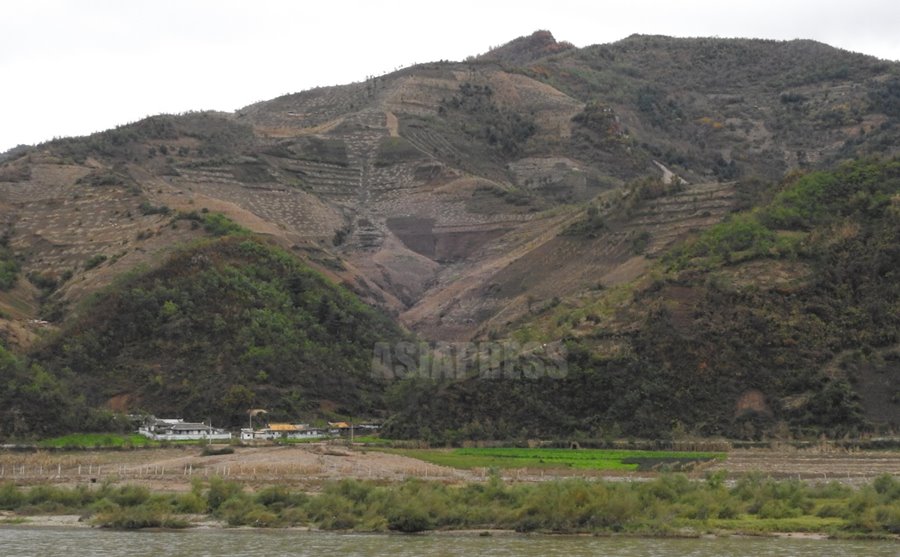
◆ Factories Idle, Working-Age People Heading for the Hills
At the same time, the Kim Jong-un regime has tightened its grip on food distribution, placing it under state control. Sales of food in the jangmadang (public markets) have been banned, leaving residents with no way to obtain staple foods other than through the small rations they receive from their state employer and purchases from the state-run food stores known as ryanggok pamsaso.
But reports indicate that an increasing number of enterprises are falling behind on wages and rations — or failing to pay them at all.
"Some enterprises are partially operating, but most aren't making ends meet. Everything is struggling except foreign trade and subcontracting work, and looking around, there's no one who isn't doing subcontracting."
Even where factories want to operate, severe cash shortages make it impossible. As a result, many people are earning income through piecework done at home — known locally as imgagong (subcontracting) — producing wigs, false eyelashes, and similar items from raw materials brought in from China. The finished products are exported to China and have become an important source of foreign currency earnings for North Korea.
In short, the system as designed — where workers receive rations from their workplace and buy any shortfall from the ryanggok pamsaso using their wages — has broken down entirely. The state does provide small amounts of food free of charge through local neighborhood offices to so-called jeolyangseidae — households that have completely run out of food and money — but only those with no able-bodied workers qualify.
When the reporting partner says that "widowers and women supporting parents after a divorce have gone into the mountains," this reflects the reality that households with only one working-age adult, who must report to a job that provides neither adequate wages nor adequate food rations, are left with no viable way to survive in the city — and so they leave.