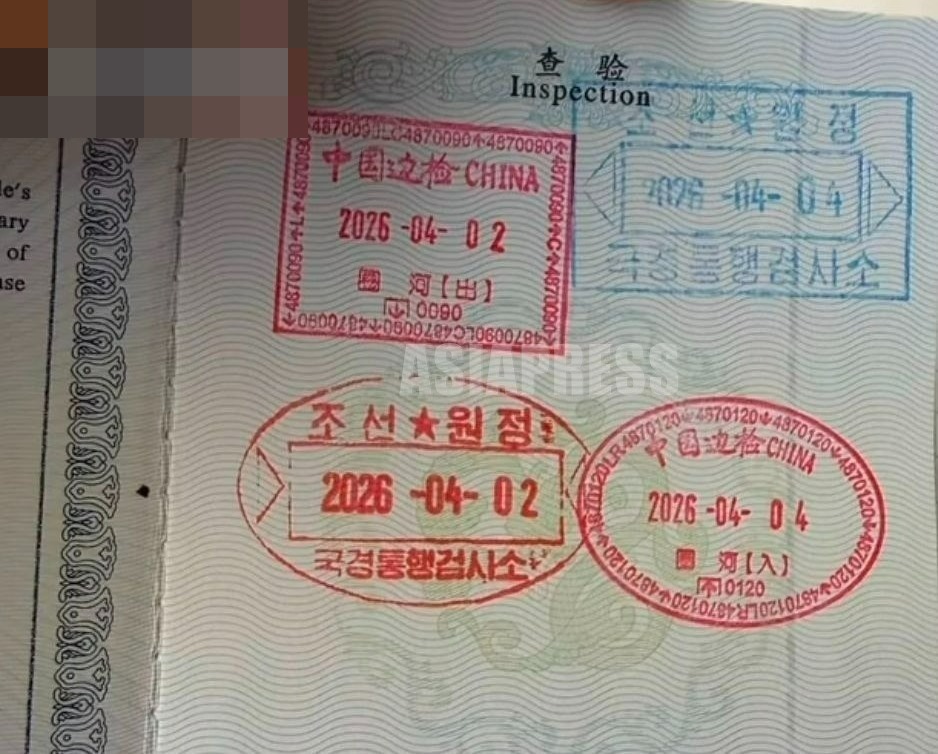
North Korean authorities have reportedly relaxed visa invitation requirements significantly for Chinese entrepreneurs visiting for trade and investment purposes. Free accommodation, extended stay periods, and other incentives are being offered to encourage visits, and a rush of Chinese business travelers to North Korea has begun. A source in Jilin Province with expertise in China-North Korea trade reported this in late April. (KANG Ji-won)
◆Stay Period Extended from One Week to One Month
The Chinese trade source reported on developments at the border crossing between Changbai County in Jilin Province and Hyesan in Ryanggang Province.
"North Korean authorities are issuing invitation letters in bulk to Chinese entrepreneurs considering investment. The process is simple — anyone can enter easily just by submitting basic information such as passport details."
Stay periods have also been extended. Previously, even with a business invitation letter, visitors were limited to short stays of around one week. Since April, however, stays of up to one month have become possible.
"Visitors can now inspect factories, mines, and construction sites directly. Tourism itineraries are also more flexible than before — rather than following a fixed route, visitors can pre-book destinations after arrival, with schedules arranged around their inspection plans to include coastal areas, recreational sites, and the like."
Furthermore, entrepreneurs willing to sign investment contracts are reportedly being offered exceptional terms: preferential customs treatment, complimentary hotel stays, and long-term residency rights. The effect has been immediate, with the rush of visitors beginning as soon as April arrived.
"These days, the area in front of the Changbai customs post is so packed with cars of people heading to North Korea that there's nowhere to park," the trade source said, describing the scene.

◆ Interest Concentrated on "Processing Trade" in Seafood and Similar Goods
So what products are drawing the interest of Chinese trading companies and investors? Trade with North Korea is severely restricted under UN Security Council sanctions. Imports require approval from Chinese customs authorities, and U.S. secondary sanctions — penalties targeting organizations and companies that do business with North Korea — are another serious deterrent.
On this point, the source said: "The sector Chinese entrepreneurs are most interested in is seafood. The thinking is that processed seafood — dried or seasoned products — can get around sanctions. Requests are pouring in from parties who want to process the goods inside North Korea and then bring them into China."
Seafood imports from North Korea are banned under UN sanctions, but apparently there is now a possibility that Chinese customs authorities might approve processed products. Chinese businesses also appear to believe that other sanctioned goods, such as minerals, could become importable if they undergo processing inside North Korea.