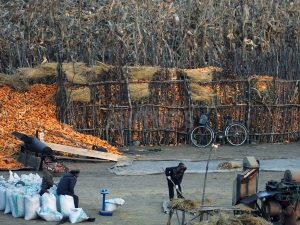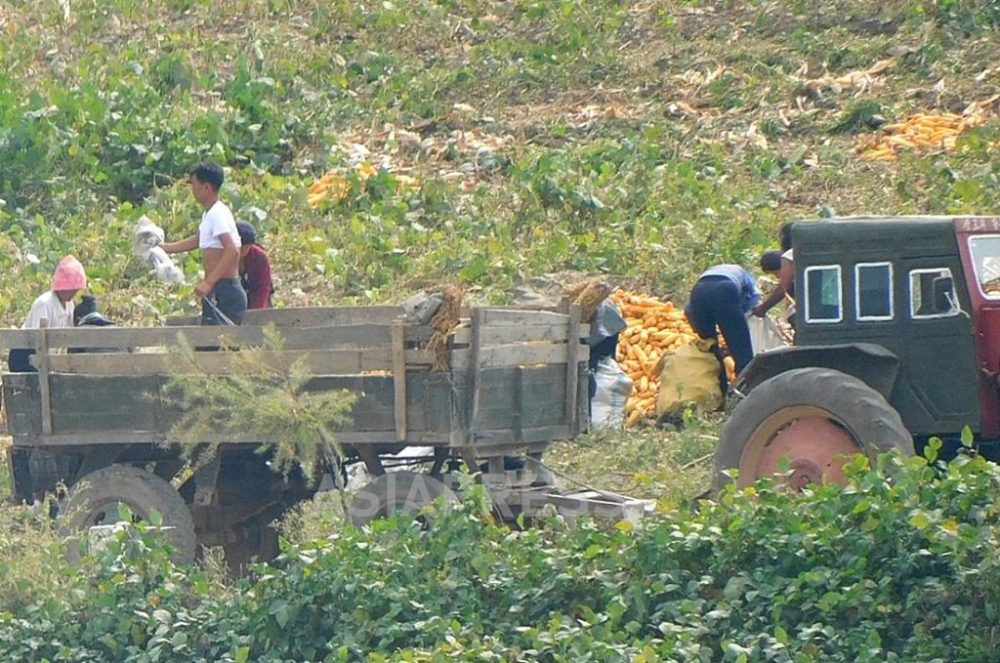
ASIAPRESS conducted a large-scale price survey in four locations across northern North Korea in May and June of this year. This is an attempt to assess the current state of the North Korean economy through concrete data. Starting with the fourth installment of this series, we present the price data while also explaining how the numbers should be interpreted and the systems behind them. This installment looks at food and foodstuff prices. (HONG Mari / KANG Jiwon)
◆1 kg of White Rice Costs 40,000 Won, Equal to a Month's Wages
Before getting into the details, it should be noted that food prices have continued to rise even after July, once the large-scale survey was completed. Corn, the North's other staple food, in particular has surged since August to nearly double its May price, hitting a record high. We will report separately on the causes once we have finished analyzing them.
As reported in a previous article, food is sold twice a month at state-run grain outlets called "ryanggok panmaeso" (grain sales stations). The main items are white rice, corn, and wheat/wheat flour. From early May to early June, we received price reports three times from grain sales stations in Ryanggang Province and North Hamgyong Province.
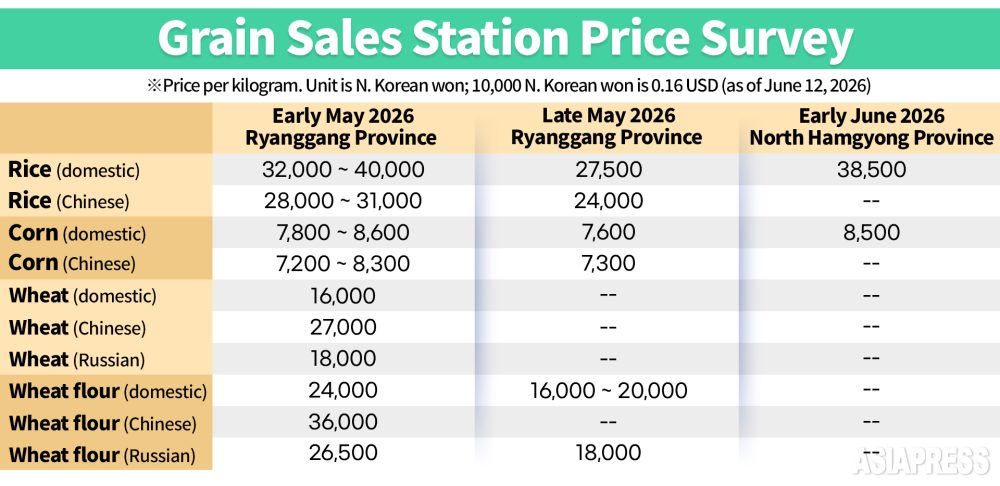
The blank cells in the table indicate items that could not be surveyed due to circumstances on the reporting partner's end. Wheat and wheat flour prices are missing for North Hamgyong Province, though sales of these items were in fact taking place. According to the reporting partner, the grain sales stations sell not only domestic grain but also grain from China and Russia, and Russian wheat and wheat flour in particular have been circulating in large quantities since around February of this year.
The difference in white rice and corn prices in Ryanggang Province in early May was due to differences in grade. Grain is classified into high, medium, and low grades, but residents reportedly cannot choose which origin or grade to buy. This is because stock arrives unpredictably — sometimes only high-grade domestic goods come in, other times only low-grade Chinese goods — leaving residents with little to no choice.
In Ryanggang and North Hamgyong Provinces, the cost of transporting grain from breadbasket regions such as Hwanghae Province also affects prices. As a result, even though these are state-run monopoly outlets, prices vary by region.
The wages of an average worker at a North Korean state-owned enterprise are generally around 35,000–50,000 won a month (approximately 0.56–0.8 South Korean won as of June 12). That is barely enough to buy 1–2 kilograms of white rice.
◆White Rice Price Up 6.8-Fold, Corn 2.5-Fold in 3.5 Years
An essential point about food prices is that enormous inflation is underway. The graph below shows the price trends of white rice and corn from early January 2023 to mid-June 2026. The price surge is immediately apparent.
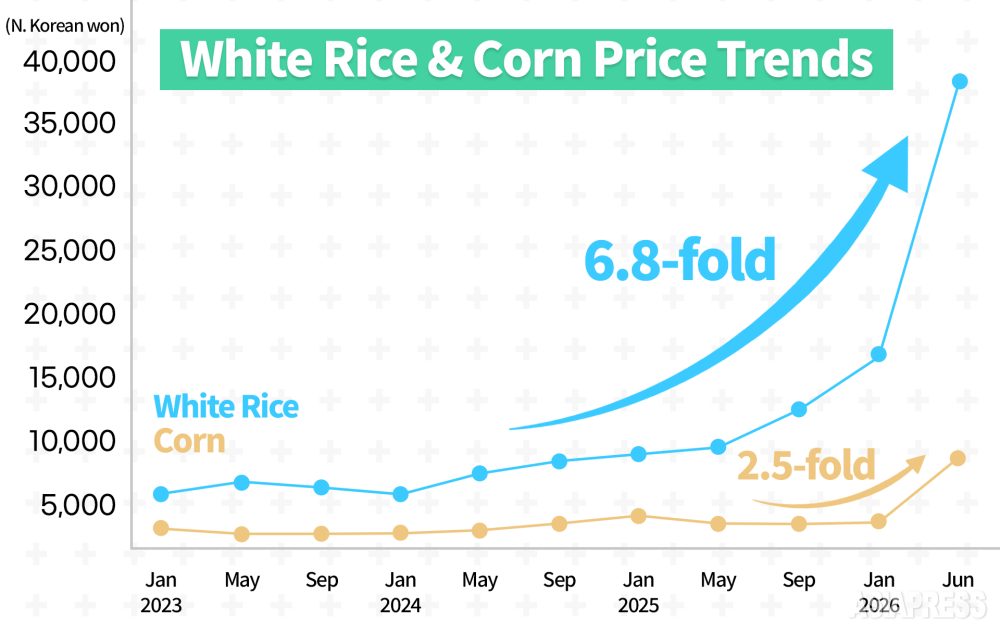
As of early January 2023, white rice cost 5,600 won and corn cost 3,400 won (both per kilogram). By mid-June 2026, white rice had reached 38,500 won and corn 8,500 won — increases of 588% for white rice and 150% for corn. Corn continued to climb after that, reaching 15,600 won as of August 21, for a total increase of a staggering 359%.
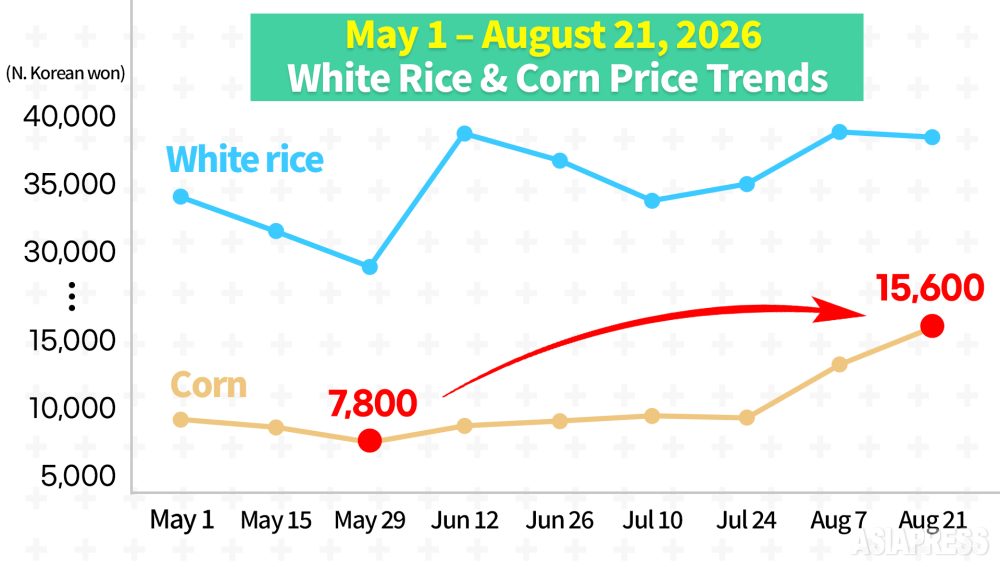
Naturally, this surge in food prices hits everyday life directly. Wages at state-owned enterprises were raised more than tenfold nationwide all at once around the end of 2023, but have remained frozen ever since. Take, for example, a monthly wage of 50,000 won: in January 2024, that would have bought 8.8 kilograms of white rice or about 16.1 kilograms of corn, but by June 2026 it buys only 1.3 kilograms of white rice or 5.9 kilograms of corn. By August, it buys only 3.2 kilograms of corn.