For the past three years, North Korea's number-one export to China has been "human-hair products" including wigs. This is contract processing trade in which North Korean firms receive materials from Chinese companies, manufacture them in North Korea, and then export them back to China. The people who hand-make wigs are predominantly women. In a reality where state enterprise wages have become impossible to live on due to hyperinflation, these "side jobs" have become a crucial income source supporting ordinary households. Under what conditions are people working, and how much are they actually earning? (JIRO Ishimaru / KANG Ji-won)
◆ Contract-Processing Wigs Become Number-One Export by Avoiding Sanctions
In 2017, when UN Security Council economic sanctions were strengthened, North Korea became unable to export most of its mineral resources—coal, iron ore, and others—which had previously been the backbone of its foreign-currency earnings. As a last resort, the Kim Jong-un regime turned its eye toward female labor. Contract processing trade—receiving orders from Chinese companies to manufacture items like wigs, synthetic eyelashes, and toys—began to show growth. North Korean firms receive materials like human hair and synthetic fiber from China, complete them through hand labor, and send them back to China. It is a typically labor-intensive trade with low profitability.
This contract processing trade appears in Chinese customs statistics under categories such as "products using human hair including wigs, beards, and eyebrows" (human-hair products), "synthetic-fiber beards, eyebrows, and eyelashes," and "animal toys." Beginning in late 2022, these categories began climbing into the top export rankings. In particular, "human-hair products" held the number-one export ranking for nearly every month through July of this year, with 2025 export volume reaching approximately $190.55 million.
China is the world's largest producer and exporter of wigs, with a 2025 market share of roughly 60 percent. Of course, some are also sold in Japan and South Korea. A portion of these products are likely those hand-made by North Korean women.
◆ A Single Wig Equals a Month's Worth of State Enterprise Wages
This hand-labor work is called "contract processing" (imgagang) in North Korea. Since the outbreak of the COVID-19 pandemic in 2020, when individual economic activity came under stricter control, "contract processing" has become a vital income source for ordinary people.
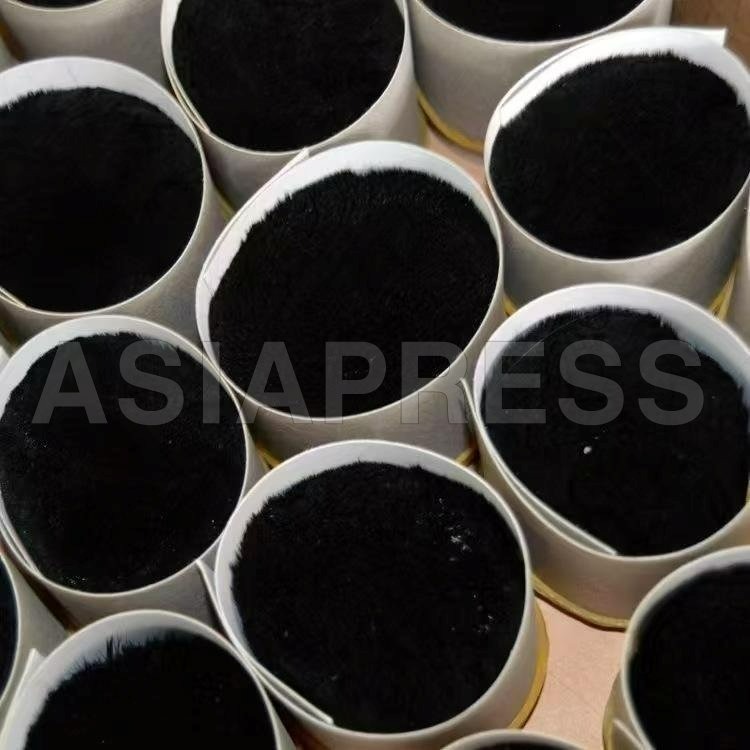
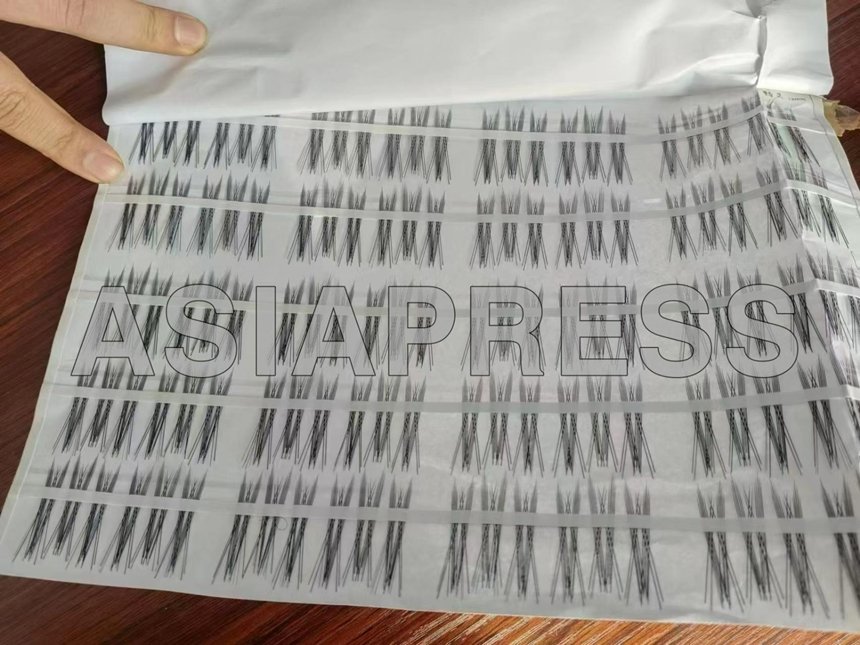
The most representative example of "contract processing" is wig-making. The photograph below was taken and sent by a reporting partner in Jilin Province, China, showing materials destined for export to North Korea. North Korean firms receive processing orders from Chinese companies and recruit subcontract laborers domestically. So what level of income are people earning?
"Previously, we would register professional workers and pay them 350,000 won per month to work, but now we use a piece-rate system and pay according to the work done," said a reporting partner in Ryanggang Province.
Previously, work was assigned directly to individuals in a form of private employment, but now people are formally registered as employees of trading companies. Much of the work is done at home, though some work takes place in workshops. Completing a single wig brings in between 35,000 and 42,000 won, and production takes seven to ten days.
Since 10,000 North Korean won equals approximately 0.14 USD (as of September 4, 2026, based on ASIAPRESS research), completing a single wig yields only about 0.5~0.7 USD. For Chinese companies facing rising labor costs, high-quality hand-work by North Korean women at this price is certainly attractive.
◆ The Entire Nation Mobilized for Contract Processing
The fact that contract-processed goods have become a major export in less than four years is not simply because of Chinese company demand. It also reflects the reality that since the end of the COVID-19 pandemic, control over individual economic activity has intensified, cash income for urbanites has plummeted, and people are flooding in seeking work. This is because the wages earned through state employment have lost much of their value due to hyperinflation, making it impossible to live on state wages alone.
"It's as if the entire nation is mobilized to do contract work on behalf of the Chinese. Except for people who are somewhat better off, there is no one who isn't doing 'contract processing'—making wigs, hats, knitting, dolls, and so on. Because so many people want to do it, there is no longer work every day," said a reporting partner describing the current situation.
Meanwhile, reporting partners agree that an increasing number of people are suffering health damage from overwork. Many work during the day at their state jobs, then make wigs at home after work for as long as time allows. Children returning from school are also said to join in the work, so it is likely that many women in a "dependent" social status (housewives) engage in full-day labor.
Because power outages are frequent, many people have developed eyesight problems from doing detailed hand-work for long hours in dim indoor spaces. Reporting partners noted with concern: "Even healthy people have their bodies (and especially their eyes) ruined after one or two months," and "Many more women wearing glasses are seen on the streets now. You can tell they are suffering from contract processing work."
However, it is true that "contract processing" income has become the pillar of household finances, and "some people feel grateful simply that such work exists," according to reporting partners.