Accurately diagnosing the economy of North Korea, a self-isolated state, is difficult, since there are extremely few yardsticks (indicators) and little information available for assessment. Recently, analyses claiming that "North Korea's economy is improving" have appeared frequently from experts and media outlets. However, the data or indicators offered as evidence are thin. A large-scale price survey was conducted in the northern region of North Korea in May and June as an attempt to present data and use it to analyze the current state of North Korea's economy. (ISHIMIARU Jiro)
◆ A Reality of Overwhelmingly Insufficient Indicators
As is well known, the economic statistics released by the North Korean regime—including the government budget—are almost nonexistent. Trade statistics between North Korea and China published by the Chinese government are among the few relatively reliable indicators available. Beyond that, the only materials available for assessment are satellite image analysis, photos and videos taken by an extremely limited number of visitors such as Russians in central Pyongyang, articles released by North Korean state media, and estimates from the Bank of Korea. It would be helpful to make contact with business figures who travel between North Korea and China, but that is very difficult (since entry restrictions on Chinese business figures were eased in May, this may become more feasible going forward).
This journalist has long been dissatisfied with vague assessments claiming that "North Korea's economy has improved (or worsened)." Unless such claims show, through some indicator, "what specifically improved (or worsened), compared to when, and in what way," they do not go much beyond the realm of impressionistic argument.
It is also important to show "for whom" things have improved (or worsened). For example, if North Korea–China trade has become more active, and North Korea has gained the financial breathing room to invest in the munitions industry or in construction projects in Pyongyang as compensation for supporting Russia's war of invasion in Ukraine, then from the perspective of the Kim Jong-un regime, one could say "the economy has improved."
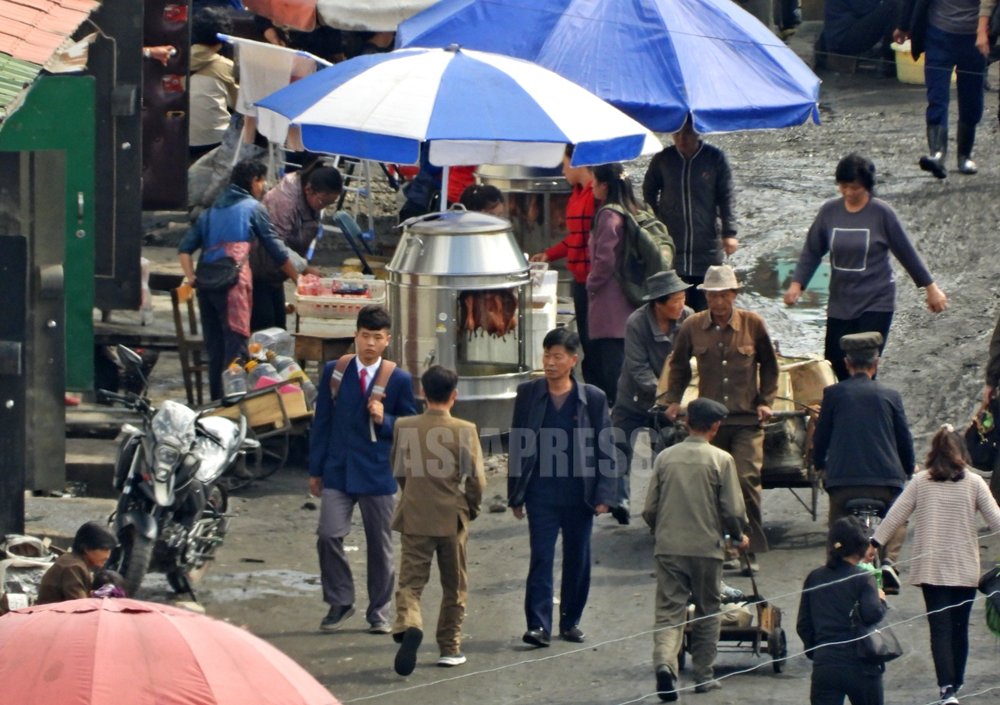
But that does not necessarily mean that industry in provincial cities or the livelihoods of ordinary residents have improved. Without presenting separate information or data as indicators, it is difficult to judge whether things have improved or worsened.
◆ A Large-Scale Price Survey Conducted in the Northern Region
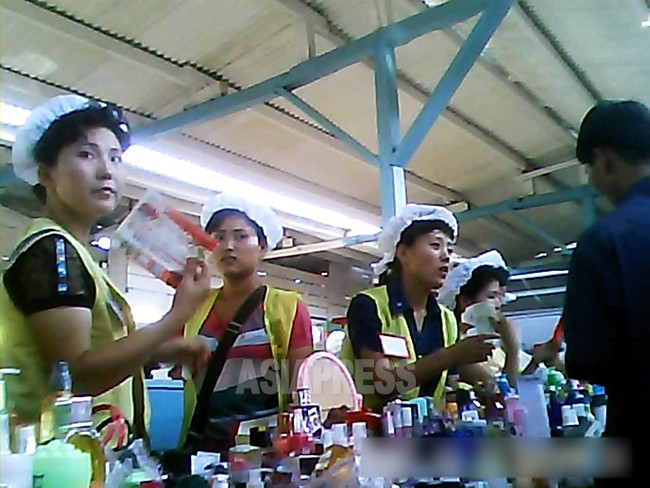
From May through mid-June this year, a large-scale price survey was conducted in the northern region of North Korea. It covered more than 45 categories, ranging from consumer goods to public utility fees such as electricity and medical costs, to wages (pay) at state-run enterprises. Though it has its limits, this is an attempt to present, in data form, indicators for judging the current state of North Korea's economy.
An overview of the survey is as follows.
・Survey period: May 2026–mid-June 2026・Survey areas: Four locations in North Hamgyong Province and Ryanggang Province
・Survey method: Research and interviews by reporting partners inside North Korea
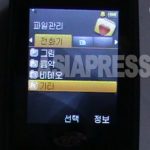
※Contact was made via Chinese smartphones smuggled into North Korea
・Survey items: Grain (rice, corn, wheat, wheat flour), food products (cooking oil, soy sauce, soybean paste, soybeans, tofu, pork, etc.), public utility fees (electricity, water, coal for heating, public transportation fares, medical costs), industrial goods (clothing, footwear, etc.), wages (state-run enterprises, local factories), unit prices for consignment processing work, etc.
・Limitations of the survey: Reliable information could not be obtained for Pyongyang or other regions. The survey was limited to the consumption behavior of ordinary citizens; it was not possible to survey the wealthy class.