◆ A Radical Shift in the Distribution System
Before reporting on the prices of consumer goods, we would like to explain how the distribution structure for food and consumer goods has changed significantly since around 2020.
As is well known, in North Korea, the food rationing system effectively collapsed in the early 1990s, consumer goods production ground to a halt, and the state-run distribution network lost its function. In its place, farmers' markets (markets where farmers sold vegetables, grains, chicken, eggs, and other items grown or raised in their own yards) turned into black markets, and all manner of consumer goods, including the once-banned trade in food, began to be sold there.
The black markets, which had been expanding, were legalized in 2003 under the Kim Jong-il regime. These officially sanctioned markets continued to multiply and diversify, expanding and becoming more organized, even as they were frequently subjected to strong government control and regulation.
Much of the transportation involved also came, in practice, to be handled by the "private" sector. Most goods began to be distributed not through the state-run distribution network but through market mechanisms, with prices determined autonomously by large and small merchants under a system of competition based on supply and demand.
However, from around 2020, the Kim Jong-un regime began pushing forward with powerful measures to suppress the markets and control private economic activity, while simultaneously attempting to restore the ryanggok panmaeso [state-run grain sales stations] and state-run stores. This amounted to a forceful policy of reclaiming, from the markets, the state's leading role in the distribution of food and goods.
As of 2026, the distribution of food and general consumer goods can be divided into three categories: ① the state-run distribution network and state-run stores, ② the markets (jangmadang), and ③ the ryanggok panmaeso (state grain sales stations). Below is a compilation of reports from six reporting partners living in four cities across Ryanggang Province and North Hamgyong Province.
◆ At State-Run Stores… the "Price Bureau" Was Setting Prices
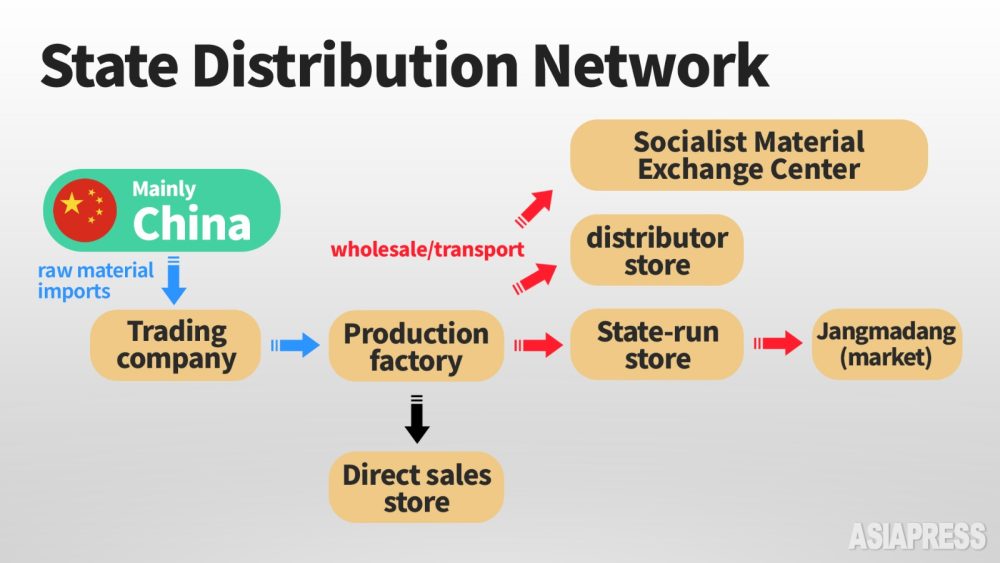
The Kim Jong-un regime, which has focused on domestically producing consumer goods, used the COVID-19 pandemic as an opportunity to restrict imports of finished Chinese products, instead importing raw materials for production at state-run factories. It also changed the system so that these goods could only be handled through the state-run distribution network, from wholesale all the way to the final point of sale at state-run stores. As a result, existing markets—with the exception of vegetables, meat, and similar items—became, in principle, structured to receive goods wholesale from state-run stores (more on the markets will follow in a later installment).
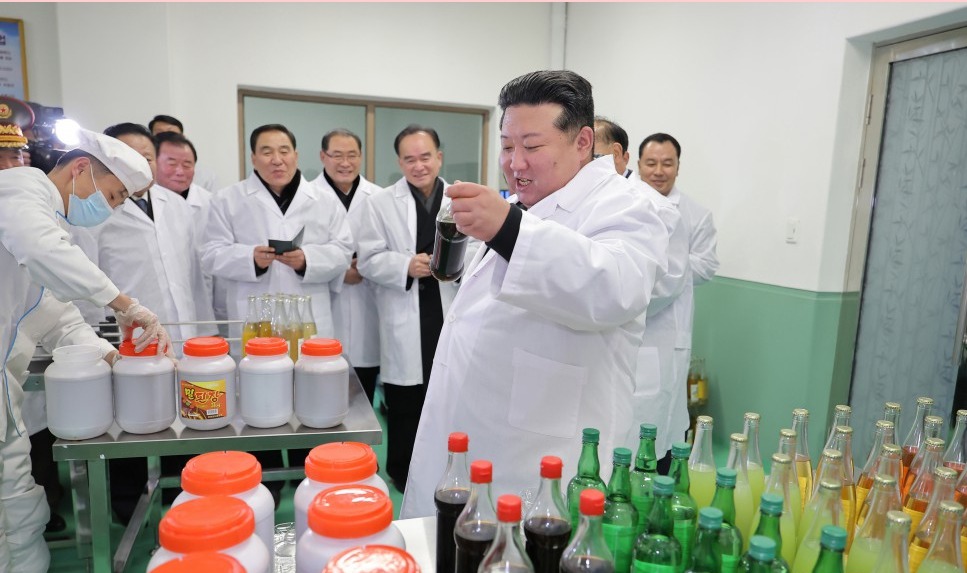
According to reporting partners, in each city, state-run stores have expanded their facilities using investment from donju [newly wealthy entrepreneurs] in place of the cash-strapped state, and sell only domestically produced goods, such as clothing and snack foods, and household items like soap (Chinese products are handled at foreign-currency stores).
What matters here is that the "Price Bureau" of the People's Committee (local government) has come to determine all prices. Around February 2024, there was even a move to introduce a "single state price system."
"A price list booklet of roughly 200 pages was distributed to state-run stores. Prices were set down to fine detail by item. That said, prices can apparently still fluctuate," reporting partners in Ryanggang Province and North Hamgyong Province reported.
During this period, the Kim Jong-un regime appears to have been designing a system to set uniform state prices nationwide. However, this plan collapsed amid a sharp bout of inflation. According to the survey, comparing January 2023 to early June 2026, gasoline rose 531%, diesel 567%, polished rice 454%, corn 124%, the US dollar 715%, and the Chinese yuan 558%.
Since most domestically produced goods are manufactured using raw materials imported from China, they are naturally affected by rises in international oil prices and fluctuations in exchange rates. It is unclear exactly when the "single state price system" collapsed, but it was likely unsustainable from the very start.
That said, there has been no change to the system under which the "Price Bureau" sets the prices of goods at state-run stores. "Prices change about once every two days," a reporting partner in Ryanggang Province reported in May. (To be continued)
※Reporting partners communicate through Chinese cell phones smuggled into North Korea.
■<N.Korea Video> Visiting the North Korea-China Border Lockdown
■[List of Series]A Large-Scale Price Survey Reveals North Korea's Economy