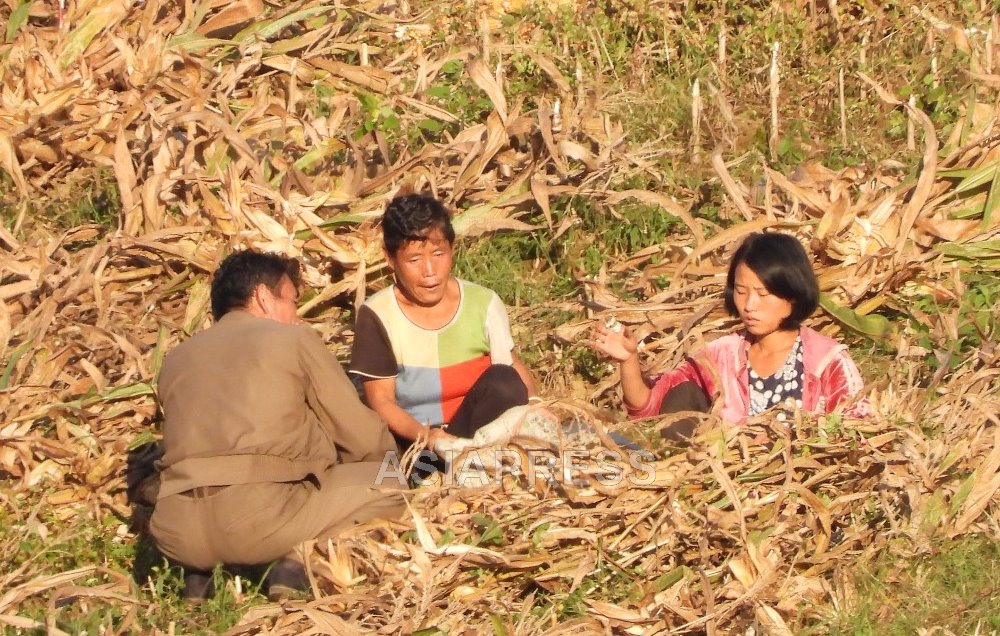
In rural areas of North Hamgyong Province recently, a "power struggle" has been underway between farmers and authorities. There's intense conflict between the state and farmers over whether to receive surplus grain production beyond the basic distribution (approximately 270kg) in kind or in cash. This article summarizes the context of this conflict based on information provided by local reporting partners. (JEON Sung-jun / KANG Ji-won)
◆ Farmers Angered by State Offering 'Paper' Money Instead of Grain
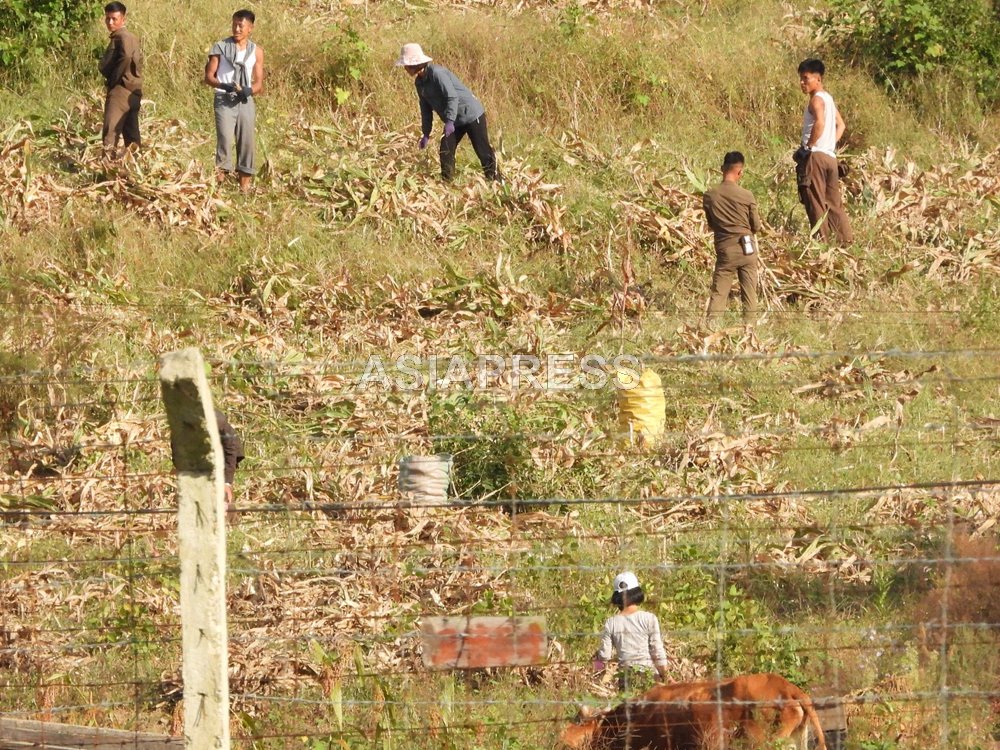
Of the two local reporting partners who investigated farms, reporting partner A resides in a city and conducted research on nearby farms, while reporting partner B is an actual farm worker. Both farms have approximately 500 workers each and are typical northern region farms centered on dry-field farming rather than rice paddies.
-- We heard there are complaints from local farmers regarding this year's distribution. What's the situation?
Reporting partner A: For surplus production beyond the basic distribution (270kg), they say they'll pay in cash rather than grain. For example, if someone is to receive 350kg in this year's distribution, the state will calculate the additional 80kg at the state procurement price and pay in cash.
※ The grain procurement price refers to the state-set price established for purchasing grain from farms or farmers.
-- Why is cash payment a problem?
Reporting partner A: First, there's the issue of the procurement price. The procurement price for corn is 3,000 won per kg, which is over 1,000 won cheaper than the private market price. From the farmers' perspective, they're taking an immediate loss, so naturally there's significant dissatisfaction.
Reporting partner B: As grain prices keep rising, holding cash is a loss. Farm workers each received hundreds of thousands of won in cash distribution, but the money is so worthless it doesn't really help much.
Due to the continuous devaluation of North Korean currency, the North Korean economy has fallen into inflation. The exchange rate, which was 25,000 won per dollar at the beginning of the year, has risen 168% to 42,000 won as of late December. Gasoline and white rice, which were 27,000 won and 8,800 won respectively at the beginning of the year, have now surged 159% and 198% to 43,000 won and 17,500 won. The burden of receiving cash while the won continues to fall appears to be one reason farm workers are expressing dissatisfaction.
◆ The State's Ulterior Motive: Preventing Private Trading At All Costs
-- Why does the state insist on paying cash instead of grain?
Reporting partner A: If farm workers hold surplus grain, it will eventually be converted to cash through private transactions and circulate outside state control, so the state wants to buy it up in advance to eliminate that possibility.
Reporting partner B: The original intention was for the state to purchase the surplus production with cash or substitute it with daily necessities to distribute to farm workers. If given in kind, it would circulate again through private channels. It's the state's intention to completely control grain.
◆ Farms Caught in Awkward Position Between Farmers and State
-- There must be strong pushback from farm workers—what's the farm's position?
Reporting partner A: With farm workers demanding grain instead of cash, farms are struggling too. So even if the state takes major grains like corn, they're trying to give farm workers as much non-grain items (beans, sesame, peppers, etc.) as possible in kind under the names of "side dishes" or "preferential grain."
Reporting partner B: Farms are also trying a method where they receive items like soybean paste, bread, and daily necessities produced in local factories in kind, and repay them collectively from surplus production. Farm workers are somewhat accepting of this method since these are things they need to buy anyway.
There have been recent local reports that North Korean authorities are sending inventory products from local factories to state stores in rural areas to essentially force-sell them to farm workers, suggesting more detailed investigation is needed.
◆ Farmers' Complaints Shift Qualitatively from 'Survival-Based' to 'Profit-Based'
The biggest conflict witnessed during the fall 2025 distribution was not about 'whether distribution exists' but about 'how distribution is done.' With basic distribution guaranteed to some extent, a dispute has erupted between the state and farmers over surplus production.
The state is attempting to forcibly purchase surplus at cash procurement prices to monopolize grain distribution, effectively passing the disadvantages of inflation onto farmers. Meanwhile, farmers are demanding grain in kind to avoid losses from continuous currency devaluation.
This is a significant change. While past complaints from North Korean farmers stemmed from survival crises of "not having enough rice to eat right now," this year's complaints are due to a desire to “be compensated for labor at fair value (in kind)." Quick efforts by the farms to detect and respond to worker complaints are a shift from scant efforts in the past by farm management to deal with such issues.
The next installment will examine the state-led grain management system that the government is trying to maintain even at the cost of farmer resistance. (to be continued in the next installment)
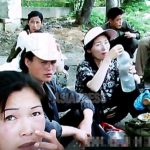
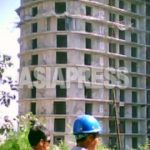
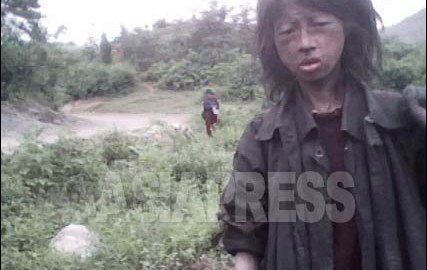
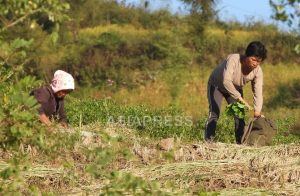
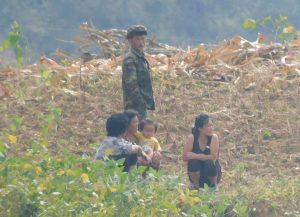
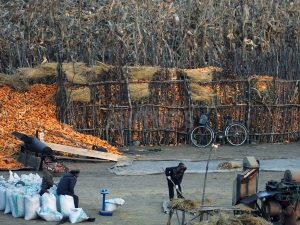
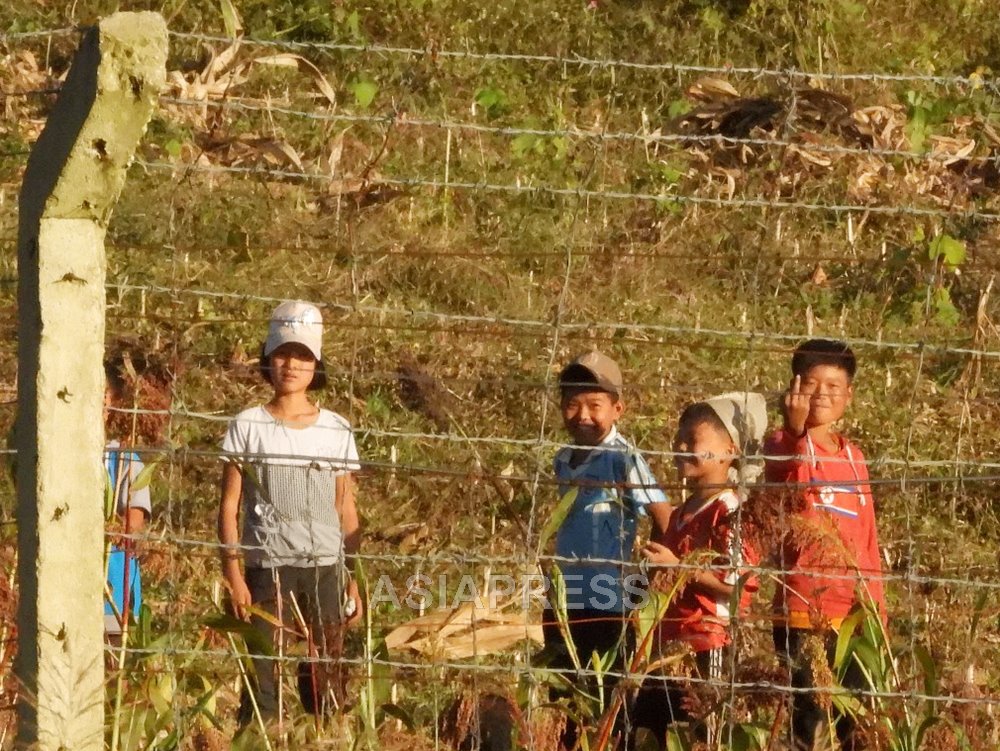
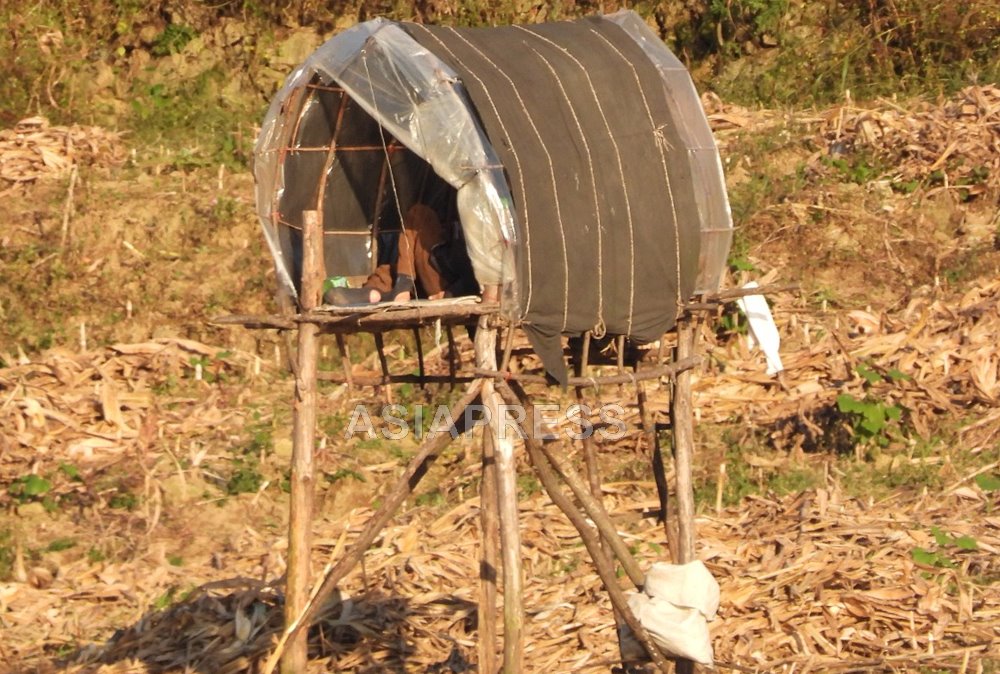
※ All photos were taken in September 2025 by the ASIAPRESS border reporting team. The photos were taken of Sakju County in North Pyongan Province from the Chinese side of the border.
※ ASIAPRESS communicates with its reporting partners through Chinese cell phones smuggled into North Korea.