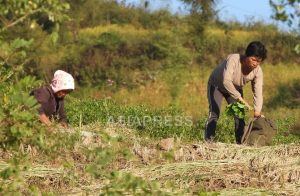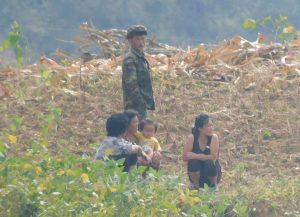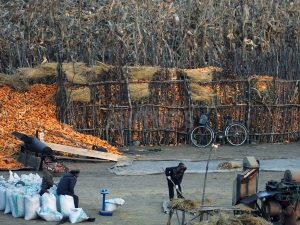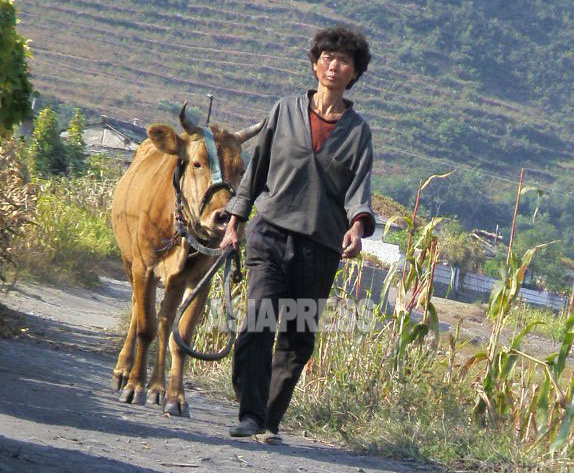
ASIAPRESS has confirmed that North Korean authorities have begun leasing out "small plots" (sotoji) — illegal farmland that individuals had cultivated in mountainous areas, previously confiscated under the pretext of "forest protection" — to institutions and enterprises on the condition that 40% of the harvest be paid as rent. The information was relayed in early March by a reporting partner living in North Hamgyong Province. The stated purpose is for cash-strapped local governments to use the rental income to cover reforestation costs. (JEON Sung-jun / KANG Ji-won)
◆ "Small Plots Leased to Institutions and Enterprises — Not to Individuals"
According to Reporting Partner A in Hoeryong, North Hamgyong Province, the local People's Committee's Land Management Bureau and the Forestry Management Office have begun distributing usage rights to small plots among institutions and enterprises.
North Korean authorities have in recent years declared annual "forest restoration campaigns," using them as justification to aggressively reclaim the small plots that North Koreans had depended on for their livelihoods. Those same plots are now being handed over to enterprises.
The reporting partner described the situation as follows:
"Starting March 14, the People's Committee's Land Management Bureau — working through the Land Inspection Brigade and the Forestry Management Office — is parceling out some of the small plots that individuals had previously cleared and farmed. It's limited to land within 150 meters of the base of mountain slopes."
Individuals, however, have been entirely excluded from the distribution.
"Individuals aren't eligible. I've heard that the small plots in the Hoeryong area total more than 20 jeongbo [approximately 20 hectares]. Land near farms generally goes to those farms to manage, while the rest is divided up by work unit, though approval from the Land Management Bureau is required first."