It has been a month and a half since the United States and Israel attacked Iran. The two countries have still not reached an agreement in negotiations to end the fighting. How are North Koreans understanding the current situation in Iran and the Middle East? In early April, ASIAPRESS spoke again with a Korean Workers' Party member and reporting partner living in North Hamgyong Province. (HONG Mari / KANG Ji-won)
◆ Even Party Officials Only Aware That "There Was Some Kind of Conflict in the Middle East"
In early March, ASIAPRESS asked three reporting partners living in northern North Korea about domestic reactions to Israel and the United States' surprise attack on Iran and the killing of its supreme leader. All three responded with shock, saying they had no knowledge of it whatsoever.
Reporting Partner A, who was asked to look into the matter again, is a Korean Workers' Party member living in North Hamgyong Province. "I've been hearing a lot about the situation in Iran through ASIAPRESS, but even if I suspected there might be a related meeting or rumor going around, I couldn't ask directly," they said, and reported the results of their careful investigation as follows:
"Nothing about Iran is known here. Nobody around me seems to know anything. I have an acquaintance on the city party committee, and when I heard there had been an international situation briefing for officials, I asked them how things stood abroad lately. They only knew that there had been some kind of conflict in the Middle East and that the global economy wasn't doing well."
◆ On the Killing of the Supreme Leader... "America Is Something Else"
Reporting Partner A then reflected again on the shock of Khamenei's killing:
"The fact that they can take out the president [meaning supreme leader] of another country if they set their mind to it — America is something else. I've heard Iran is a poor country, so I don't know what kind of security he had, but it's truly astonishing.
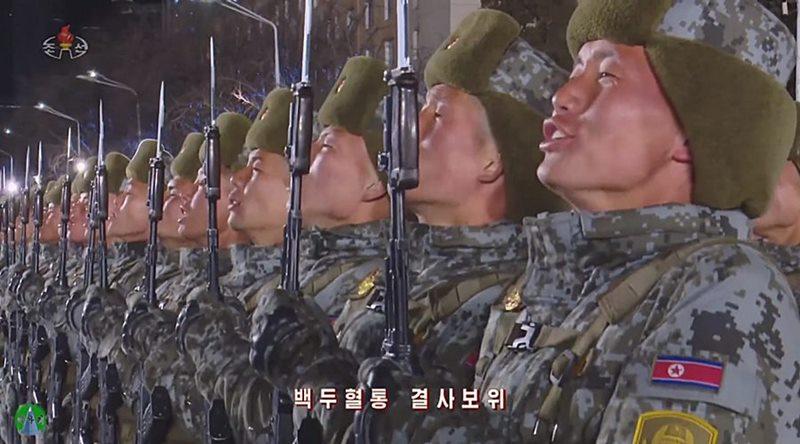
Maybe that's why they're promoting every day that we have nuclear weapons and that we're a nuclear power. At the spring conscription ceremonies this year, apparently the phrase kyŏlsa ongho — 'defend to the death' — has been coming up a lot. I'm not sure, but they say Kim Jong-un is quite close with President Trump, so surely he won't be assassinated?"
The phrase kyŏlsa ongho refers to defending Kim Jong-un, the Workers' Party's core leadership, or the "Paektu bloodline" — the Kim family dynasty — with one's life.
※ Chomo: The spring military conscription drive. Upon graduating from senior middle school (equivalent to high school), students are subject to enlistment unless they have health issues or are continuing their education.
◆ Lukashenko's Visit Spun as Proof That "The Anti-Imperialist, Anti-American Alliance Has Been Solidified"
North Korea's state media coverage of the Iran situation has been limited to a Foreign Ministry statement in early March condemning the U.S. and Israeli military strikes and a report on the selection of a new supreme leader in Iran, with no mention whatsoever of the assassination. However, the regime appears to be making full use of the situation as an opportunity to promote the solidarity of the pro-Russia camp, both domestically and internationally.
State media gave prominent coverage to Belarusian President Lukashenko's visit to Pyongyang in late March, during which he held talks with Kim Jong-un and signed a Treaty of Friendship and Cooperation. Belarus is a Russian ally that has also cooperated in the invasion of Ukraine.
During Lukashenko's visit, the message conveyed at a party members' meeting that Reporting Partner A attended emphasized the following:
"Party members were told in a lecture that the anti-imperialist, anti-American alliance had been solidified. Beyond that, the content covered how imperialists are disrupting the international order, how important nuclear armament is, and that a single-minded socialist society united behind the party and the leader [Kim Jong-un] is the secret to certain victory."