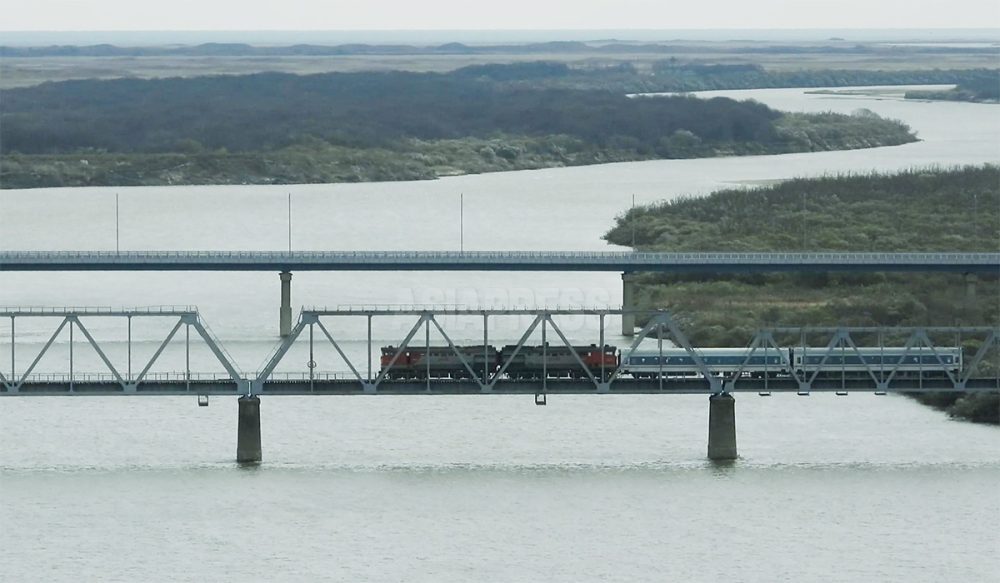
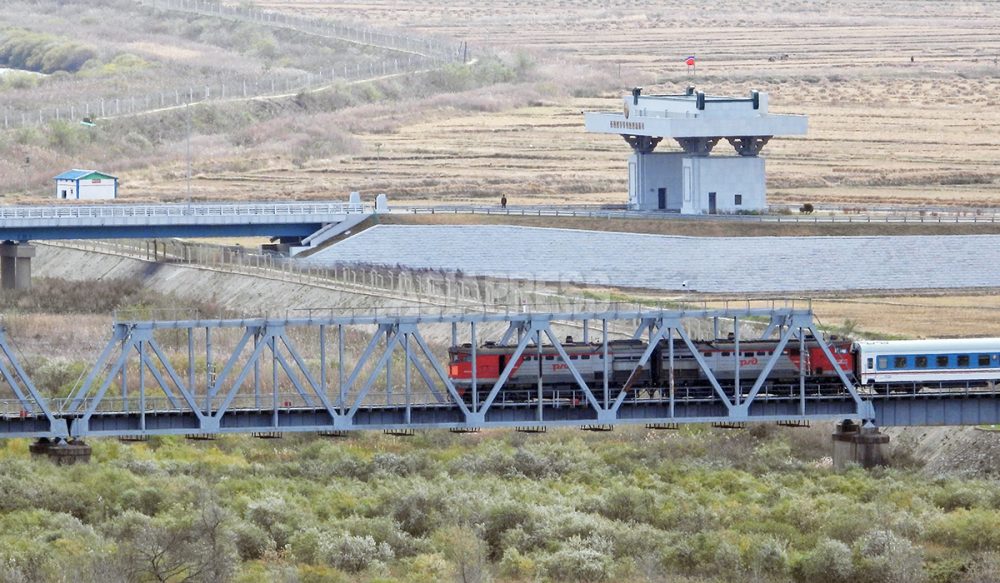
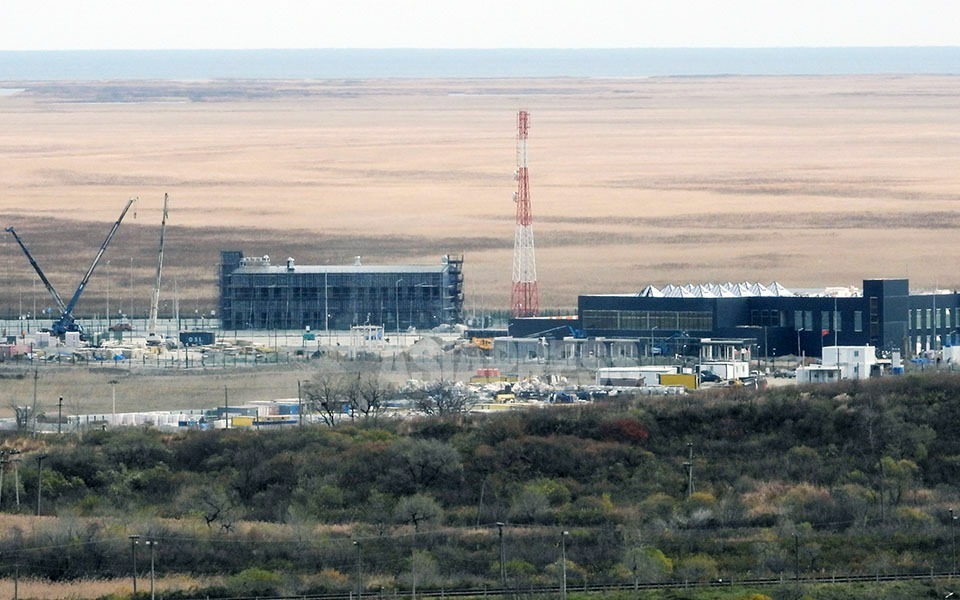
In late October, ASIAPRESS visited Fangchuan in Hunchun, Jilin Province, where the borders of China, North Korea, and Russia meet, to report on the North Korea–Russia border area. We confirmed the Tumen River road bridge linking North Korea and Russia, which opened on September 7, and new buildings at both ends of it that appear to be immigration and customs facilities. Some of North Korea’s military supplies for Russia’s war against Ukraine are reported to have been shipped across the railway bridge right next to the new road bridge. There are concerns that the new bridge will make it easier to move weapons and ammunition. (ASIAPRESS Editorial Department)
◆ More troops, weapons and ammunition moving in violation of sanctions?
The lowest 17 kilometers or so of the Tumen River form the border between North Korea’s Rason Special City and Russia’s Khasan District in Primorsky Krai. The new road bridge stands about 500 meters downstream of the existing railway bridge. It was built under the Agreement on the Construction of a Road Bridge on the Tumen River Border, which was signed alongside the Treaty on Comprehensive Strategic Partnership at the North Korea–Russia summit in June 2024. It opened on September 7 this year.
Compared with photos ASIAPRESS took in September last year, the bridge has been completed in the past year, and buildings that appear to be immigration and customs facilities have gone up on both sides.
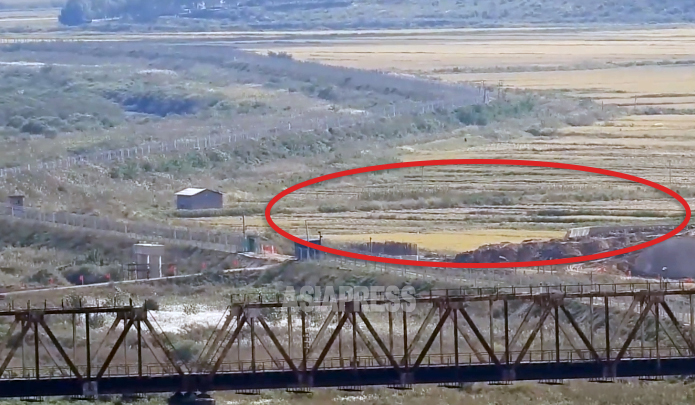
The Multilateral Sanctions Monitoring Team (MSMT), made up of 11 countries including Japan and South Korea, said in its first report, released in May 2025, that about 14,000 North Korean troops were sent to Russia between October 2024 and March 2025, and that North Korea also supplied artillery shells and missiles. The North Korean and Russian governments officially acknowledged the troop deployment in April 2025.
This is a direct violation of UN Security Council Resolution 2270, which imposes an arms embargo. The new road bridge could also be used in the future to move military supplies and goods that evade sanctions.
◆ Many Russian freight cars on the North Korean side
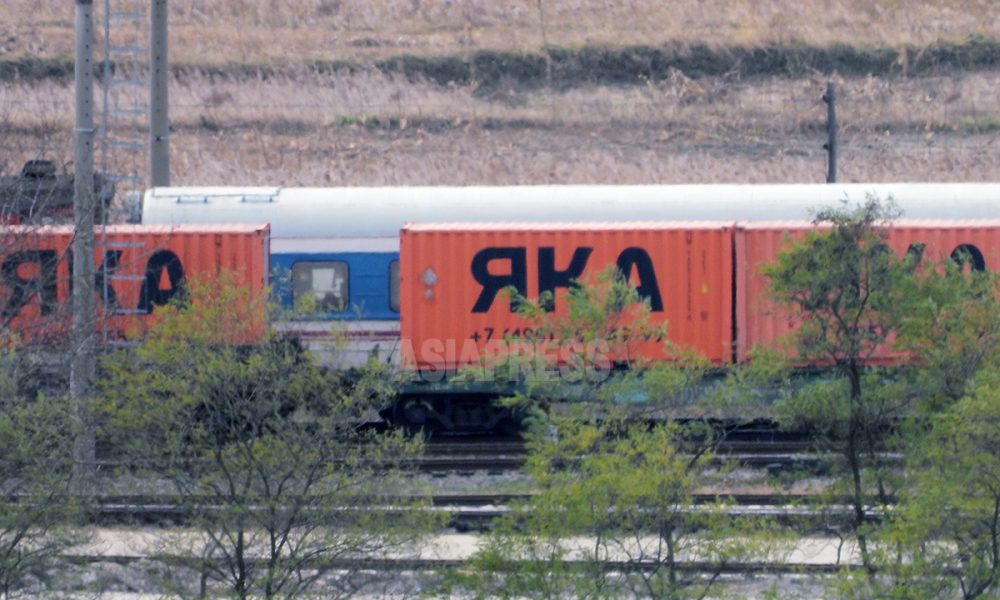
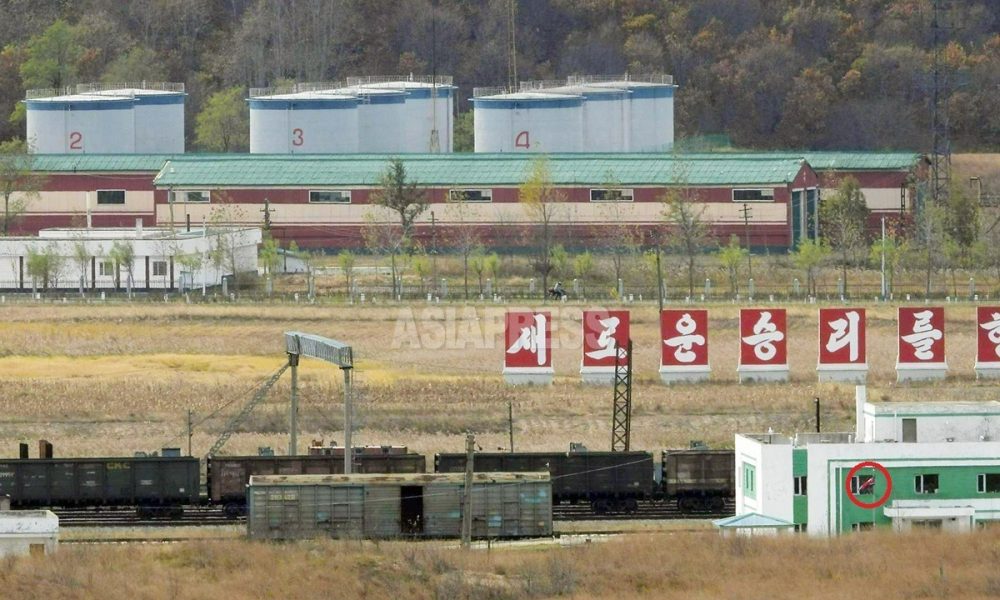
Around Tumangang Station, the hub of North Korea–Russia trade, we saw a lot of freight activity tied to the Russian rail network: freight cars carrying Russian containers, tank cars for oil and other liquids, and open freight cars.
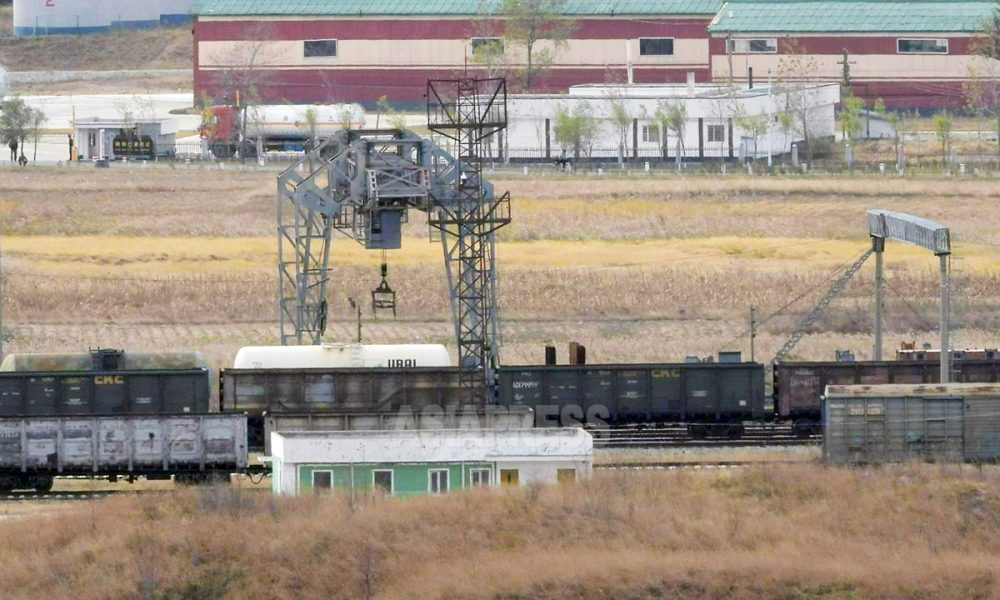
Large, numbered oil storage tanks stand behind Tumangang Station.
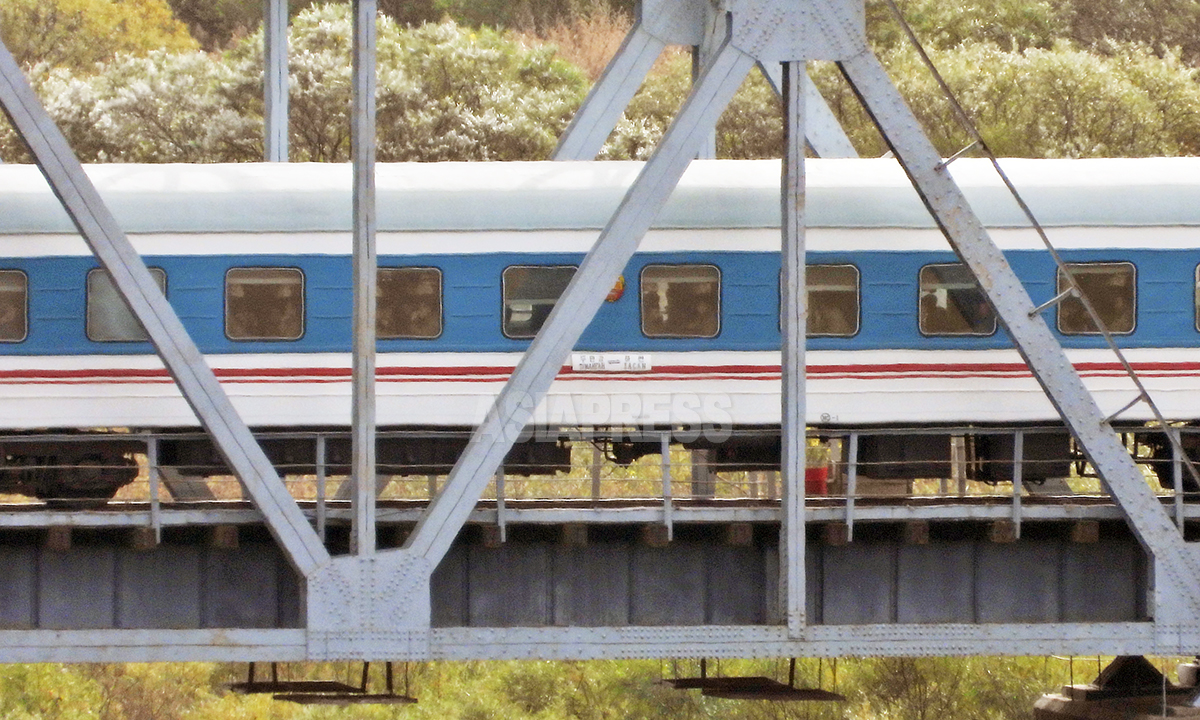
While we were there, we saw a passenger train leave North Korea’s Tumangang Station and cross the railway bridge toward Khasan Station in Russia. Passengers could be seen inside a carriage bearing North Korea’s national emblem and a “Tumangang–Khasan” destination sign, but we could not tell whether they were North Koreans or Russians. We did not see any vehicles crossing the road bridge that day.