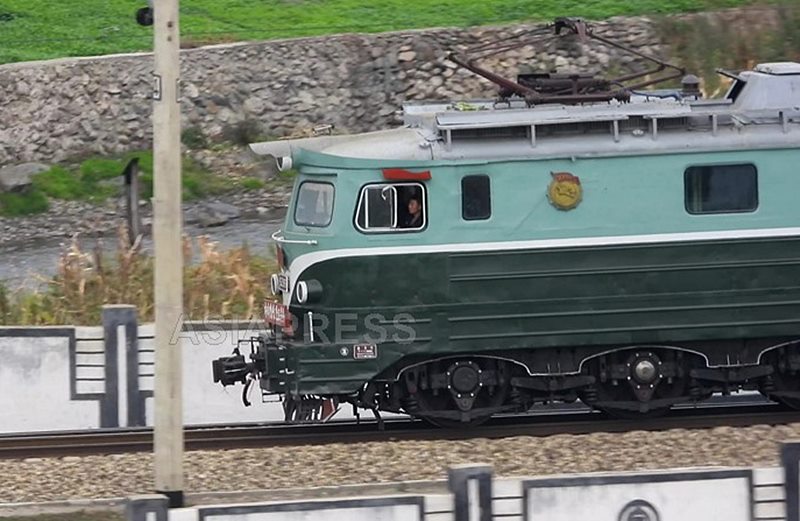
North Korea's chronic electricity shortage shows no signs of significant improvement. Energy scarcity and the failure to properly repair and upgrade aging power generation and transmission infrastructure, except in the capital, Pyongyang, continue to plague the country. While the Kim Jong-un regime has been diverting limited electricity to industrial use, orders were issued in September of last year to concentrate power supply on the railways, according to reports. (ISHIMARU Jiro / KANG Ji-won)
◆ Even in provincial capitals, electricity available only 3 hours daily
In September 2025, the ASIAPRESS reporting team conducted fieldwork along the North Korea-China border. From the upper reaches of the Yalu River, we observed the nighttime scene of Hyesan in Ryanggang Province, located across from Changbai County in China's Jilin Province. Only scattered lights dotted the darkness; an inky blackness stretched before us. The difference in nighttime brightness between the two sides of the Yalu River border was stark.
In Sinuiju, North Pyongan Province, along the lower reaches of the Yalu River, facilities, roads, and apartment buildings facing the Chinese side were brightly lit, but residential areas beyond them showed only sparse, dim lights.
Multiple reporting partners residing in Hyesan stated that "power outages remain a daily occurrence, with electricity for residents available only about 3 hours per day."
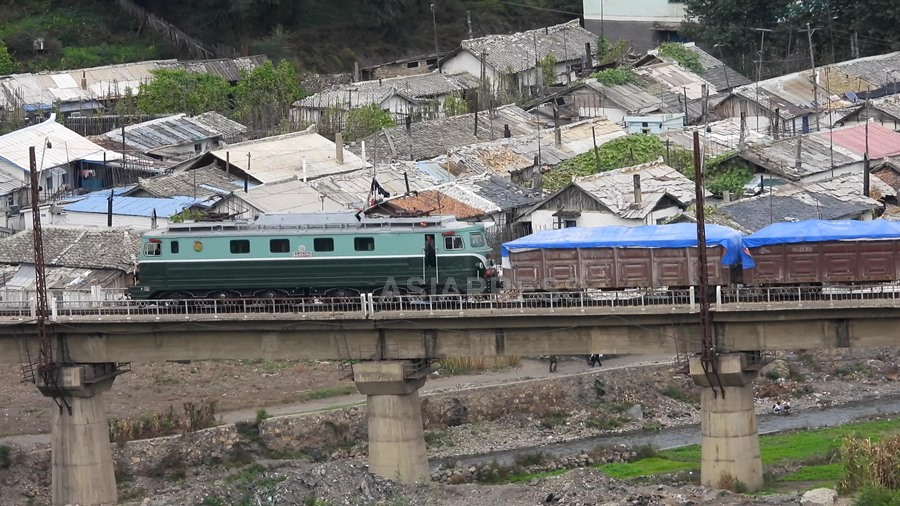
◆ Rail transport takes top priority
Under these dire power conditions, the Kim Jong-un regime issued orders in September of last year to prioritize electricity supply to railways in provincial areas. Reporting Partner A, who lives in an urban area of North Hamgyong Province, explains:
"Orders came down from the central government saying, 'Railways are the nation's arteries. Transport goods on time to contribute to people's livelihoods.' They directed that power be supplied to railways as a priority, and in areas with frequent blackouts, to coordinate with the Ministry of Railways to set train operation hours from 3 PM to 5 PM, ensuring train operations even if it means cutting off industrial power supply during those hours.
Previously, railways transported state cargo and raw materials and supplies needed by state-run factories, but recently they're requiring even food, light industrial products like clothing and sundries, and daily necessities to be transported by rail."
※ North Korea has separate power lines: "industrial lines" exclusively for supplying electricity to party and administrative agencies, factories, and enterprises for production, and "residential lines" for supplying power to ordinary households.
Multiple reporting partners living in Hyesan have provided similar reports. Reporting Partner B explained:
"Electricity for Hyesan residents is supplied only 3-4 hours per day, but they say rail transport has top priority, followed by concentration on state-run factories and local factories. The railway runs about 2-3 passenger trains and around 3 freight trains daily, and they're mandating that even passenger trains attach at least 2 boxcars for freight. It's a requirement to prioritize moving food and state factory products, using trains rather than trucks."