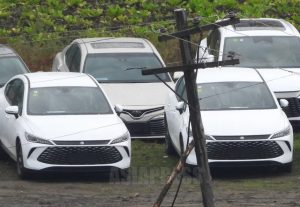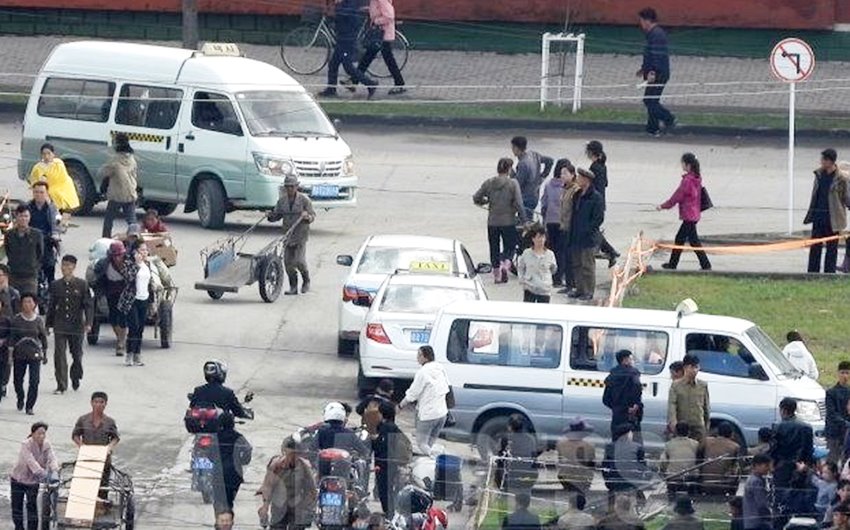
In early 2025, North Korea permitted private vehicle ownership. ASIAPRESS, working with reporting partners inside the country, has previously reported on a surge of smuggled vehicles entering from China and signs that taxi and car rental businesses are expanding. According to recent reports from inside North Korea, female drivers have begun appearing on the roads — but are meeting with strong resistance from men. A reporting partner in Hyesan, Ryanggang Province, filed this report in late March. (HONG Mari / KANG Jiwon)
◆ Women Behind the Wheel — Including Husband-and-Wife Taxi Teams
A reporting partner living in Hyesan describes the recent changes:
"In the old days, if you saw a Chinese woman driving in Rajin (the special economic zone), people would stare in amazement. Now you start to notice it here too, little by little. Even in Hyesan, you occasionally see women driving with dark sunglasses on.
There are also women who take turns driving taxis with their husbands. Of course, not just anyone can drive — getting a license is something for the children of officials or the donju (the new wealthy class). It seems more common for them to drive their own family's or company's car rather than driving professionally. Apparently female drivers are even more visible in Chongjin, Hamhung, and Pyongyang."
But men's reactions to female drivers, the reporting partner says, can be harsh.
"There are men who spit when they see a woman driving. No matter how much the Party talks about a society of gender equality, deeply ingrained male-supremacist attitudes are still very much alive."
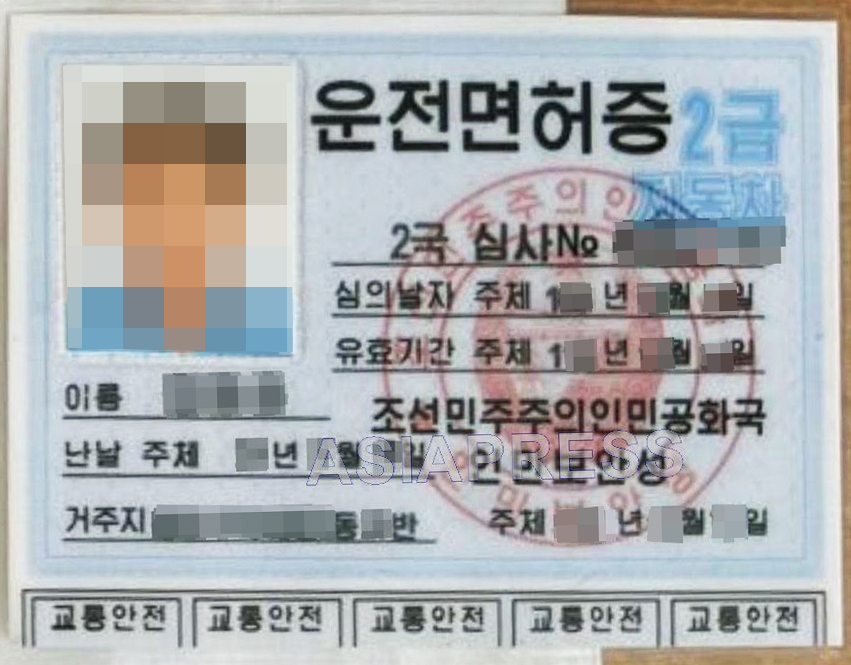
◆ License Costs Hit 1,950 USD — A 12.5-Fold Jump in Three Months
The deeply rooted belief that driving is men's work is surely part of it — but that may not be the only reason men are hostile toward female drivers.
In a January article, ASIAPRESS reported that the bribe required to obtain a license, which "used to be settled for 300–500 yuan (approximately 39–65 USD), now requires at least 1,200 yuan (approximately 156 USD) even if you already know how to drive." In just the past three months, that figure has reportedly skyrocketed to 15,000 yuan (approximately 1,950 USD).
"There was a time when the feeling was, 'Maybe someday we'll be able to drive too,'" the reporting partner said. But driving has now become a symbol of wealth, and for the majority of ordinary people, it serves as a sharp reminder of the widening gap between rich and poor. In a society where contempt for women runs deep, frustration appears to be directed at female drivers — with the sentiment being: "I can barely afford rice, let alone a car, and here's a woman driving one."
The number of people seeking driver's licenses has surged, but for now it remains a phenomenon limited to the wealthy.
"There are a lot of people who want to drive, but most can't afford it. Rather than using a private car to make money (by seeking out business), most people are earning wages by working as hired taxi or freight drivers."


![[Video Report] 'Doegurikun' the urban poor who delivers grains from farms to market](https://www.asiapress.org/rimjin-gang/wp-content/uploads/2018/07/20120524_daegeri_01-150x150.jpg)