◆ Rows of trucks without license plates
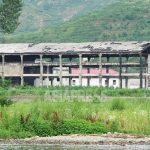
Beneath the bridge on the Chinese side, around 20 red trucks without license plates were parked. U.S.-based Radio Free Asia (RFA) reported that satellite imagery taken on Oct. 6, just before the opening, showed about 100 blue, red and gray cargo trucks gathered in the area. According to RFA, the trucks were first spotted on Sept. 20, grew to more than 60 by the 28th, and reached about 100 by Oct. 6.
North Korean and Chinese media also reported that on the 15th, the day of the opening ceremony, a large number of red trucks crossed from China into North Korea. Exporting vehicles to North Korea violates UN Security Council sanctions.
However, as ASIAPRESS reported in October, Chinese vehicles have been entering Ryanggang Province in northern North Korea through official trade since around August. Vehicles are expected to be exported to North Korea via the new bridge as well.
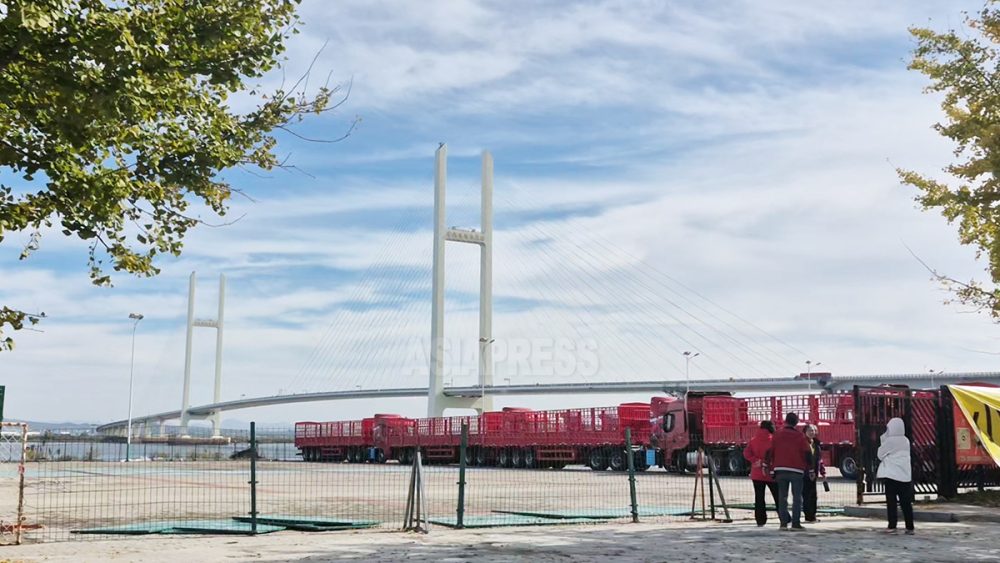
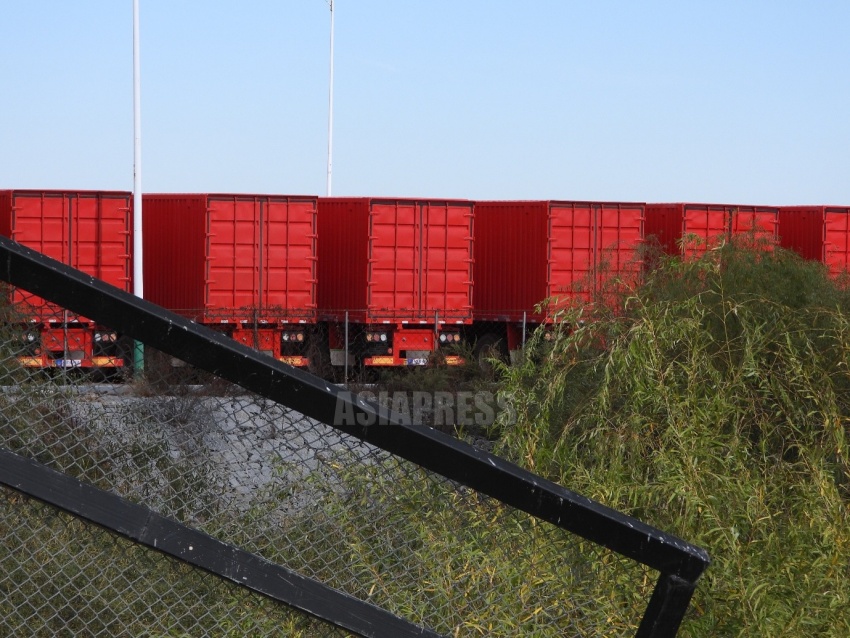
◆ Related facilities built on the North Korean side too
On the North Korean side, where there were no buildings as recently as last year, a new customs gate and related facilities have also been built. North Korea-China trade is an important barometer of relations between the two countries. Attention now turns to when the new bridge will begin full-scale operations.
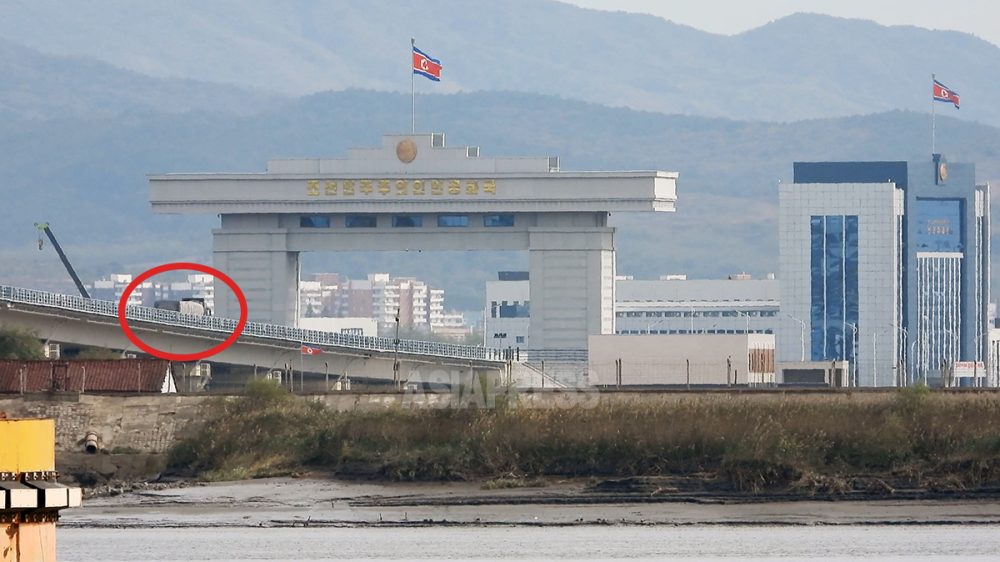
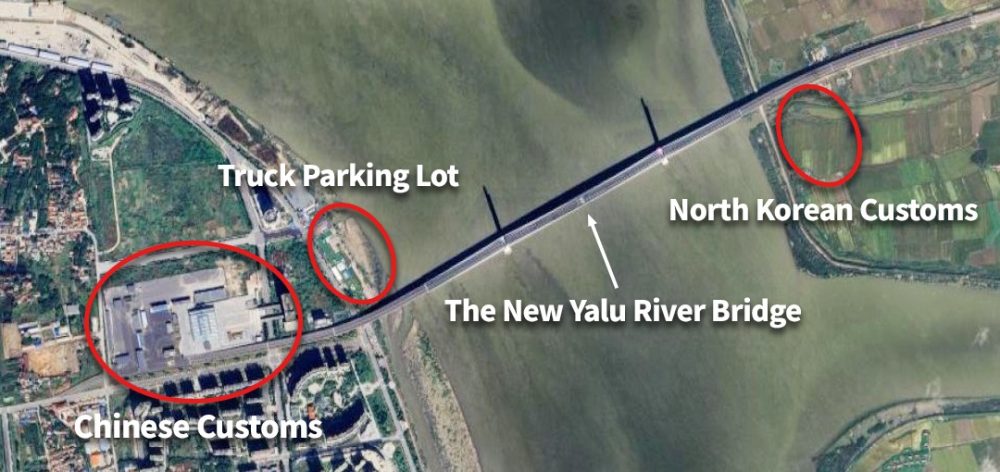
※ All photos taken by ASIAPRESS in October 2026 (except the 2012 construction photo).