Photos taken inside North Korea confirm that severe hyperinflation is underway in the country. ASIAPRESS obtained photos of the price tags at a mobile fruit stand in Pyongyang. They were taken by a Chinese trader who visited Pyongyang in late June. (HONG Mari / KANG Ji-won)
◆ QR Code Payments Even at Street Stalls
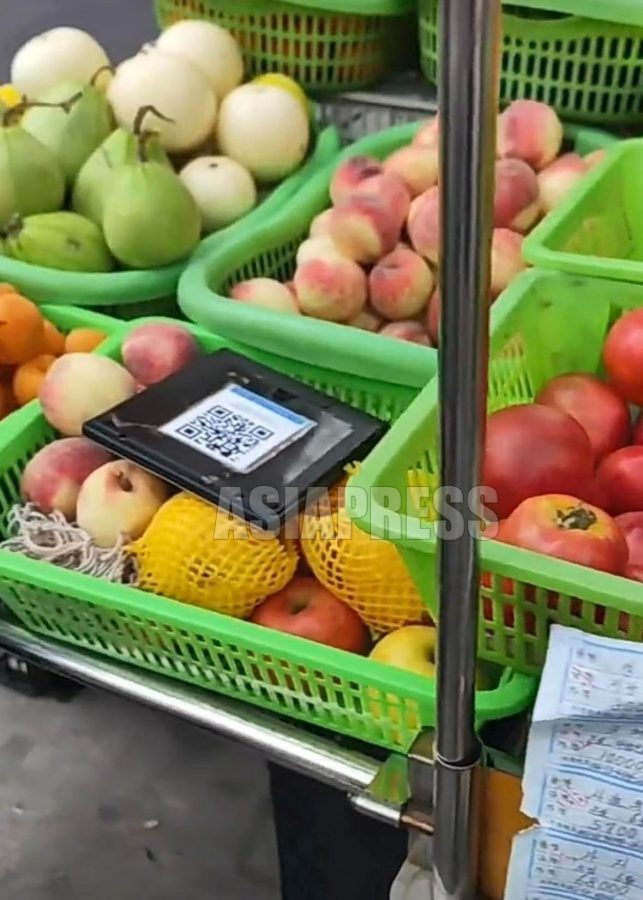
ASIAPRESS obtained three photos, taken in Pyongyang by a Chinese trader who was in the city on a business trip in late June. A cart parked on the street holds a wide variety of fruit in baskets. Two women, apparently customers, are picking out fruit.
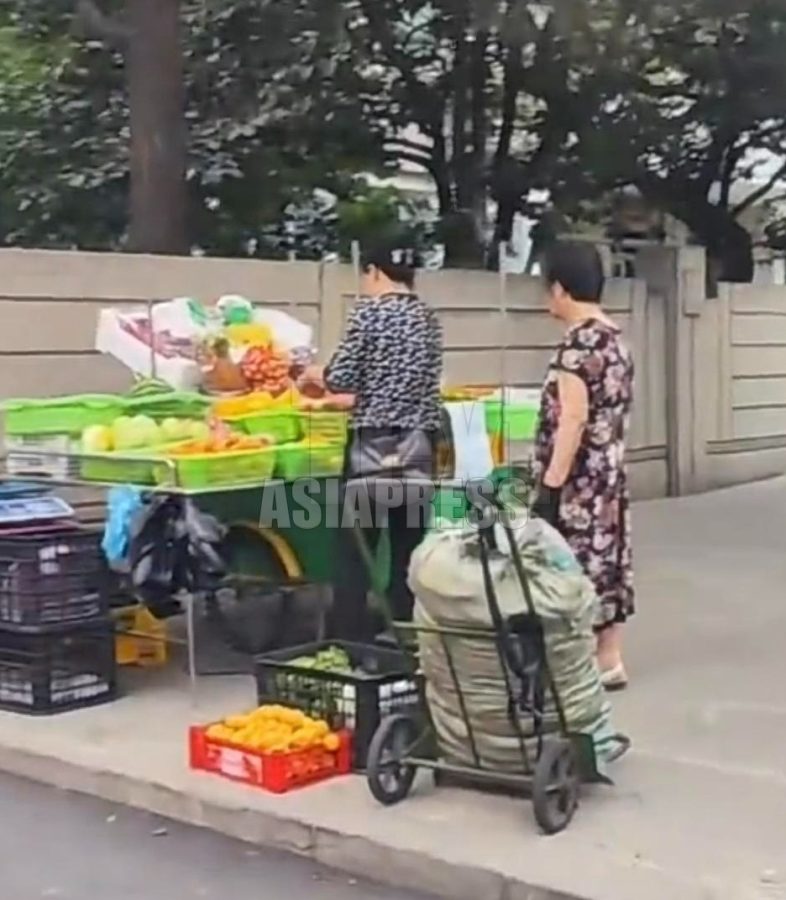
This appears to be not a private business, but a mobile sales outlet run by the fruit department of a state-run store. A payment QR code is placed on top of the fruit, suggesting that purchases are made by electronic payment.
◆ "Pricing Bureau" Approval Stamps on the Price Tags
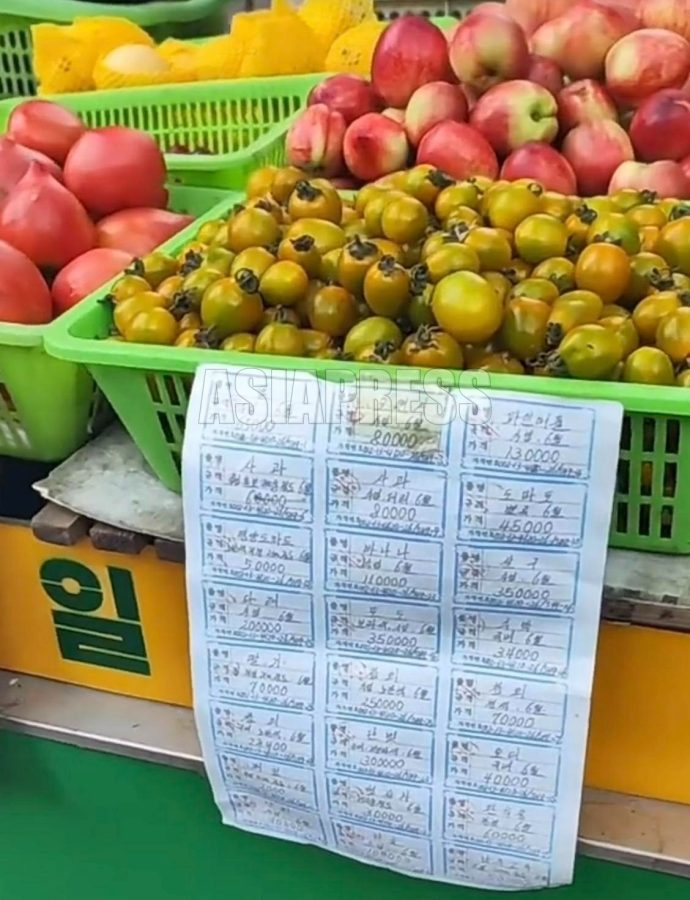
The third photo is somewhat blurry, but the price tags are legible. Each entry lists the item, specification and price, in that order.
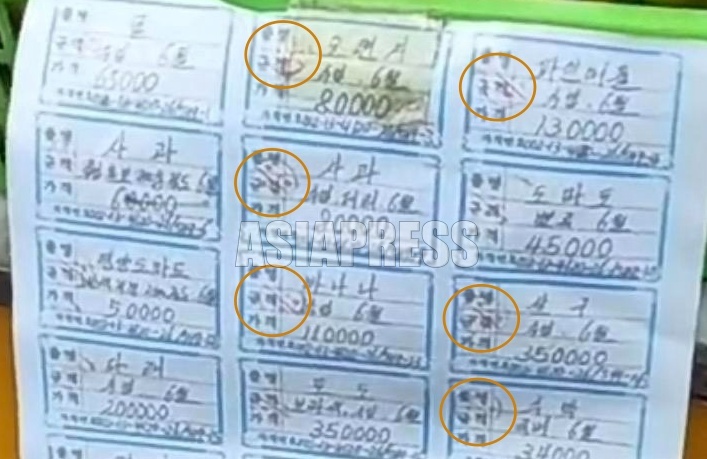
Zooming in on the photo shows a stamp on each individual entry. Prices of goods at state-run stores are set by the "pricing bureau" of the people's committee (local government). The stamps are most likely approvals indicating that all of these prices were set by the pricing bureau in June.
The legible portions are organized in the table below. Portions that could not be deciphered are marked "○○." We have made every effort to be accurate, but errors are possible.
※ ○○ = illegible. Prices are per kilogram. Units are North Korean won.
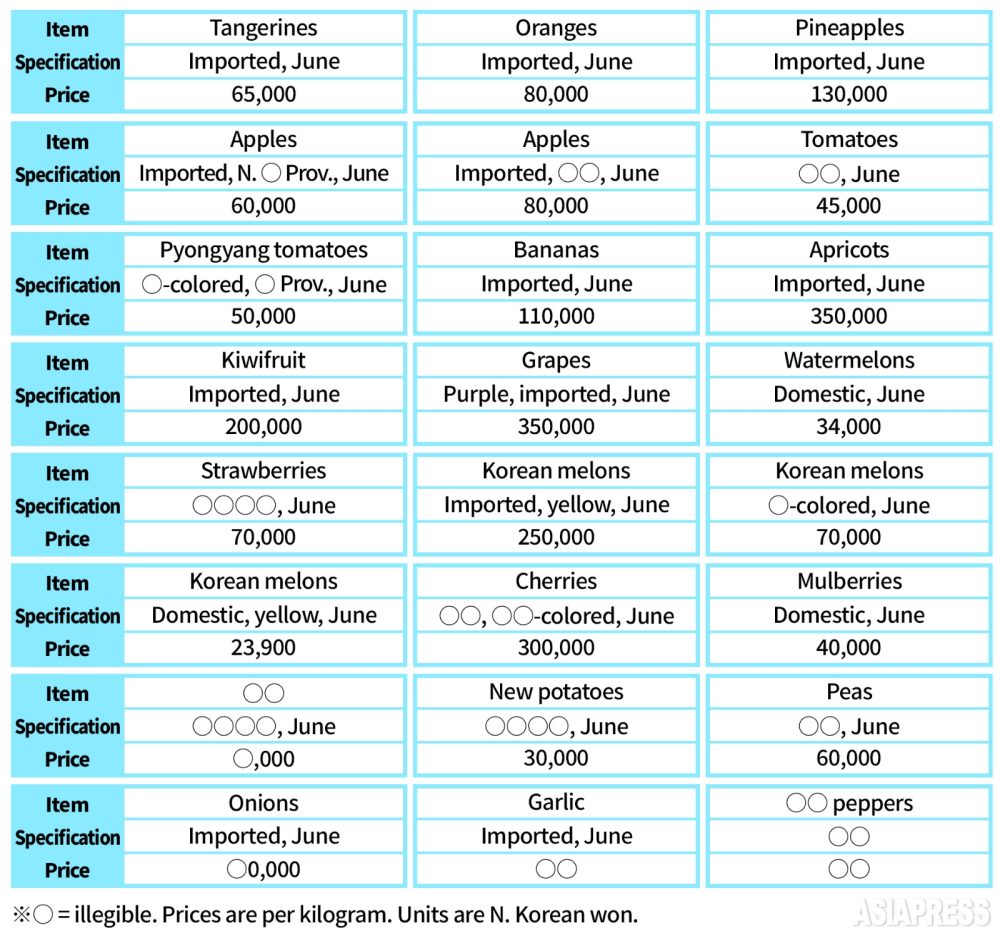
The specification column appears to indicate whether each fruit or vegetable is imported or domestic and, if domestic, where it was grown. Even so, every price is steep. Imported grapes cost 350,000 won per kilogram, and cherries 300,000 won.