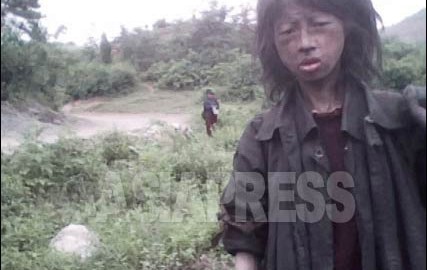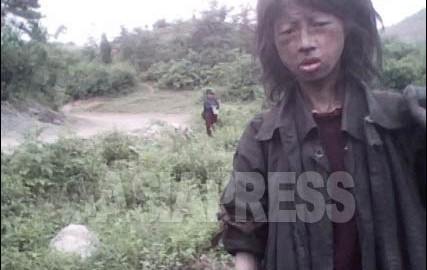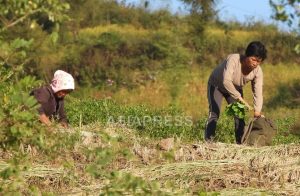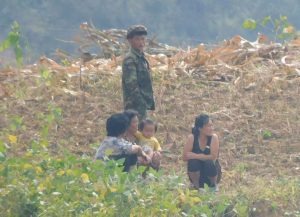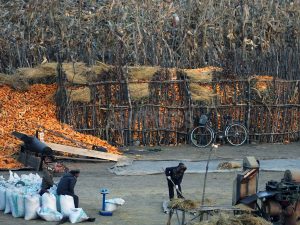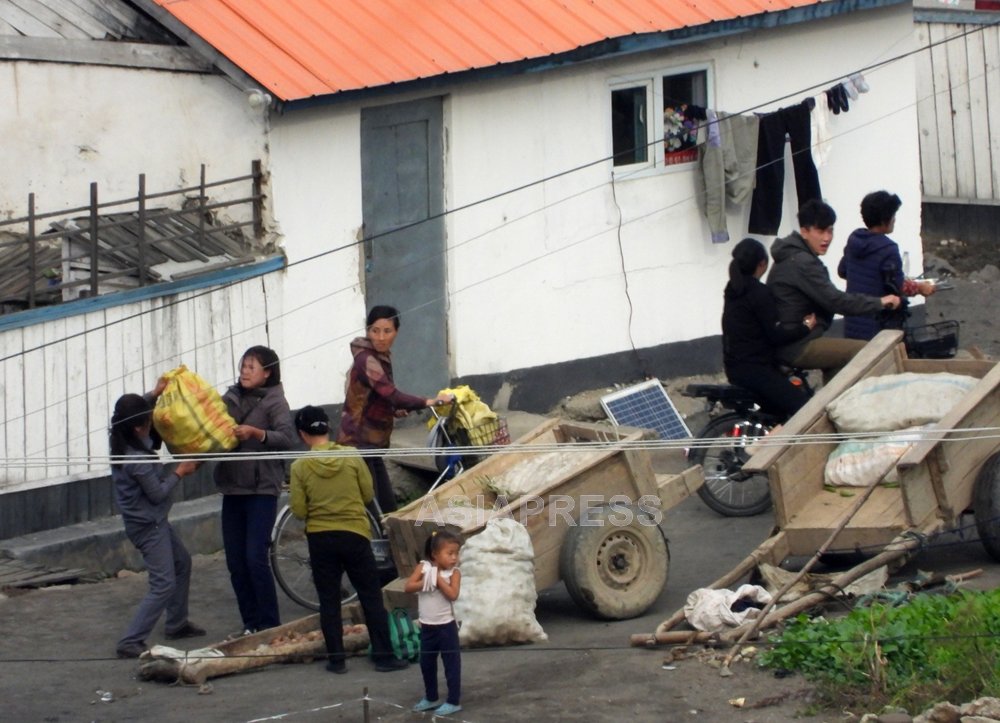
Among all of North Korea’s social organizations, the one with especially strong organizational power is the Women’s Union (the Socialist Women’s Union of Korea), made up mainly of full-time housewives. In the previous installment, we reported on how its members are driven into mobilized labor in a wide range of areas—farm work, construction, cleaning, road repair and more—for more than half of every month. This grueling physical labor is completely unpaid. Not only that, but it has emerged that Women’s Union members are also made to pay substantial “union dues” every month. Several female reporting partners living in Ryanggang Province and North Hamgyong Province conducted the investigation. (HONG Mari / KANG Ji-won)
◆Mobilized More Than Half the Month, for Zero Pay
In the previous installment, Reporting Partner A in North Hamgyong Province described how much of each month Women’s Union members are tied up by mobilization to farm work, construction sites and the like: “We’re mobilized 14 to 17 days a month, for an average of about eight hours a day. Some days it’s just three hours in the afternoon.” Reporting Partner B in Ryanggang Province said, “Mobilized labor is at least 15 days a month, about five to six hours a day.”
The mobilization is basically outdoor physical labor, and though the hours are long, it is, astonishingly, unpaid. However, B said, “If you show up for mobilization, your union dues may be reduced.”
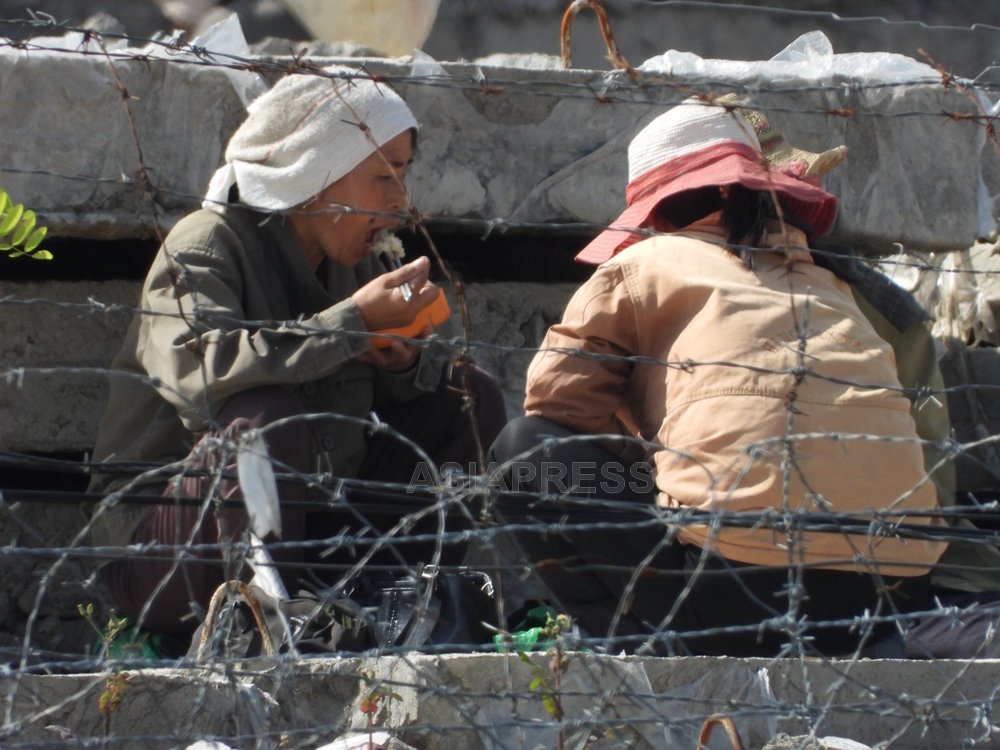
Women’s Union members are forced to pay “union dues” every month. The female reporting partners in Ryanggang and North Hamgyong provinces all gave the same answer: “Union dues are 15,000 won a month.” In other words, members are mobilized for long hours without pay and must hand over money on top of it. However, those who take part in mobilization without missing a day can reportedly have their dues reduced to 5,000 won a month.
※ 10,000 North Korean won equals approximately 183 South Korean won (as of October 23, 2026)
◆Once, Bribes Could Get You Out of Mobilization
Where does the 15,000 won in dues go? According to the two reporting partners, 10,000 won goes to “mobilization support work”—that is, meals and other expenses for members sent out on mobilization—while the rest covers the Women’s Union’s operating costs. In addition, when goods produced by the Women’s Union are sold, or when the site members are dispatched to pays for their labor, the Women’s Union collects the payment and uses it for operating expenses, necessary equipment, fuel and the like.
It is easy to imagine how much suffering this completely uncompensated mobilization causes women. In the past, it was an everyday occurrence to pay bribes to escape labor mobilization, study sessions and other parts of organizational life in order to concentrate on trading in the jangmadang (markets) and elsewhere. However, after the authorities seized on the COVID-19 pandemic to strictly restrict individuals’ economic activities, controls aimed at binding full-time housewives to Women’s Union organizational life were tightened.
Indeed, a reporting partner in Ryanggang Province told us in 2024: “We’re so busy—regular study sessions on Wednesdays, lectures on Fridays, and life review sessions and lectures on Saturdays. Attendance is strictly managed, too, and now there’s a system where anyone who doesn’t attend is investigated and reported.”
According to B, a growing number of people have recently been taking jobs to get out of the Women’s Union. At a workplace they must belong to the General Federation of Trade Unions of Korea instead, but they apparently judge that to be better than the Women’s Union’s relentlessly busy organizational life.
※ Life review session (saenghwal chonghwa): a self-criticism meeting that all North Koreans are required to attend, held once a week within the organization to which they belong.
That said, there still appear to be people who pay to get out of organizational life. In one neighborhood (dong) of Hyesan, Ryanggang Province, only about 50–60% of the 350 Women’s Union members show up for mobilization, B says. “About 50 people pay money to skip mobilization, and the rest can’t come because of personal circumstances or illness.”
Mobilization for state-led projects, unlike routine mobilization such as cleaning and road repair, is strictly enforced, and getting out of it reportedly requires far larger bribes.
“A construction boom started this year, and we’re required to be mobilized to construction sites four days a week. As of September, it costs 10,000 won to skip half a day and 25,000 won to skip a full day,” B said.