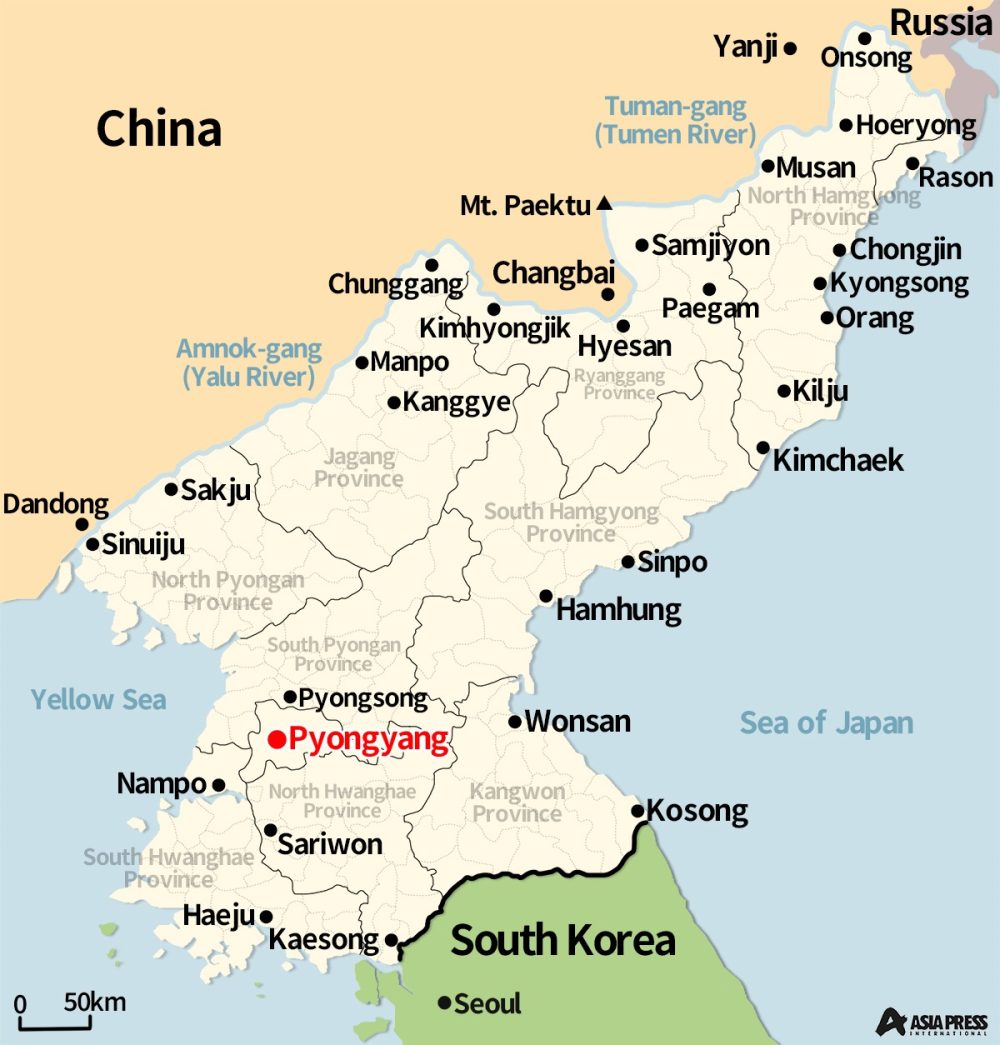
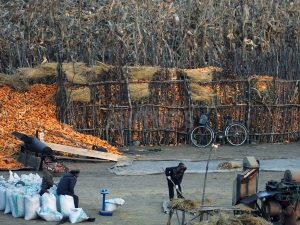
◆ Processing-for-hire side jobs: a vital source of income for residents
Processing-for-hire is such a common home-based side job for North Korean women that one reporting partner said, “There’s no one around me who doesn’t do it.”
“It’s as if the whole country has been mobilized to do subcontracting work for the Chinese. Apart from people who are a bit better off, everyone does processing-for-hire: wigs, hats, knitting, doll-making. So many people want the work now that there isn’t work every day.”
This is how many reporting partners describe the rush of women into processing-for-hire.
The reason is simple: processing-for-hire is a vital source of income for residents. Monthly wages at North Korean state enterprises are about 35,000–50,000 won (about 0.5-0.7 USD). Meanwhile, severe inflation pushed the price of one kilogram of corn above 10,000 won for the first time ever in August. In the latest ASIAPRESS price survey (as of October 2), white rice cost 45,000 won per kilogram and corn cost 13,500 won. A monthly wage can buy barely one kilogram of white rice, or just 2.5–3.5 kilograms of corn.
Some residents say that at night, children and husbands join in as well, with “the whole family mobilized to work.” But because power outages are frequent, the delicate work often has to be done in the dark, and “even healthy people wreck their bodies (their eyes) after one or two months of it,” one said.
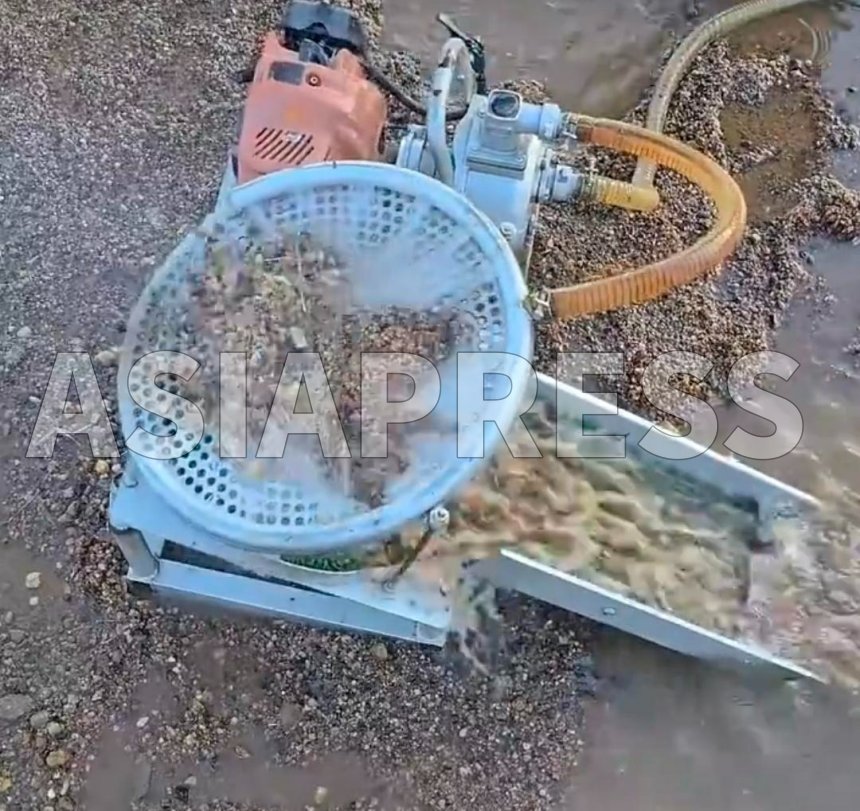
Even so, it is nowhere near enough to cover living expenses. Besides climbing the mountains to gather medicinal herbs and wild greens or cutting firewood to sell, many people reportedly pan for gold along riverbanks. The photo below shows a gold-panning machine imported from China.
◆ Domestic snacks well received: a wide range of designs and flavors
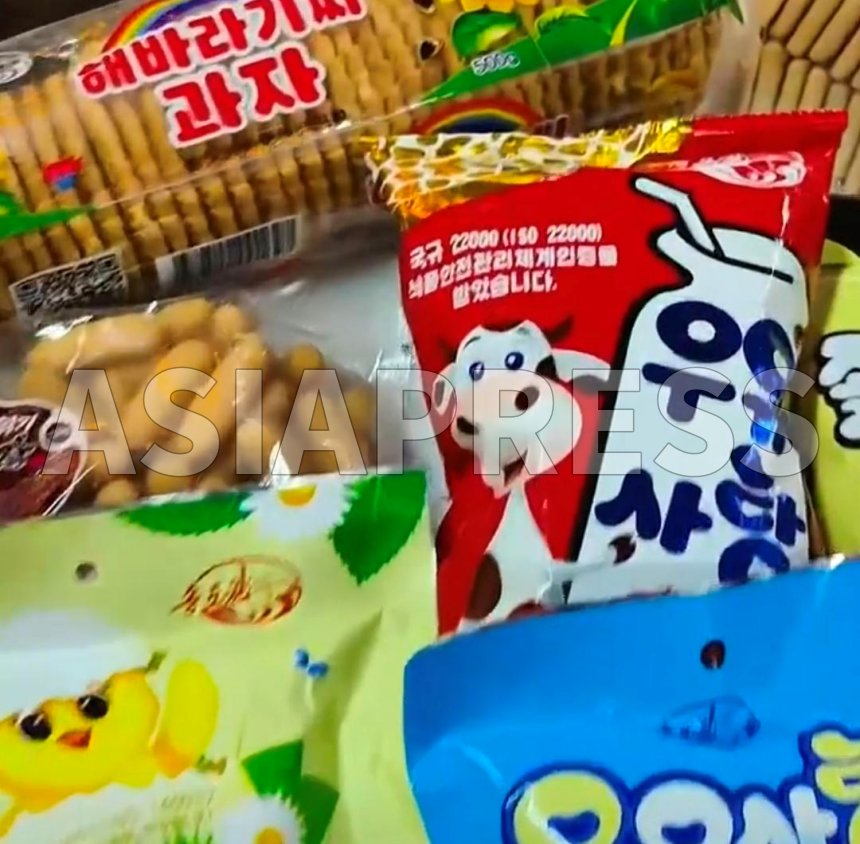
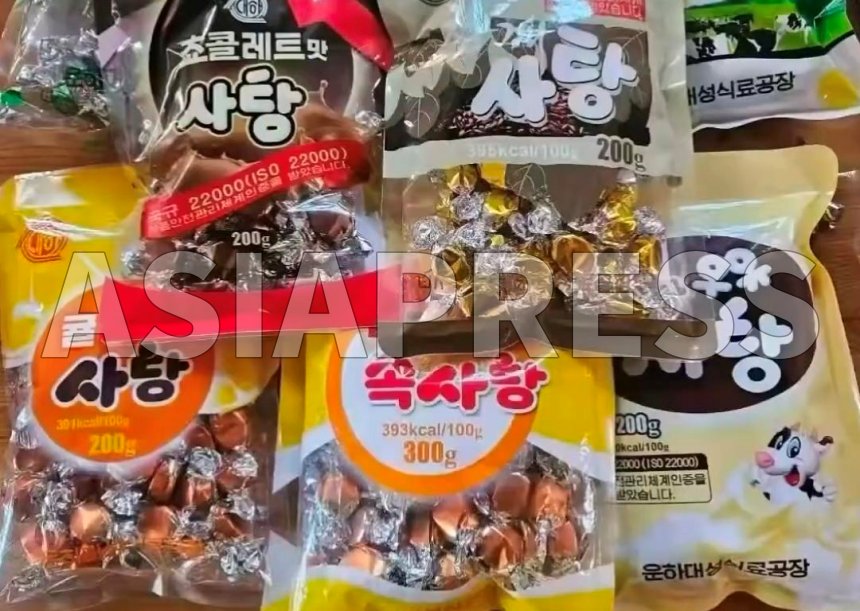
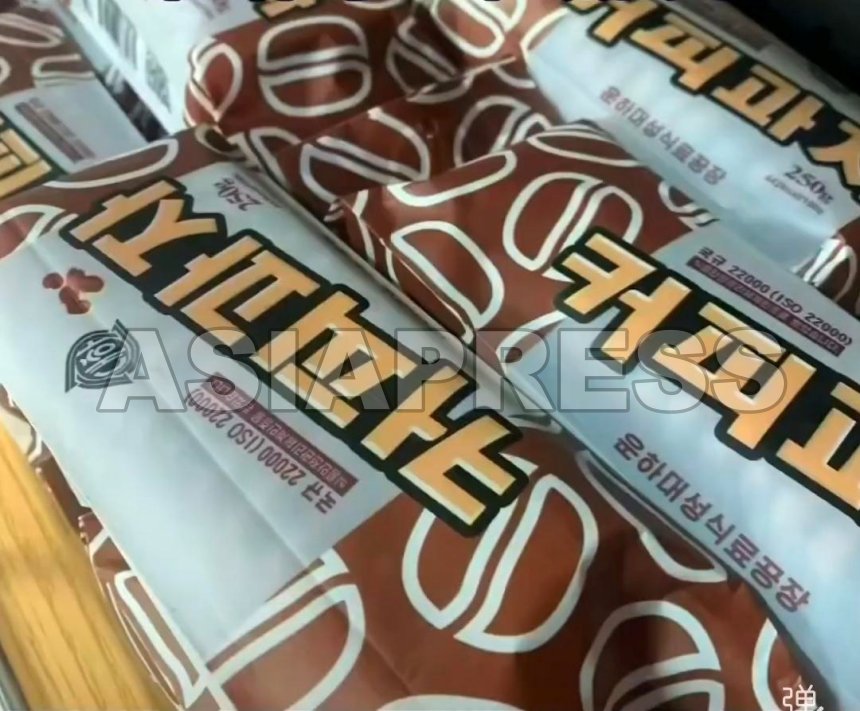
Finally, here are photos of snacks sold at state-run stores.
The Kim Jong-un regime has been promoting domestic production of consumer goods since around 2017. A reporting partner in Ryanggang Province said, “Domestic food products have become pretty well established. Candy and snacks in particular are as popular as Chinese products.” However, the raw materials are imported from China, so in the end people still see them as “half-Chinese,” the reporting partner said. As of June, candy sold for 4 yuan (about 0.6 USD) and snacks for 7 yuan (about 1.05 USD).

※ASIAPRESS communicates with its reporting partners through Chinese cell phones smuggled into North Korea.