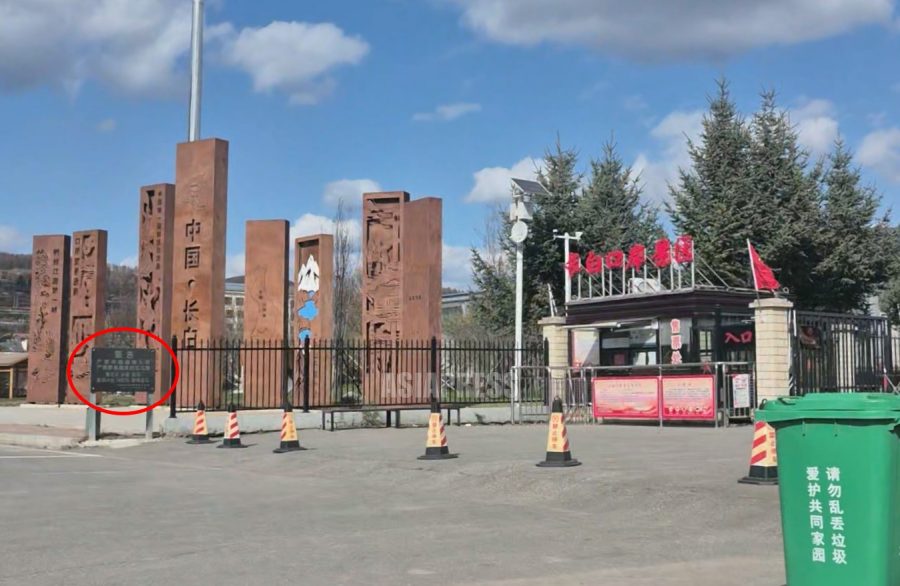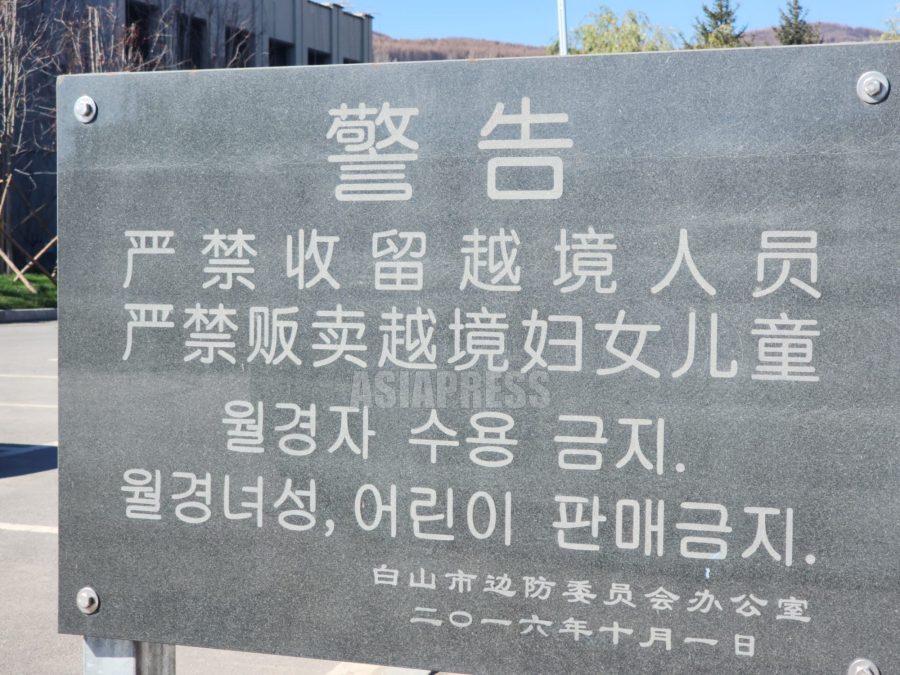
While visiting the upper reaches of the Yalu River on the North Korea-China border in late October, the ASIAPRESS reporting team came across a sign that read "No selling of border-crossing women and children." Put up by Chinese authorities, the sign is a warning that the trafficking of North Koreans will not be tolerated. Using the COVID-19 pandemic as an opportunity, the Kim Jong-un regime completely sealed the border with barbed wire and surveillance cameras, and crossing into China is now close to impossible. Even so, the sign suggests that Chinese authorities have not let their guard down against defections or against the trafficking of women and children. (ASIAPRESS Editorial Department)
◆ Ryanggang Province became the main hub for defections
The strange sign stands near the customs facility in Changbai Korean Autonomous County, Jilin Province, China. The border between China and North Korea is formed by two large rivers that flow out from Mount Paektu: the Yalu and the Tumen. Changbai County sits on the upper reaches of the Yalu, and the river separating it from Hyesan, Ryanggang Province, on the North Korean side is only a few dozen meters wide.
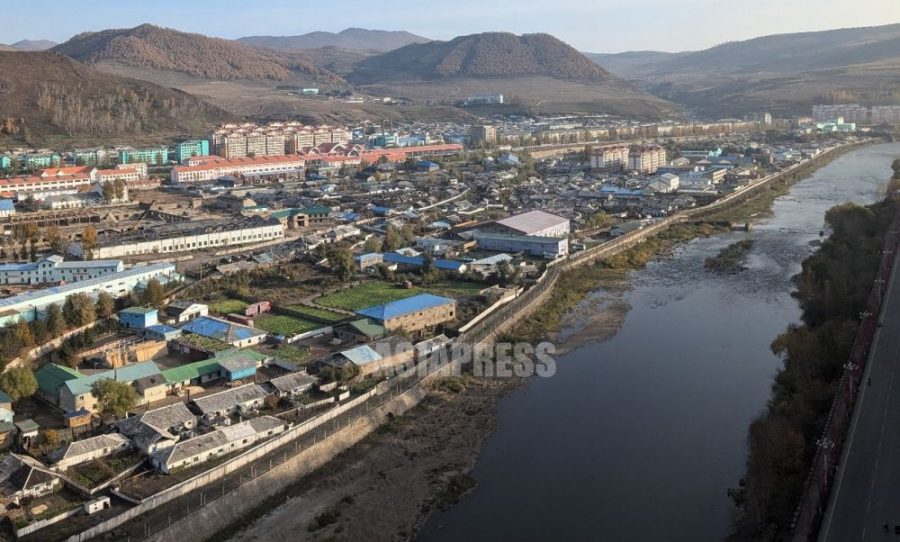
According to statistics from South Korea's Ministry of Unification, a cumulative total of 34,600 North Korean defectors had arrived in South Korea as of the end of June 2026. Arrivals peaked in 2009, when 2,914 defectors entered the country. The number then dropped sharply as security along the North Korea-China border was tightened, but Hyesan came to be known as the main hub for crossing into China.
One reason is that, compared with Musan County or Hoeryong along the Tumen River in North Hamgyong Province, Hyesan is a larger city with better transportation, so people planning to defect from other regions could come up with a pretext and travel there relatively easily. The river is also narrow, which makes crossing easier. Across the river, Changbai County, where many ethnic Koreans live, has a population of about 70,000, large enough to offer places to hide, and people there could communicate with defectors in Korean. All of this worked in defectors' favor.
The sign near the Changbai customs facility reads: "No harboring of border crossers. No selling of border-crossing women and children." It was posted on Oct. 1, 2016, in the name of the Baishan Border Defense Committee. Baishan has jurisdiction over Changbai County, and the Border Defense Committee is the body responsible for guarding and managing the border. It goes without saying that the "border crossers" on the sign refers to people who have escaped North Korea and crossed into China.