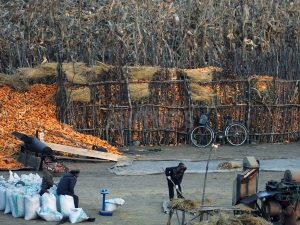
◆How Does the Park Family Actually Survive?
Writing out the Park family's household budget, total expenditures for food and other expenses come to 444,900 won—roughly double their monthly income. The question "How exactly do they survive?" only deepens.
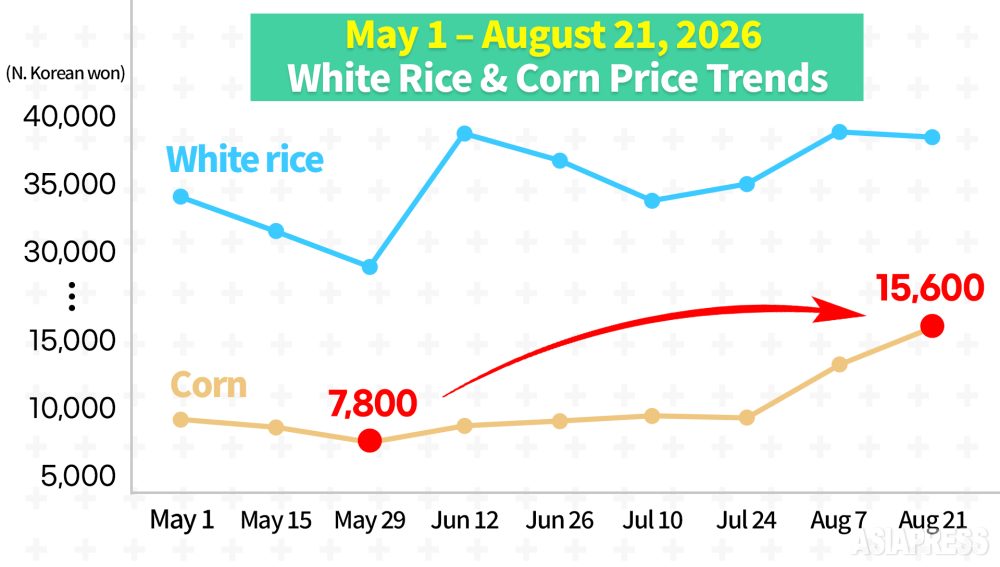
Moreover, the price of corn—the staple food of ordinary residents—doubled in just three months between May and August. Food that was already insufficient became half as affordable. Malnutrition is inevitable.
◆How Impoverished Residents Cope
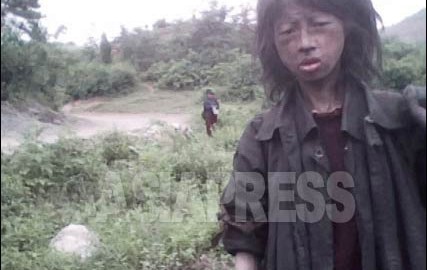
No matter what they do, the deficit is enormous. How are ordinary residents managing? The first response is obviously economizing. The second, unavoidable method is eating less. Whenever economic conditions deteriorated, North Korean residents have pushed themselves to extreme measures: replacing white rice with corn, reducing meals from three to two to one per day, or replacing rice with porridge.
Eating thin cornmeal porridge with large amounts of dried radish greens added and only soy sauce or salt for seasoning is a long-established method ordinary residents have used to endure hunger. If a family has a yard, they can grow vegetables to supplement their diet, so many ordinary residents prefer single-story houses connected to neighbors' homes over apartments, as they allow more room for gardening.
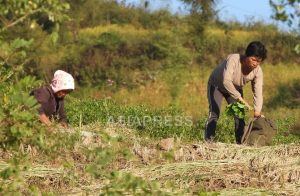
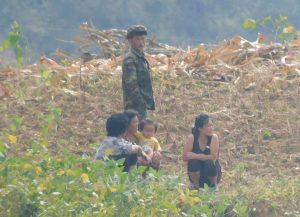
Next, the family must somehow secure additional cash beyond what wages and subcontracting income provide—an absolute shortfall. For example, harvesting medicinal herbs, wild vegetables, and firewood from mountains to sell is an extremely common strategy for North Korean ordinary residents, though it rarely generates substantial income. Those with means might purchase a piglet to raise and later sell. (Pigs and chickens are commonly raised even in apartments.) Those with tools might pan for gold in rivers.
An important point is after the COVID-19 pandemic, the Kim Jong-un regime has strictly controlled private economic activity and private employment, meaning opportunities for city residents to earn cash income have progressively disappeared.
Before 2020, people could earn daily income through various means depending on effort: running street stalls, producing and selling cakes and rice cakes, pulling hand-drawn carts for transportation work, or finding day-labor jobs at construction sites. Today, this is almost impossible. (Some people with specialized skills still occasionally earn good day wages by being hired for construction or interior finishing work.)
With opportunities to earn cash through individual initiative now extremely limited, hyperinflation has made residents' lives even more difficult. "It is not uncommon for people driven to desperation to resort to theft, robbery, or prostitution," reporting partners in the northern regions report.
The next installment will be the final part of this series. We will attempt a comprehensive assessment of the North Korean economy as we conclude this large-scale price survey.
※ ASIAPRESS communicates with its reporting partners through Chinese cell phones smuggled into North Korea.
■[List of Series]North Korea's Economy Seen Through a Large-Scale Price Survey

![[Video Report] N.Korea Regulation Officer at Market](https://www.asiapress.org/rimjin-gang/wp-content/uploads/2017/04/444-150x150.jpg)
![[Video Report] Nominal Farm Mobilization: People Feel Squeezed](https://www.asiapress.org/rimjin-gang/wp-content/uploads/2018/07/mqdefault-150x150.jpg)