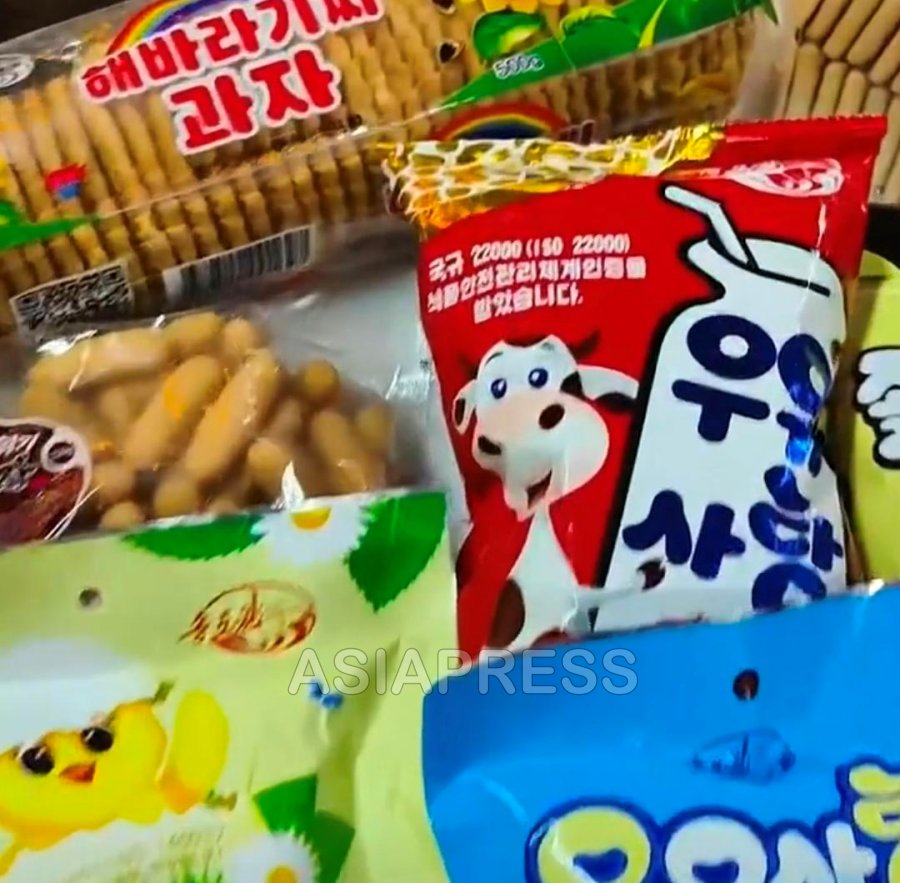
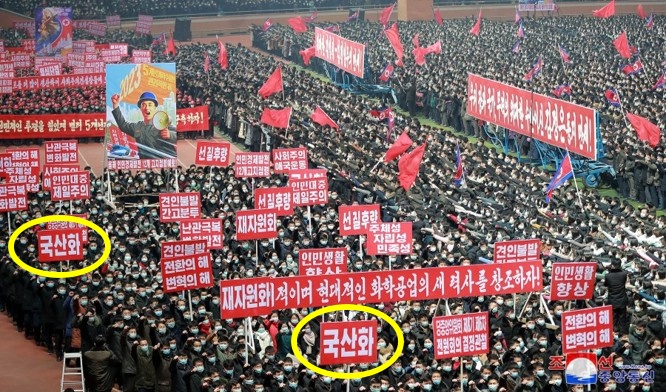
In North Korea, products manufactured in factories are generally referred to as "industrial products." The Kim Jong-un regime, perceiving a crisis as the domestic market is being eroded by Chinese products, has strongly appealed for the promotion of domestic production. Taking the coronavirus pandemic as an opportunity, the regime has strictly regulated the import of finished products from China while simultaneously pushing strongly for a transition toward a structure that pursues domestic production using imported raw materials. In this fifth installment, we report on the prices of domestically produced industrial products. Reporting partners in Ryanggang Province and North Hamgyong Province investigated the state-run store selling prices for 15 product categories including clothing and shoes in May and June. (HONG Mari / KANG Ji-won)
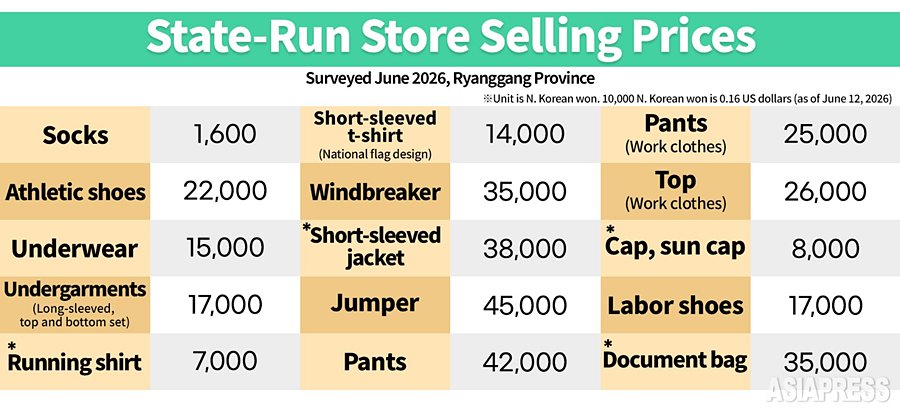
◆Clothing and Shoes …15 Product Categories Investigated
State-run stores are, in principle, specialized in selling domestically produced goods, and sell consumer goods such as clothing, shoes, candy, alcohol, and beer. Chinese products are known to be sold in foreign exchange stores.
The table below shows the prices for clothing and shoes sold at a state-run store in Ryanggang Province in June 2026. There is a possibility that prices have risen since July.
◆The Perception That "Domestic Products" = Semi-Chinese Products
The following is a summary of what was conveyed in May and June by six reporting partners residing in four cities in Ryanggang Province and North Hamgyong Province.
According to domestic reporting partners, the general perception is that even though it is called "domestic product," it is essentially semi-Chinese product. This is because most goods produced in state-run factories import not only raw materials but also packaging materials from China.
A woman who defected by boat from South Hamgyong Province in October 2023 and entered South Korea testified to ASIAPRESS: "I believed the government's continued propaganda that domestic production was progressing, but when trade with China stopped due to COVID, food prices skyrocketed all at once. When I realized the reality was that they were Chinese products, I was disappointed, thinking 'Can't our country even make candy?'"
Meanwhile, among reporting partners in North Hamgyong Province, there was also a perception that in the case of inexpensive socks or running shirts, "they are purely domestic products using domestically produced cotton." However, since China is a world-leading producer of cotton and cotton textiles while North Korea's production of cotton fiber is only at a minimal level, the possibility that domestically produced cotton is being used appears to be low.