ASIAPRESS conducted a large-scale price survey in May and June in four cities in Ryanggang Province and North Hamgyong Province. In this sixth installment, we report on public utilities including electricity, water, transportation, and medical costs. We have confirmed that all public services have now become established on the principle of user-pay, and the "free medical care system" that once served as a cornerstone of regime propaganda has transitioned to a fee-based system. (HONG Mari / KANG Ji-won)
◆Additional Fees Pay for 6 Hours of Daily Electricity
The results of the water and utilities survey are as follows:
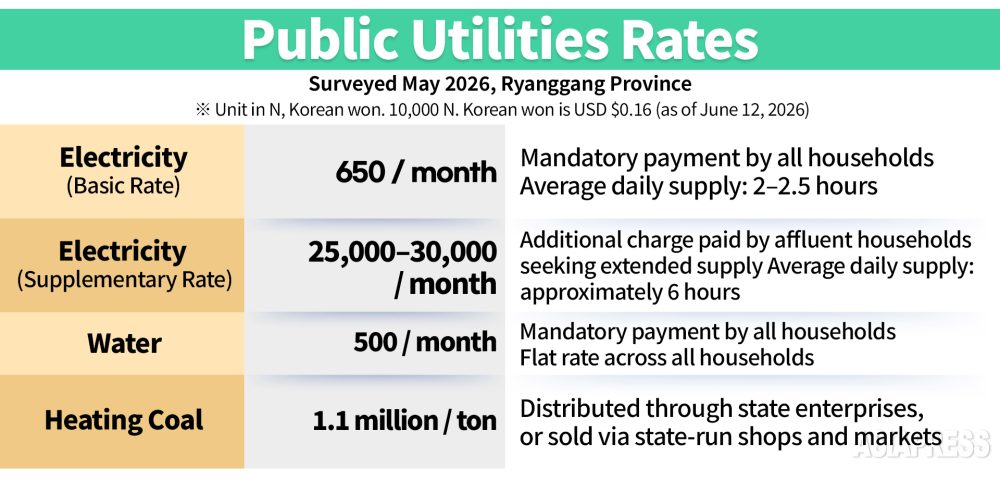
The basic electricity rate was the same across all regions at 650 won per month, but in the surveyed areas, the standard residential line ("residential line") supplied only approximately 2–2.5 hours of electricity per day. Households wishing to use electricity for longer periods pay 25,000–30,000 won per month in order to be guaranteed approximately 6 hours of additional daily supply.
※ Industrial facility power supply is called the "industrial line." In the surveyed areas, it has been supplied approximately 10 hours per day since the beginning of the year. The structure prioritizes the "industrial line," forcing residents to bear the inconvenience.
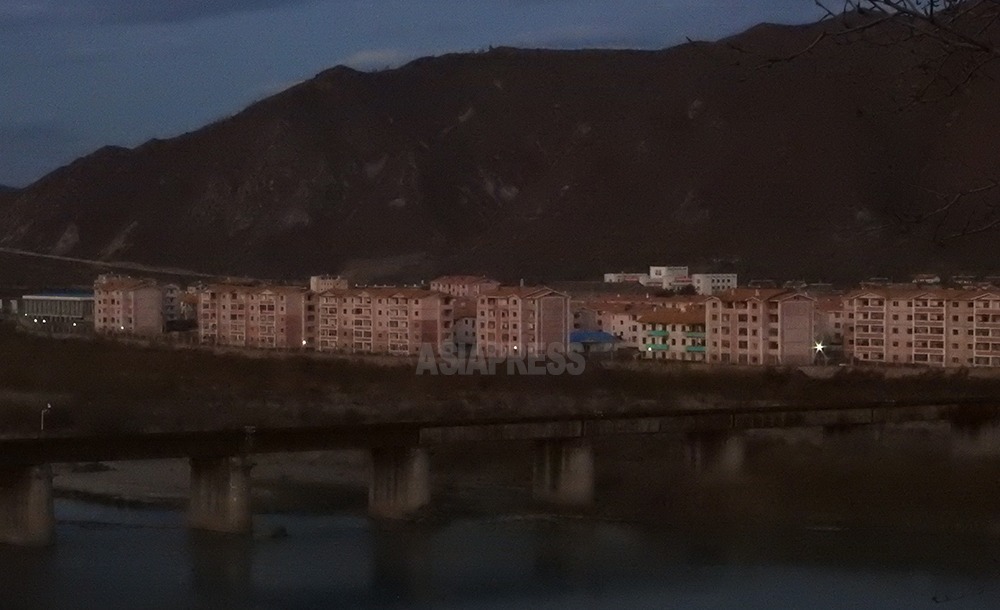
In affluent residential areas such as cadre apartments, when people wish to use additional electricity, a meter is installed, a neighborhood watch unit’s leader tallies usage, and the user pays the fee to the power distribution bureau (a local agency under the Ministry of Power Industry) by card or cash.
The basic water rate was 500 won per month. Typically, water pressure limits water supply to only the second or third floors in general apartments, but households without water access are still obligated to pay the water fee.
※ 10,000 North Korean won equals approximately 0.15 US dollars (as of August 28, 2026)
◆Basic Fees Apply Simply by Owning Appliances
Let us examine electricity charges in more detail. Appliances incur monthly basic fees simply by being owned, varying by type. Additionally, usage-based charges are said to accrue separately.
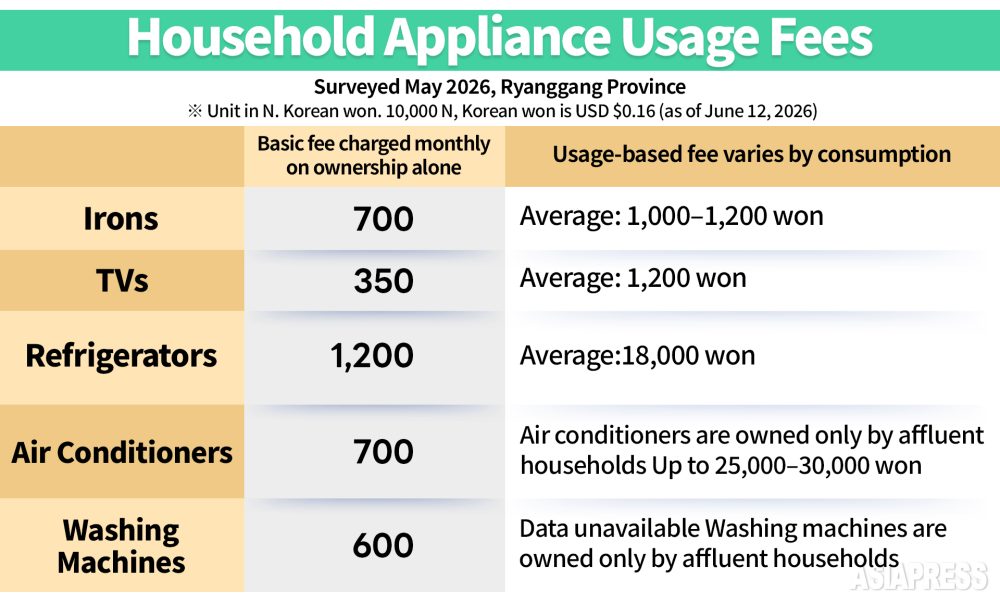
Televisions and irons are generally distributed to ordinary households, but refrigerators and air conditioners are used only by the wealthy, and washing machines are owned by an extremely limited number of households. For reference, our reporting partner in Ryanggang Province owns a television, small refrigerator, DVD player, electric fan, and computer.