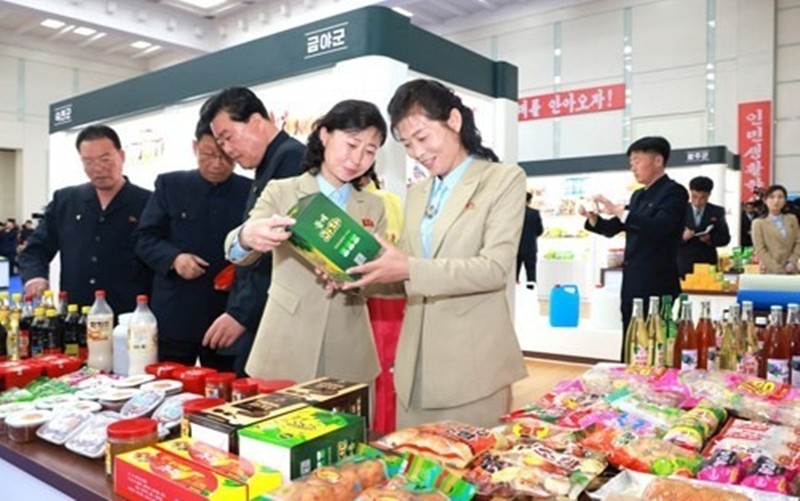
◆Sale of Food Grains Strictly Banned
As noted above, the sale of food grains in markets has been strictly banned since around January 2023, but selling miscellaneous grains or processed foods is reportedly not a problem.
"Items classified as 'non-grain,' such as beans, millet, sorghum, and potatoes, can still be sold. Locally produced items such as vegetables, chicken, eggs, and pork can also be sold. Corn can be sold if it's processed into noodles rather than sold as a raw grain — that makes it a processed food rather than a grain. It's become similar to a farm-produce market."
Sales of rice, corn, and other food grains are only permitted at the state-run monopoly outlets, the grain sales offices. But because the volume and quality of supply there are unstable, authorities reportedly turn a blind eye when merchants at miscellaneous-grain stalls quietly sell small amounts on the side. Some merchants are also said to handle food grains out of their homes. The operational realities of the grain sales offices will be covered in detail in the next installment.
◆Secondhand Goods Trading Thrives; Signs of Merchants Being Organized
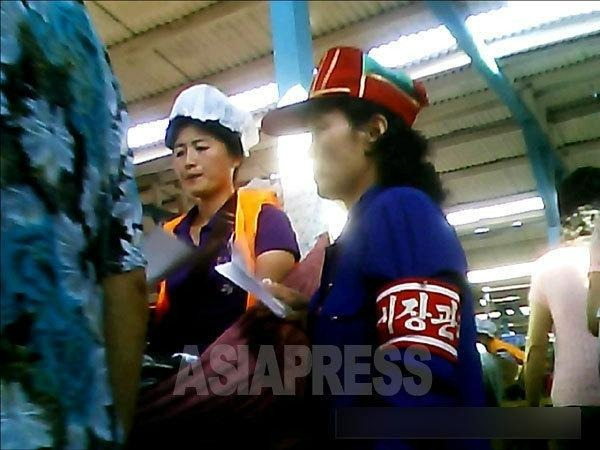
The most active trade in the markets these days is reportedly in secondhand goods. As tight restrictions on private economic activity cut into cash income, city residents are selling off household items and used clothing, mostly through barter, according to reports. There are also signs of factories and enterprises moving to set up their own sales counters inside the markets.
According to information from Ryanggang Province in July, authorities have begun moving to organize merchants.
"They're trying to organize merchants who handle the same items into something like cooperatives. At each stall, only one person is allowed to work in rotation, and sales and profits are supposed to be split equally."
◆Consumers Are Shifting From Markets to State-Run Stores
Having lost their freedom, markets are losing vitality as they are squeezed out by state-run stores. Reporting partners agreed that in recent years, a clear trend has emerged of consumers shifting from markets to state-run stores, since the stores carry a wide range of goods at prices not much different from the markets. State-run stores reportedly even offer giveaways or hold "bargain sales" to draw customers in.
But as noted in the previous installment, state-run stores have the drawback that prices are set by the "price bureau" under the people's committee (local government), so haggling or buying on credit isn't possible. Because of this, many people still prefer the flexibility that markets offer.
◆The Decline of Markets Saps Society's Vitality
As conditions for doing business have worsened, many merchants have withdrawn from the markets altogether.
One of ASIAPRESS's reporting partners ran a shoe stall in the market for many years and earned a stable income. Until around 2018, monthly net profit reached about 2,000 yuan (roughly 410,000 won today), but once Chinese goods stopped coming in and regulatory restrictions made any profit impossible, this reporting partner pulled out of the market entirely a few years ago.
Conditions vary by region, but ASIAPRESS estimates that the overall volume of market trade today has fallen to less than half of 2019 levels. Markets, energized by individual creativity and effort, contributed greatly to raising the standard of living for ordinary North Koreans. It seems likely that this policy-driven decline of the markets is robbing North Koreans of motivation and a sense of future prospects — and, in turn, significantly draining vitality from society as a whole.
※ASIAPRESS communicates with its reporting partners through Chinese cell phones smuggled into North Korea.
■[List of Series]North Korea's Economy Seen Through a Large-Scale Price Survey