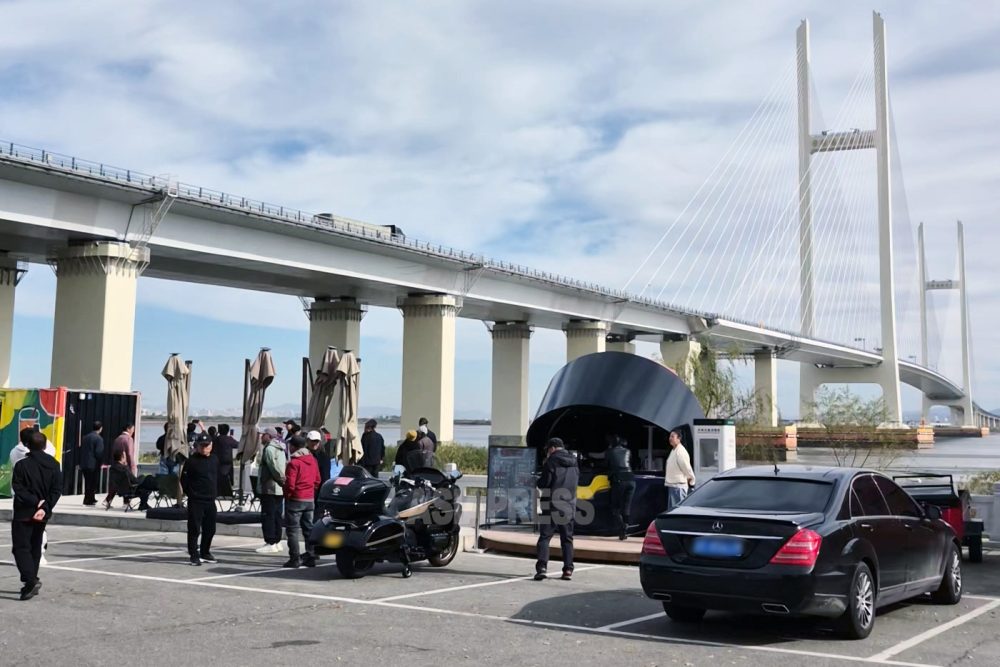
The New Yalu River Bridge on the North Korea-China border, which had sat unopened for 12 years after its completion, officially opened on Oct. 15, 2026. ASIAPRESS visited the site in mid-October, shortly after the opening. Contrary to expectations, there was little traffic crossing the new bridge. (ASIAPRESS Editorial Department)
◆ A bridge opens after 12 years
The New Yalu River Bridge is about 3 kilometers long and has two lanes in each direction. It connects Dandong in China’s Liaoning Province with Sinuiju in North Korea’s North Pyongan Province. Dandong and Sinuiju are the largest trading hubs for North Korea-China trade. Until now, the main trade route has been the Yalu River Bridge, about 10 kilometers upstream from the New Yalu River Bridge. That bridge, however, was built in 1943 during the Japanese colonial period and carries only a railway and a single lane of road traffic, so its aging structure and limited freight capacity have long been problems. Construction of the New Yalu River Bridge began in late 2010 to replace it and was completed in 2014. China reportedly covered the full construction cost.
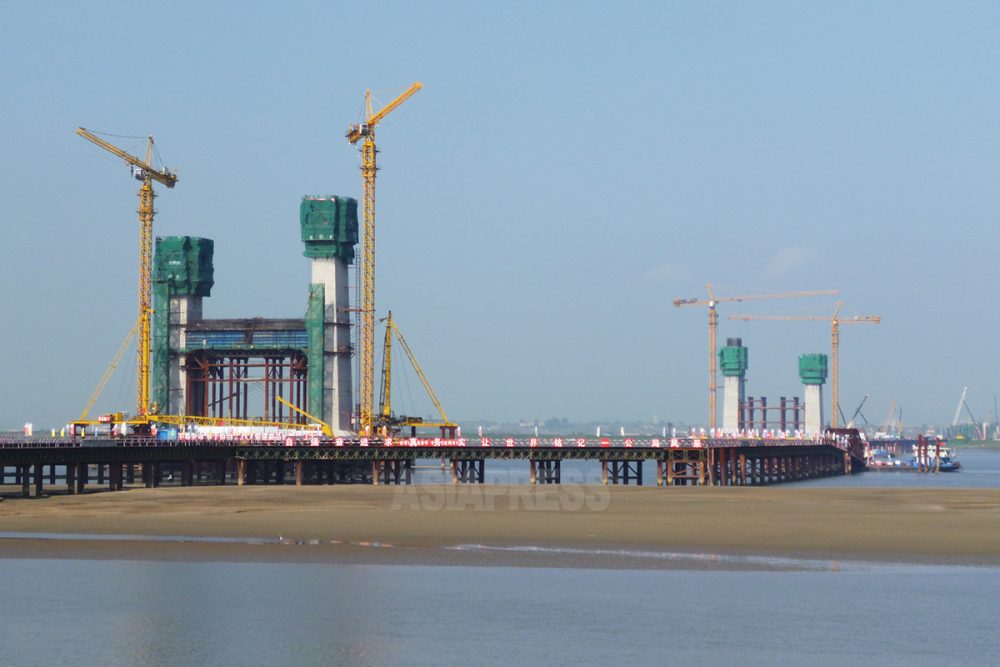
After its completion, the bridge sat idle for 12 years, partly because of stalled relations between North Korea and China. It finally opened on the 15th of last month. At the opening ceremony, Chinese Premier Li Qiang and North Korean Premier Pak Thae Song delivered congratulatory messages by video. According to Chinese state media, Li said “the bridge will become a new landmark symbolizing the traditional friendship between China and North Korea.” The Korean Central News Agency (KCNA) described it as “the creation reflecting the invincible vitality and development of DPRK-China friendship.”
◆ Customs a world apart from the tourist scene, with tight security
In mid-October, shortly after the opening, an ASIAPRESS reporting team visited the site. The area was crowded with Chinese tourists trying to take photos with the bridge in the background. When the team spoke to them through a translation app, one replied, “I’m proud of it as a symbol of friendship between our two countries.”
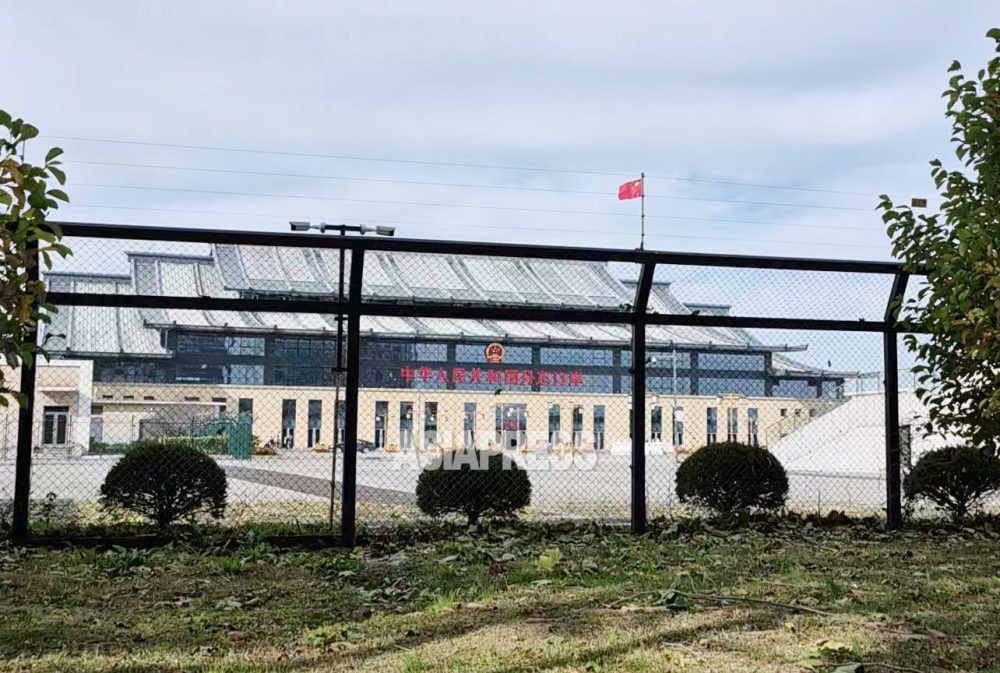
Security around the new Chinese customs facility was a stark contrast. Guards were posted at the entrances, and numerous surveillance cameras had been installed in the area. When the team took a few photos, they were immediately warned: “No photography.”
The team had expected to see vehicles lined up at the Chinese customs gate waiting for clearance, but the site was quiet. Few vehicles were crossing the bridge. On Oct. 24, a few days after the team’s visit, Kim Jong-un crossed the new bridge for a day trip to Dandong. The timing, just before that visit, may have had an effect, but it appeared that full-scale operations were still some way off.
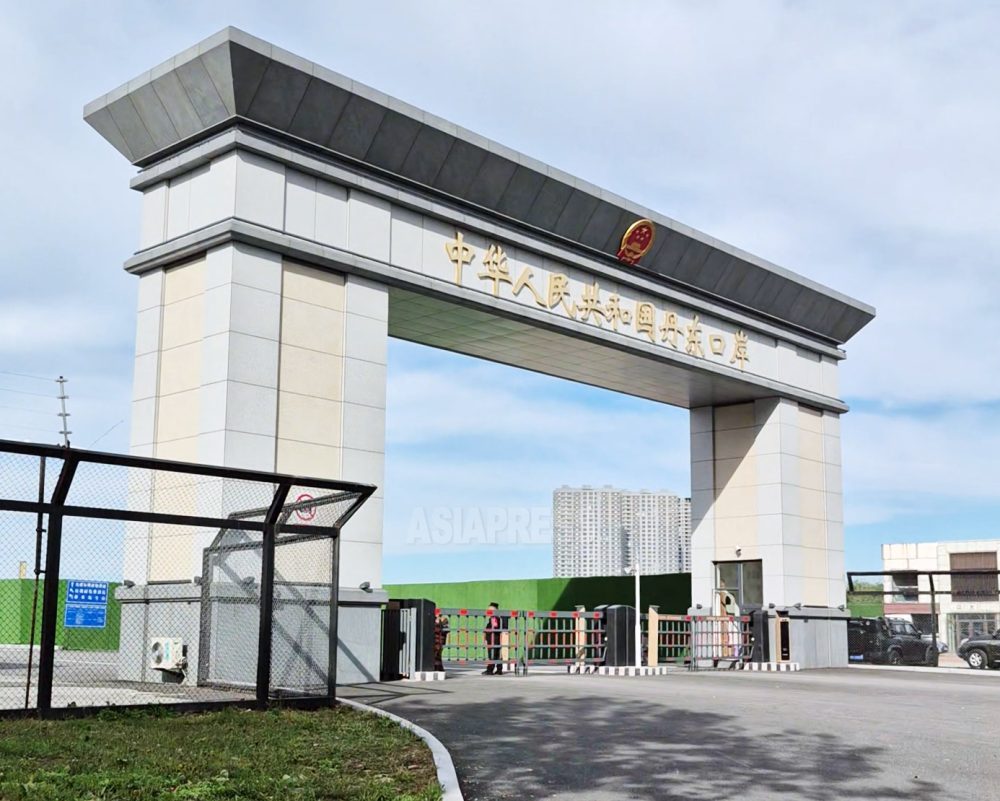
Almost no vehicles or people could be seen inside the customs compound either.